
What Is Espresso Pre-Infusion? How It Affects Coffee Extraction
When preparing espresso, most people focus on grind size, water temperature, pressure, and extraction time. However, another step can influence the brewing process before the espresso begins to flow: pre-infusion.
Espresso pre-infusion is the process of gently introducing water to the coffee grounds before full extraction pressure is applied. This initial stage allows the coffee puck to become wet before the main extraction begins.
Although it may last only a few seconds, pre-infusion can influence how water moves through the coffee bed and how consistently the coffee is extracted.
So, how does it work, and does every espresso need it?
What Is Espresso Pre-Infusion?
Pre-infusion is an initial stage of espresso brewing in which water reaches the prepared coffee puck before the machine applies its normal extraction pressure.
Instead of immediately forcing water through dry coffee grounds at full pressure, the machine introduces water more gently. Depending on the espresso machine, this may happen at lower pressure, reduced flow, or through a programmed sequence.
The purpose is to wet the coffee grounds before the main extraction.
Once the puck has been sufficiently wetted, the machine proceeds with the main brewing phase.
Pre-infusion is available on many espresso machines, although the level of control varies. Some machines provide a fixed pre-infusion stage, while others allow users to adjust its duration or pressure.
Why Does Pre-Infusion Matter?
A prepared espresso puck is made of many small coffee particles. Even when the grounds are distributed and tamped carefully, the coffee bed may not have perfectly uniform resistance everywhere.
When water enters the puck, it needs to move through this structure.
Pre-infusion allows the grounds to become wet before the main extraction pressure is applied. This can help establish more even contact between water and coffee.
Potential benefits include:
-
More consistent wetting of the coffee bed
-
Better control over the initial flow of water
-
Reduced risk of uneven extraction in some setups
-
Greater flexibility when adjusting espresso recipes
However, pre-infusion is not a guaranteed solution for every extraction problem. Grind consistency, puck preparation, dose, and machine performance remain important.
How Does Pre-Infusion Work?
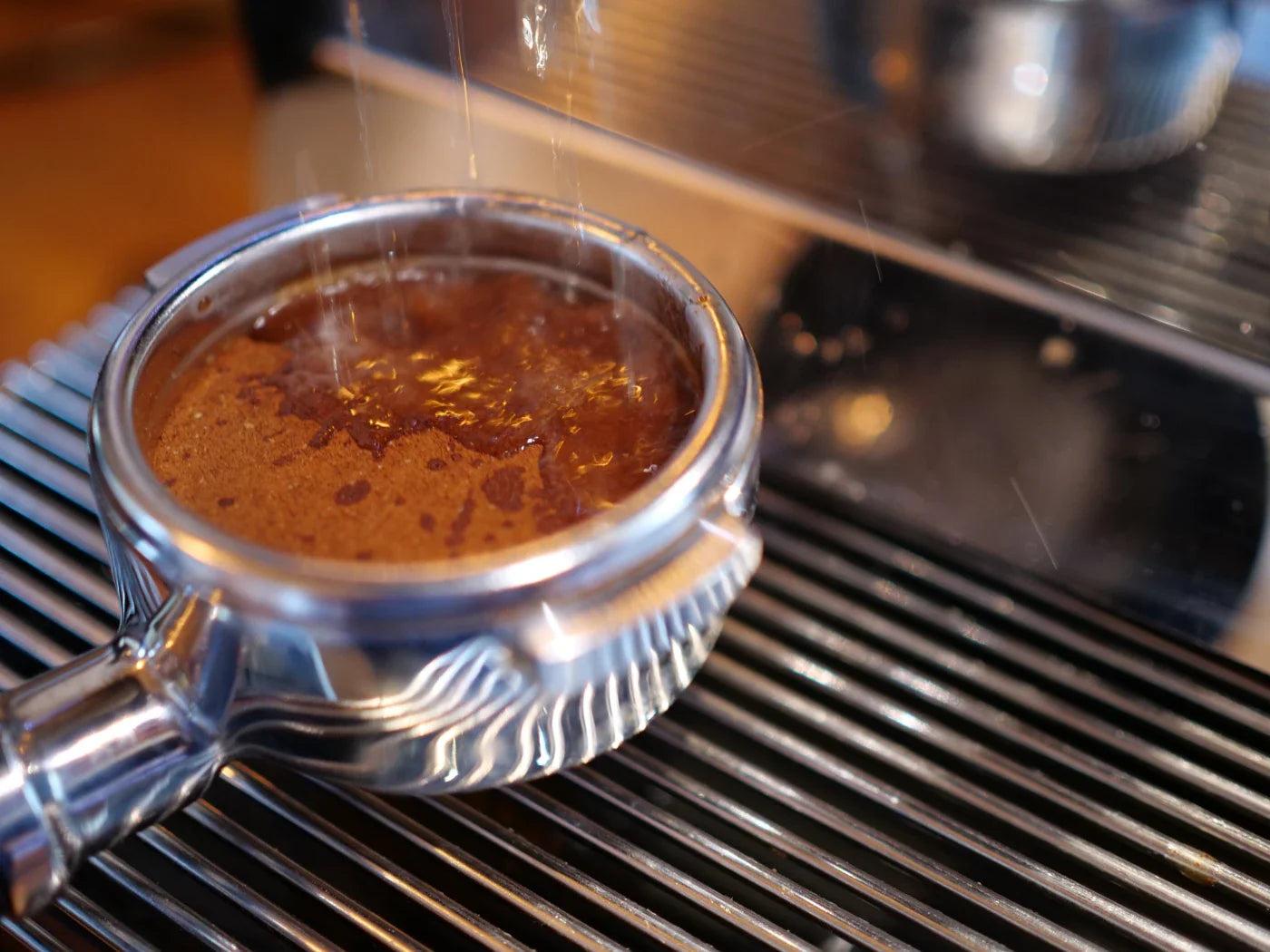
Espresso pre-infusion can be understood in three stages.
1. Water Reaches the Coffee Puck
At the beginning, water enters the basket and starts wetting the coffee grounds.
The coffee absorbs water, and the puck begins to change as the particles become saturated.
2. The Coffee Bed Becomes Wetted
During this stage, water spreads through the coffee bed. The aim is to allow the grounds to become more uniformly wet before the main extraction pressure is applied.
The actual result depends on the machine, coffee preparation, grind size, and pre-infusion settings.
3. Main Extraction Begins
After the pre-infusion stage, the machine moves into its main extraction phase.
Water continues to pass through the wet coffee puck, dissolving soluble compounds that contribute to the espresso's aroma, acidity, sweetness, bitterness, and body.
The quality of the final cup depends on the entire brewing process, not pre-infusion alone.
Does Pre-Infusion Help Prevent Channeling?
Channeling occurs when water flows unevenly through the coffee puck, favoring certain pathways instead of moving relatively evenly through the coffee bed.
Pre-infusion may help reduce channeling in some situations because it allows the grounds to become wet before the main extraction pressure is applied.
However, it cannot eliminate channeling caused by major preparation problems.
For example, uneven coffee distribution, clumps, an inconsistent grind, or a poorly prepared puck can still lead to uneven water flow.
For better results, combine suitable pre-infusion settings with consistent grinding, even distribution, and level tamping.
How Long Should Espresso Pre-Infusion Last?
There is no single ideal duration for every coffee or machine.
Some espresso recipes use only a brief pre-infusion, while others allow a longer initial wetting stage. The appropriate duration depends on the equipment, coffee, roast level, grind setting, and desired result.
Rather than assuming that longer is always better, start with your machine's recommended settings and make small adjustments.
When experimenting, keep the coffee dose, grind setting, water temperature, and target beverage weight consistent. This makes it easier to understand whether changing pre-infusion actually improves the cup.
Does Roast Level Affect Pre-Infusion?
Yes, roast level can influence how a coffee behaves during espresso preparation.
Light-roasted coffees can be relatively dense and may require different grinding and extraction settings from darker roasts. Some light-roasted coffees respond well to a carefully adjusted pre-infusion stage.
Darker-roasted coffees may behave differently because roasting changes the physical structure and solubility of the beans.
These are general tendencies rather than fixed rules. Two coffees with the same roast level may still require different recipes.
The best approach is to taste the results and adjust the brewing process to suit the specific coffee.
Can Pre-Infusion Improve Espresso Flavor?
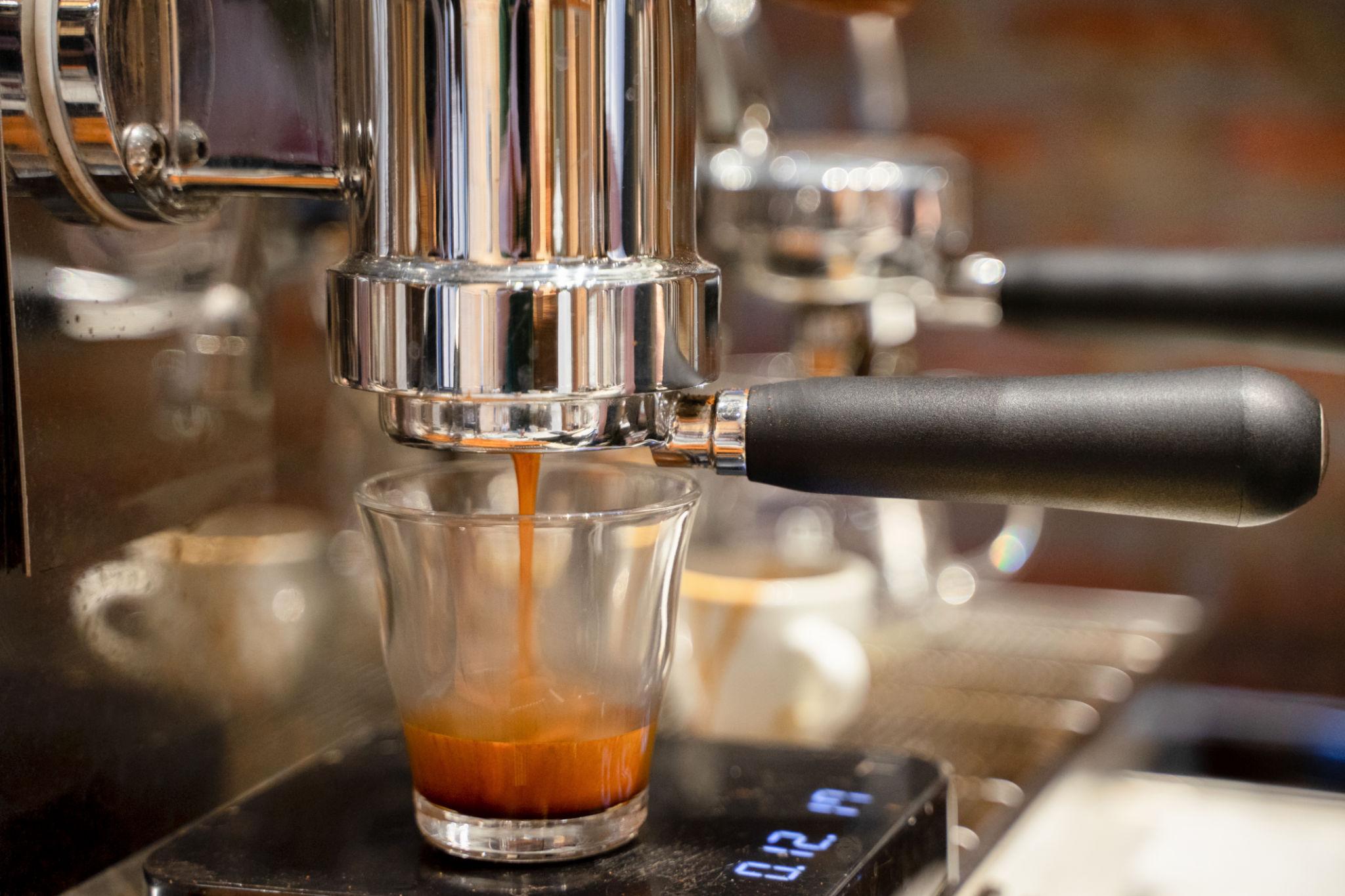
Pre-infusion can contribute to a more controlled extraction, but it does not automatically make espresso sweeter or more balanced.
When the technique suits the coffee and equipment, it may help produce a cup with clearer flavors and a more consistent balance.
If the coffee tastes sour, bitter, thin, or harsh, however, pre-infusion may not be the main issue.
Other factors to check include:
-
Grind size and grind consistency
-
Coffee dose and beverage weight
-
Water temperature
-
Roast level and freshness
-
Distribution and tamping
-
Total extraction time
Changing one variable at a time is the most practical way to determine what improves the result.
A Simple Pre-Infusion Experiment
You can explore pre-infusion without changing your entire espresso recipe.
First, choose one coffee and prepare it using your usual dose and grind setting. Record the beverage weight and extraction time.
Next, brew another shot using a different pre-infusion duration if your machine allows it.
Keep the other variables as consistent as possible.
Compare the two shots for aroma, sweetness, acidity, bitterness, body, and aftertaste.
Do not judge the result by extraction time alone. A longer shot is not necessarily better, and a visually attractive espresso does not always taste balanced.
The goal is to discover which settings work best for your coffee and equipment.
What About Cầu Đất Arabica?
Arabica from Cầu Đất, Đà Lạt, offers an opportunity to explore how brewing choices influence the character of Vietnamese highland coffee.
Depending on the variety, processing method, and roast profile, the coffee may express floral aromas, fruit-like notes, sweetness, acidity, or a more rounded body.
Pre-infusion is one variable that baristas can test when developing an espresso recipe for these coffees.
Rather than using one fixed recipe for every Arabica, begin with a consistent preparation method and adjust the settings according to the coffee's response.
The aim is to highlight the coffee's natural characteristics while producing a balanced and enjoyable cup.
Final Thoughts
Espresso pre-infusion is a small but useful part of espresso preparation. By wetting the coffee puck before the main extraction pressure is applied, it can help control the initial stage of brewing and may improve extraction consistency.
Still, the best results come from treating pre-infusion as one part of a complete brewing system.
Coffee quality, grinding, distribution, tamping, water temperature, and extraction settings all work together.
If you want to understand your espresso better, try adjusting pre-infusion gradually and taste the difference. Small, controlled experiments can teach you more than changing several settings at once.
Discover Cầu Đất Coffee
At Cầu Đất Bean, we offer carefully selected Vietnamese coffee from the highlands of Đà Lạt for different brewing styles.
Try before you buy.
Showroom: 82B Trương Công Định, Phường Xuân Hương, Đà Lạt, Lâm Đồng, Vietnam
Phone / WhatsApp: +84 926 915 849
Email: caudatbean@gmail.com
Frequently Asked Questions
What does pre-infusion mean in espresso?
Pre-infusion is the initial stage in which water wets the coffee puck before the main extraction pressure is applied.
Does pre-infusion prevent channeling?
It may help reduce channeling in some situations, but consistent grinding and proper puck preparation are still essential.
How many seconds should espresso pre-infusion take?
There is no universal duration. The appropriate setting depends on the machine, coffee, roast level, grind size, and brewing recipe.
Does every espresso machine have pre-infusion?
No. Features vary by machine. Some offer automatic pre-infusion, while others provide adjustable settings or no dedicated control.
Does longer pre-infusion always produce better espresso?
No. Longer pre-infusion does not guarantee better flavor. Compare different settings while keeping the other brewing variables consistent.


 Group4, Cau Dat Village, Xuan Truong commune, Da Lat City, Lam Dong Province, Vietnam
 +84 783 472 234
 caudatbean@gmail.com
  www.caudatbean.com