
How to Make Vietnamese Phin Coffee: A Simple Step-by-Step Guide
Vietnamese phin coffee is more than a brewing method. It is a familiar part of everyday life in Vietnam, known for its slow dripping process, rich aroma, and full-bodied flavor.
Unlike espresso machines or automatic coffee makers, the Vietnamese phin uses a simple metal filter to brew coffee directly into a cup. The process takes a little patience, but it allows you to enjoy a concentrated cup of coffee with a distinctive character.
Whether you prefer traditional Vietnamese iced milk coffee or a strong black coffee, learning how to use a phin is a great way to explore Vietnamese coffee culture.
In this guide, Cầu Đất Bean explains how to make Vietnamese phin coffee at home, including the equipment, coffee-to-water ratio, brewing steps, and practical tips for a better cup.
1. What Is a Vietnamese Phin?
A Vietnamese phin is a small metal coffee filter traditionally made from stainless steel or aluminum. It usually consists of four parts:
-
The filter base: Holds the ground coffee and sits on top of the cup.
-
The brewing chamber: Contains the coffee grounds.
-
The filter press: Gently presses the coffee inside the chamber.
-
The lid: Helps retain heat during brewing
-
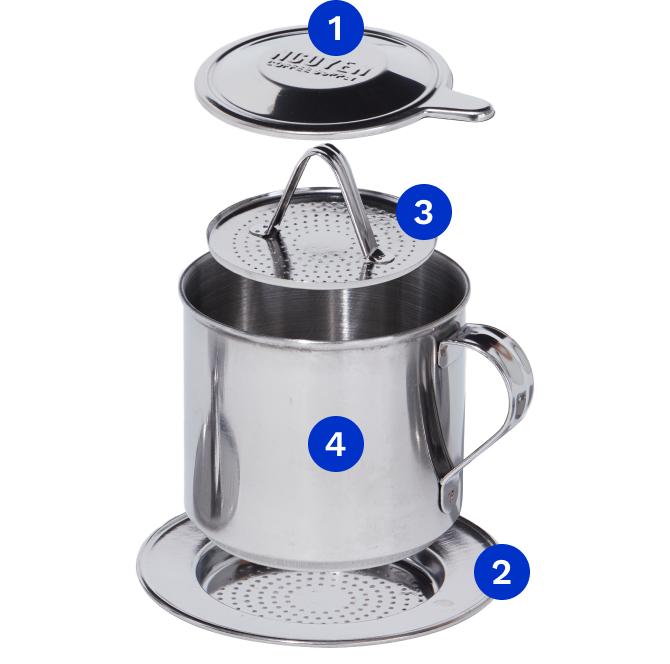
Hot water passes slowly through the ground coffee and drips into the cup below.
The phin does not require electricity or paper filters, making it a convenient and accessible brewing method.
2. What Coffee Should You Use?
The coffee you choose has a significant influence on the final cup.
Vietnamese phin coffee is traditionally associated with Robusta because of its strong body and intense flavor. However, Arabica and Arabica–Robusta blends can also produce enjoyable results.
Robusta
Robusta is a popular choice for traditional Vietnamese phin coffee. Depending on its quality and roast profile, it can deliver:
-
Full body and strong coffee intensity.
-
Roasted nut and chocolate-like notes.
-
A bold flavor that works well with condensed milk.
Arabica
Arabica offers a different experience, often with more aromatic complexity and a wider range of flavor characteristics.
Depending on its origin and processing method, it may bring floral, fruity, caramel, or chocolate notes to the cup.
Arabica–Robusta Blends
Blending Arabica and Robusta allows you to combine different characteristics.
Arabica can contribute aroma and flavor complexity, while Robusta can add body and intensity. The ideal blend depends on your personal preference.
For your first phin brewing experience, choose a medium-dark or dark roast coffee that is suitable for traditional Vietnamese-style brewing.
3. What You Need to Prepare
Before brewing, prepare the following:
-
One Vietnamese phin filter.
-
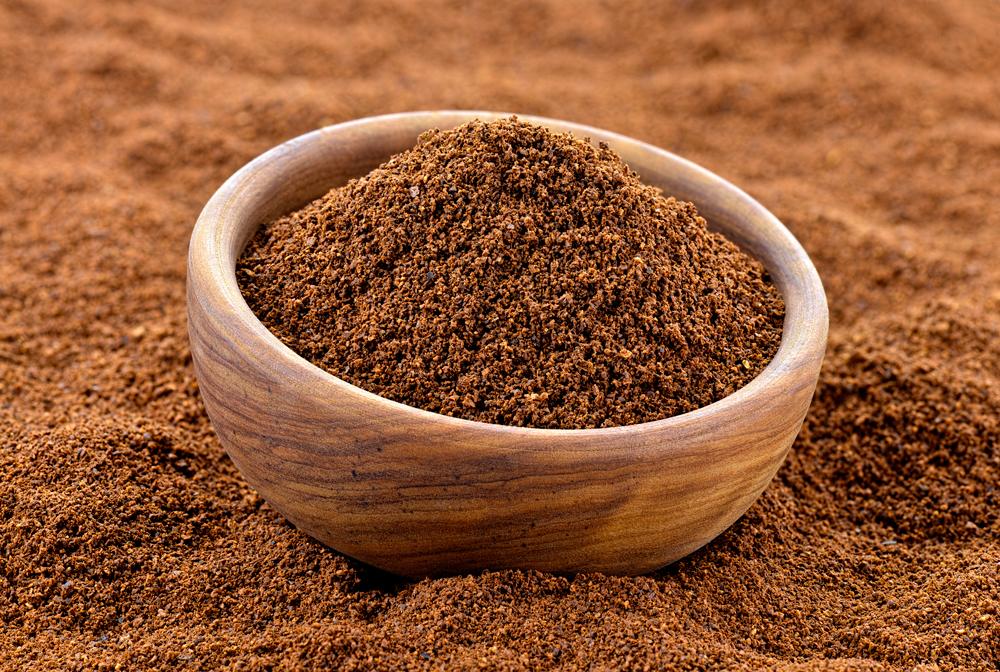
20–25 grams of ground coffee.
-
Approximately 80–100 ml of hot water.
-
A cup or glass.
-
Condensed milk and ice, if making Vietnamese iced milk coffee.
These quantities are a practical starting point. You can adjust them depending on your phin size, coffee type, and preferred strength.
4. How to Make Vietnamese Phin Coffee Step by Step
Step 1: Prepare the Phin
Place the phin filter on top of your cup.
Pour a little hot water through the filter to warm the equipment, then discard the water.
This helps maintain a more stable brewing temperature.
Step 2: Add Ground Coffee
Add approximately 20–25 grams of medium-ground coffee into the brewing chamber.
Spread the coffee evenly without pressing it too tightly.
The grind should generally be coarser than espresso but finer than the grind commonly used for French press brewing.
If the coffee is too fine, water may pass through too slowly. If it is too coarse, the coffee may taste weak or under-extracted.
Step 3: Place the Filter Press
Gently place the filter press over the coffee grounds.
Apply light and even pressure. Avoid pressing too firmly, as this can restrict water flow.
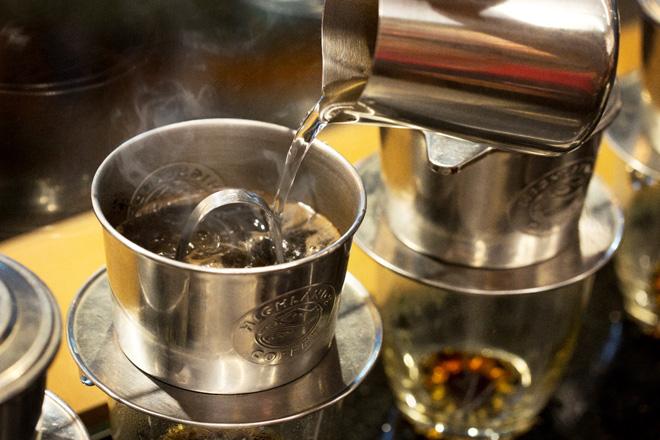
Step 4: Bloom the Coffee
Pour approximately 20–30 ml of hot water over the coffee grounds.
Wait around 30–45 seconds to allow the coffee to bloom.
During this stage, the coffee releases trapped gases and begins absorbing water.
Step 5: Add the Remaining Water
Slowly pour the remaining hot water into the phin.
Place the lid on top and allow the coffee to drip naturally into the cup.
A typical brewing time may range from approximately 4–6 minutes, depending on the grind size, coffee dose, filter design, and water quantity.
The flow should be steady rather than extremely fast or completely blocked.
Step 6: Enjoy Your Coffee
Once the dripping process is complete, remove the phin.
You can enjoy the coffee black or prepare traditional Vietnamese iced milk coffee by adding condensed milk and ice.
Adjust the amount of condensed milk according to your preferred sweetness.
5. How to Make Vietnamese Iced Milk Coffee
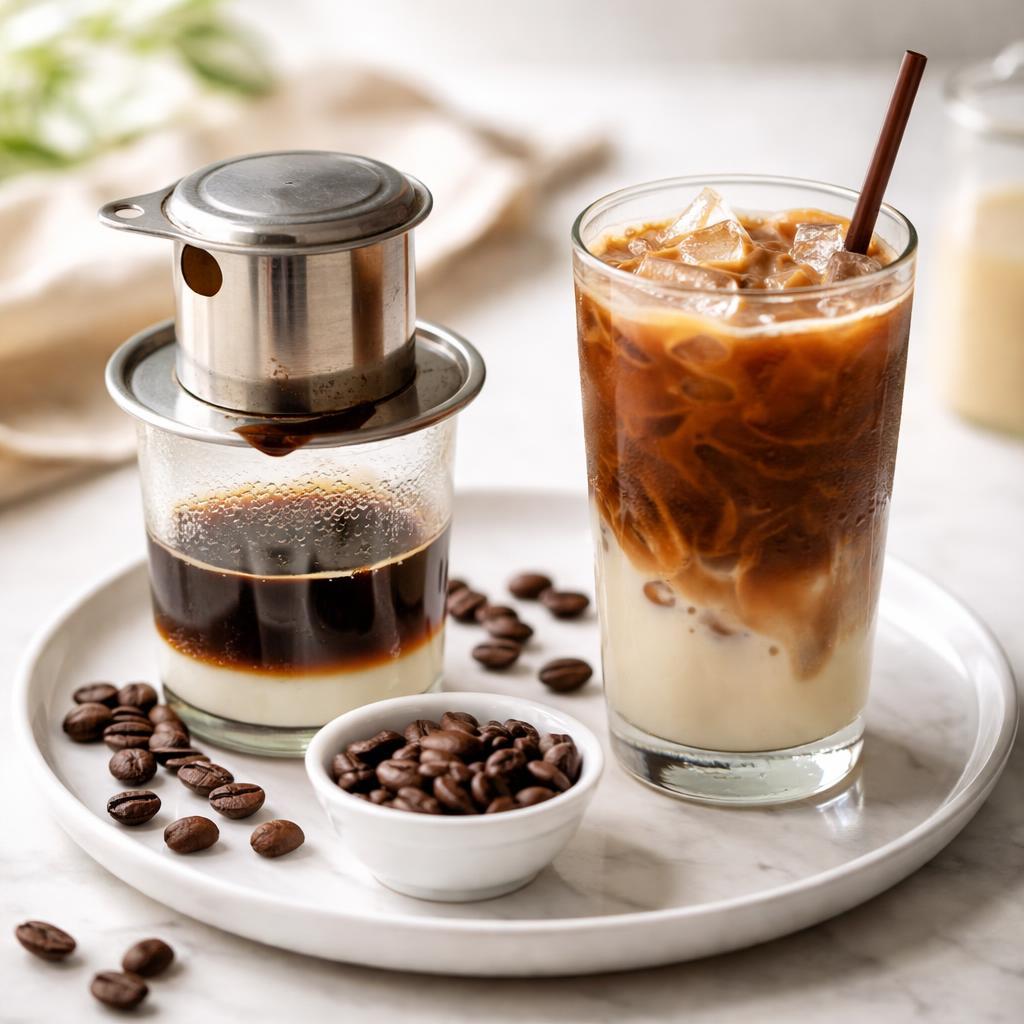
Vietnamese iced milk coffee, commonly known as cà phê sữa đá, is one of the most recognizable coffee drinks in Vietnam.
To prepare it:
-
Add 20–30 ml of condensed milk to a glass.
-
Brew your coffee directly into the glass or into a separate cup.
-
Stir until the coffee and condensed milk are well combined.
-
Add ice.
-
Stir again and enjoy.
The combination of strong coffee, creamy sweetness, and ice creates a refreshing drink with a distinctive Vietnamese character.
For a less sweet version, reduce the condensed milk or serve the coffee black over ice.
6. Common Mistakes When Brewing Phin Coffee
Even though the phin is simple to use, a few small mistakes can affect the final result.
Using the Wrong Grind Size
Coffee that is too fine may block the filter and create excessive bitterness. Coffee that is too coarse may allow water to pass through too quickly, producing a weak cup.
Start with a medium grind and adjust based on the dripping speed and taste.
Pressing the Coffee Too Tightly
The filter press should hold the coffee gently in place. Excessive pressure can restrict water flow and lead to uneven extraction.
Pouring Water Too Quickly
Pouring all the water at once may disturb the coffee bed. Add the initial bloom water first, then pour the remaining water gently.
Using Water That Is Too Hot or Too Cool
Water temperature influences extraction and flavor.
As a starting point, use hot water around 90–96°C. Adjust according to the coffee and your taste preferences.
Choosing Coffee That Does Not Match Your Preference
Not every coffee produces the same result in a phin. Some coffees are more aromatic and delicate, while others offer stronger body and intensity.
Try different origins, roast levels, and blends to discover the profile you enjoy most.
7. How to Adjust Your Phin Coffee to Your Taste
Once you understand the basic brewing process, small adjustments can help you develop your preferred cup.
| If your coffee tastes... | Try adjusting... |
|---|---|
| Too bitter | Use a slightly coarser grind or reduce brewing time |
| Too weak | Increase the coffee dose or use a slightly finer grind |
| Too sour | Try a slightly finer grind or check water temperature |
| Too slow to drip | Use a coarser grind or reduce pressure on the filter |
| Too strong | Reduce the coffee dose or increase the water quantity |
Change one variable at a time so you can understand how each adjustment affects the result.
8. Why Phin Coffee Remains Popular in Vietnam
The Vietnamese phin is simple, affordable, and closely connected to local coffee culture.
It does not require expensive equipment or complicated brewing techniques. A small filter, ground coffee, and hot water are enough to create a satisfying cup.
The slow dripping process also encourages people to take a moment and enjoy their coffee rather than rushing through it.
From small street-side cafés to modern coffee shops, phin coffee continues to be an important part of Vietnam's coffee identity.
It is also a practical way for international coffee lovers to experience a traditional Vietnamese brewing method at home.
Conclusion: Discover the Taste of Vietnamese Phin Coffee
Making Vietnamese phin coffee is simple once you understand the basic steps: choose suitable coffee, use the right grind size, add hot water gradually, and allow the coffee to drip naturally.
You can experiment with Robusta, Arabica, or blends to create different flavor experiences. Whether served black or with condensed milk and ice, each cup offers a small introduction to Vietnam's coffee culture.
At Cầu Đất Bean, we believe that good coffee begins with understanding the beans and choosing the right brewing method.
Explore Vietnamese Coffee with Cầu Đất Bean
Looking for Vietnamese Arabica, Robusta, or coffee blends for your café, roasting business, or personal enjoyment?
Cầu Đất Bean offers coffee from Vietnam's highlands, including coffee from Cầu Đất, Đà Lạt.
Contact our team to explore available coffee options, product specifications, samples, and wholesale orders.
Try before you buy.
CẦU ĐẤT BEAN
-
Showroom: 82B Trương Công Định, Phường Xuân Hương, Đà Lạt, Lâm Đồng, Vietnam
-
Phone / WhatsApp: +84 926 915 849
-
Email: caudatbean@gmail.com
-
Website: https://caudatcoffee.com.vn


 Group4, Cau Dat Village, Xuan Truong commune, Da Lat City, Lam Dong Province, Vietnam
 +84 783 472 234
 caudatbean@gmail.com
 www.caudatbean.com