
Coffee Tree Pruning: Why and When Coffee Plants Need Pruning
Producing good coffee requires more than suitable soil, favorable weather, and careful harvesting. The way coffee trees are maintained throughout their growing cycle also plays an important role in farm productivity and long-term plant health.
One essential farming practice is pruning. By selectively removing old, damaged, or unproductive branches, farmers can manage the structure of coffee trees, improve light distribution, and encourage healthy new growth.
However, pruning is not simply about cutting branches. It requires an understanding of the coffee plant's growth habits, local climate, variety, and production goals.
In this guide, Cầu Đất Bean explores why coffee trees need pruning, the main pruning methods, and how proper maintenance supports coffee farming.
1. What Is Coffee Tree Pruning?
Coffee tree pruning is the practice of removing selected branches, stems, or shoots to maintain the structure and productivity of a coffee plant.
As coffee trees grow, their branches develop, produce leaves and fruit, and eventually become older or less productive. Without appropriate maintenance, the canopy may become overcrowded, making it harder for sunlight and air to reach different parts of the plant.
Pruning helps farmers manage this growth.
The exact approach depends on the coffee species, variety, planting density, climate, and farming system. Arabica and Robusta farms may use different pruning strategies because their growth patterns and production systems are not identical.
2. Why Is Pruning Important for Coffee Plants?
Pruning supports several aspects of coffee farm management.
Maintaining Plant Structure
Coffee trees need a manageable structure to support healthy growth and fruit production.
Removing selected branches can help prevent overcrowding and maintain a shape that is easier to manage during fertilization, pest monitoring, and harvesting.
Encouraging New Growth
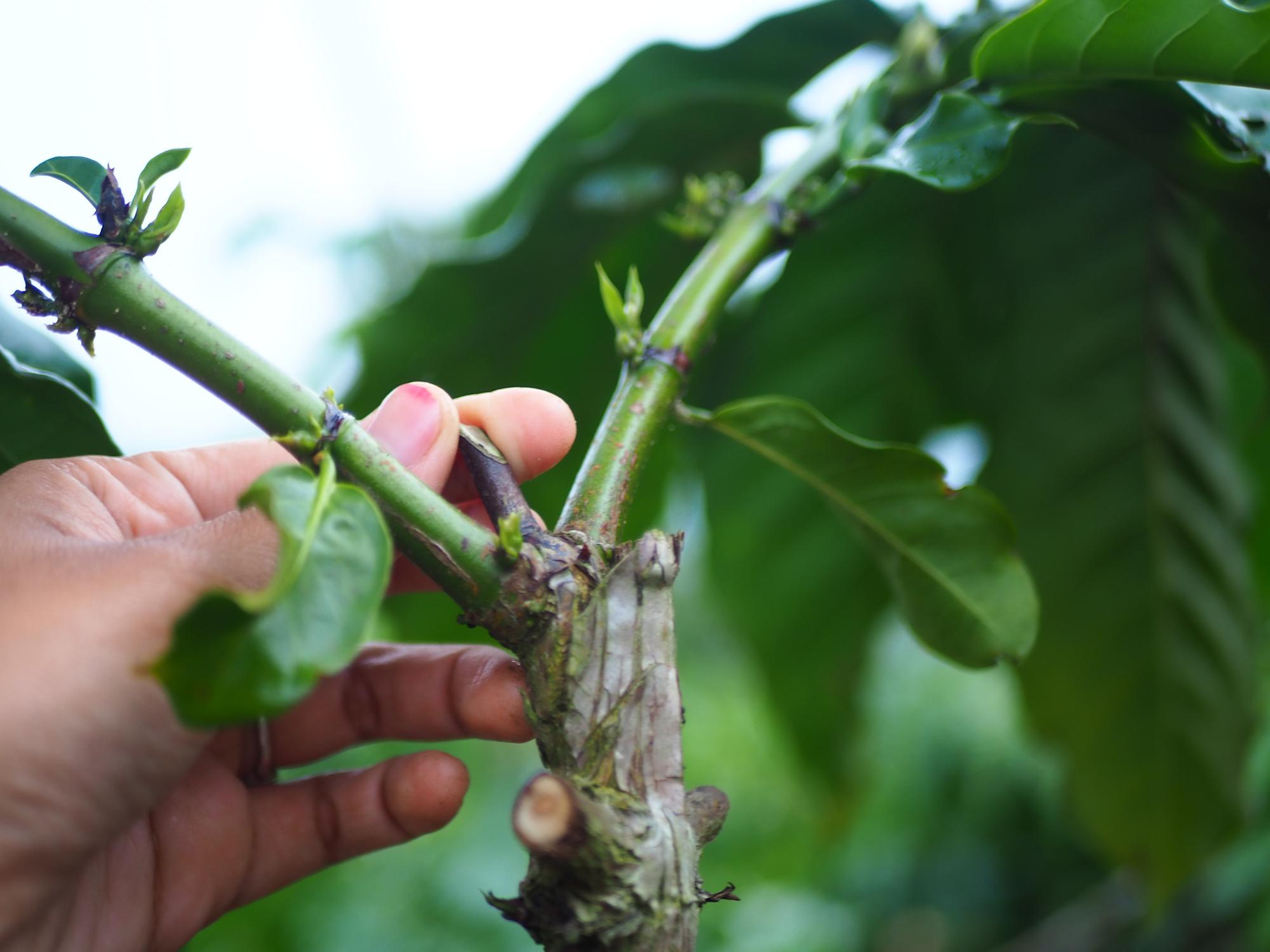
Older branches may gradually become less productive. Removing selected parts of the plant can encourage the development of new shoots and productive growth, depending on the pruning method and the plant's condition.
Improving Light Distribution
A dense canopy can prevent sunlight from reaching some branches and leaves.
Careful pruning helps create a more balanced canopy, allowing light to reach different parts of the plant.
Supporting Air Circulation
Overcrowded branches can restrict airflow within the coffee canopy.
Opening the plant structure through appropriate pruning may improve air movement and help reduce conditions that favor certain fungal diseases.
Making Harvesting Easier
A well-maintained coffee tree can be easier for workers to access during harvesting.
Managing plant height and branch structure may also make farm operations more efficient.
3. Common Coffee Pruning Methods

Different pruning techniques serve different purposes. Farmers choose the appropriate method according to plant age, productivity, and farm management objectives.
Light Pruning
Light pruning involves removing small, unnecessary, damaged, or unproductive branches without significantly changing the overall structure of the tree.
It is commonly used for routine maintenance.
Selective Branch Pruning
This method focuses on removing specific branches that are damaged, overcrowded, poorly positioned, or no longer productive.
Selective pruning helps maintain a balanced canopy while preserving healthy growth.
Rejuvenation Pruning
When coffee trees become old or less productive, farmers may use more intensive pruning to encourage new growth.
Depending on the production system, this may involve cutting back older stems or restructuring the plant.
Rejuvenation pruning requires careful planning because it can temporarily reduce production while the plant develops new growth.
Stumping
Stumping is a more intensive form of pruning in which the main stem or stems are cut back to a low height to encourage new shoots.
It is generally used as part of a planned renovation strategy rather than routine maintenance.
The timing and method should be adapted to the coffee variety, plant condition, and local growing environment.
4. When Should Coffee Trees Be Pruned?
There is no single pruning calendar suitable for every coffee-growing region.
Farmers generally consider the harvest cycle, rainfall pattern, plant condition, and the expected period of new growth.
In many coffee-growing areas, pruning is scheduled after harvesting, when the main crop has been collected.
This allows farmers to remove exhausted or damaged branches before the next major growth cycle.
However, the appropriate timing can vary.
Important considerations include:
-
Whether the main harvest has finished.
-
The condition and age of the coffee trees.
-
Local rainfall and temperature patterns.
-
The expected flowering and fruiting periods.
-
The time required for new shoots to develop.
In highland areas such as Cầu Đất, Đà Lạt, farmers need to consider local seasonal conditions when planning farm maintenance.
Pruning at an unsuitable time may affect new growth or interfere with the next production cycle.
5. What Happens If Coffee Trees Are Not Pruned?
Coffee trees can continue growing without regular pruning, but unmanaged growth may create several challenges.
Overcrowded branches: Too many branches can make the canopy dense and difficult to manage.
Uneven light distribution: Some parts of the plant may receive insufficient sunlight.
Difficult harvesting: Dense growth can make it harder for workers to reach cherries.
Accumulation of damaged branches: Dead or diseased plant material may remain within the canopy if not removed appropriately.
Declining productivity: Older branches may become less productive over time, depending on the plant's age and condition.
Regular assessment helps farmers decide when maintenance is necessary rather than waiting until the trees become difficult to manage.
6. How Pruning Supports Coffee Farm Productivity
Pruning is one part of a broader coffee farm management system.
A well-planned pruning program can help farmers maintain a suitable balance between vegetative growth and fruit production.
However, more pruning does not automatically mean higher yields.
Removing too many productive branches can reduce the number of potential fruit-bearing sites. Excessive or poorly timed pruning may also stress the plant and delay production.
For this reason, farmers need to consider the condition of each tree and avoid applying the same pruning intensity to every plant without assessment.
Other important farm practices include:
-
Appropriate fertilization.
-
Soil and moisture management.
-
Weed control.
-
Pest and disease monitoring.
-
Proper harvesting practices.
-
Regular observation of plant growth.
When these practices are coordinated, pruning becomes a useful tool for maintaining a productive coffee farm over time.
7. Do Arabica and Robusta Coffee Need Different Pruning Approaches?
Yes. Although both Arabica and Robusta require appropriate canopy and branch management, their growth habits and production systems can differ.
Arabica Coffee
Arabica plants are often managed in highland environments, where temperature, rainfall, and planting density influence their growth.
Pruning may focus on maintaining plant structure, managing productive branches, and ensuring suitable light distribution.
Robusta Coffee
Robusta plants generally grow more vigorously under suitable tropical conditions.
Farmers may need to manage multiple stems, remove excessive shoots, and maintain a structure that supports healthy development and practical harvesting.
The exact pruning system depends on the variety, farm layout, and local production practices.
For both species, the goal is to maintain healthy plants while preserving productive growth.
8. Practical Tips for Better Coffee Pruning
Successful pruning requires consistency and careful observation.
Here are several practical recommendations for coffee farmers:
Use clean and suitable tools
Pruning tools should be sharp and properly maintained. Cleaning tools between plants or when dealing with diseased material can help reduce the spread of pathogens.
Remove damaged and diseased branches
Inspect trees regularly and remove affected plant material using appropriate farm hygiene practices.
Avoid excessive cutting
Do not remove healthy productive branches unnecessarily. The goal is to improve plant structure, not reduce the canopy as much as possible.
Observe new growth
After pruning, monitor how the plant responds. New shoots, leaf development, and overall plant condition provide useful information for future maintenance.
Keep farm records
Recording pruning dates, methods, and observations helps farmers evaluate results and improve their management plans over time.
Conclusion: Healthy Coffee Trees Require Consistent Care
Pruning is an important part of maintaining coffee plants throughout their production cycle. It helps farmers manage tree structure, encourage new growth, improve canopy conditions, and make harvesting more practical.
However, effective pruning requires the right method and timing. Each coffee farm has different conditions, and management decisions should reflect the plant's age, variety, local climate, and production objectives.
From maintaining coffee trees to harvesting ripe cherries and processing green beans, every stage contributes to the final quality of coffee.
At Cầu Đất Bean, we believe that understanding coffee begins with appreciating the care and knowledge behind its cultivation.
Discover Vietnamese Coffee with Cầu Đất Bean
Explore Vietnamese Arabica and Robusta coffee from the highlands of Cầu Đất, Đà Lạt.
Cầu Đất Bean supplies green coffee beans and roasted coffee for roasters, cafés, distributors, and international buyers.
Contact our team to discuss available products, processing methods, specifications, and sample requests.
CẦU ĐẤT BEAN
Showroom: 82B Trương Công Định, Đà Lạt, Lâm Đồng, Vietnam
Email: caudatbean@gmail.com
Phone / WhatsApp: +84 926 915 849
Website: https://caudatcoffee.com.vn
Try before you buy.


 Group4, Cau Dat Village, Xuan Truong commune, Da Lat City, Lam Dong Province, Vietnam
 +84 783 472 234
 caudatbean@gmail.com
 www.caudatbean.com