
How to Evaluate Coffee Samples Before Placing a Wholesale Order
Choosing a coffee supplier is an important decision for cafés, roasters, distributors, and private-label coffee brands. A sample may look promising, but how can buyers determine whether the coffee will meet their expectations when ordered in larger quantities?
Evaluating coffee samples before placing a wholesale order helps buyers understand flavor, consistency, processing characteristics, and suitability for their business. It also creates an opportunity to compare suppliers using the same testing standards.
At Cầu Đất Bean, we believe that good sourcing begins with understanding the coffee, testing its quality, and communicating clearly with the supplier.
Why Coffee Sample Evaluation Matters
A coffee sample gives buyers an opportunity to assess a product before committing to a larger purchase. However, tasting alone is not always enough.
Two coffees may have similar flavor profiles in a small test but perform differently when roasted in larger batches or prepared using different brewing methods.
A structured evaluation helps buyers:
-
Compare coffee from different suppliers.
-
Identify flavor profiles that match their target customers.
-
Check whether the coffee suits their roasting or brewing requirements.
-
Reduce uncertainty before committing to wholesale quantities.
-
Establish clear quality expectations with suppliers.
For importers and roasters, sample evaluation is especially valuable when sourcing coffee from a new origin or developing a new product.
Step 1: Confirm the Coffee Specifications
Before opening a sample bag, review the supplier's product information.
For green coffee, important details may include:
-
Origin and growing region
-
Variety or cultivar, when known
-
Processing method, such as washed, honey, or natural
-
Harvest season
-
Moisture content
-
Screen size and defect specifications
-
Packaging and available order quantities
For roasted coffee, buyers should also confirm the roast profile, roast date, whole-bean or ground format, and intended brewing application.
These details help ensure that the samples being compared are appropriate for the same purpose.
Step 2: Inspect the Physical Appearance
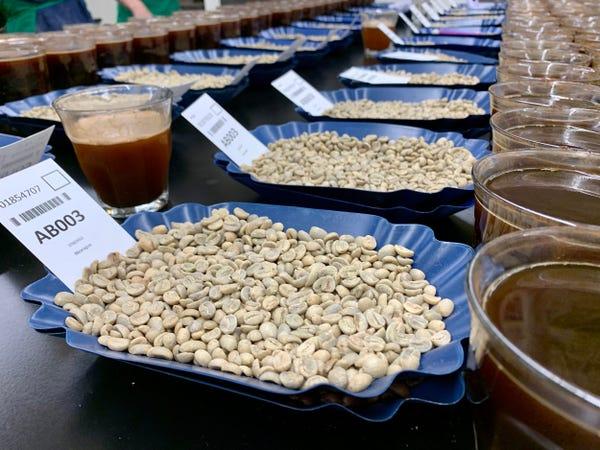
Visual inspection is a useful first step, particularly when evaluating green coffee.
Look for reasonably consistent bean size and color, along with visible defects, foreign materials, insect damage, or signs of improper storage.
For roasted coffee, observe the color distribution and check whether the beans appear reasonably uniform for the intended roast profile.
Appearance should not be treated as the sole indicator of quality. Some differences are natural, depending on variety, processing, and origin. Visual inspection works best when combined with aroma, tasting, and other relevant quality checks.
Step 3: Evaluate Aroma and Flavor
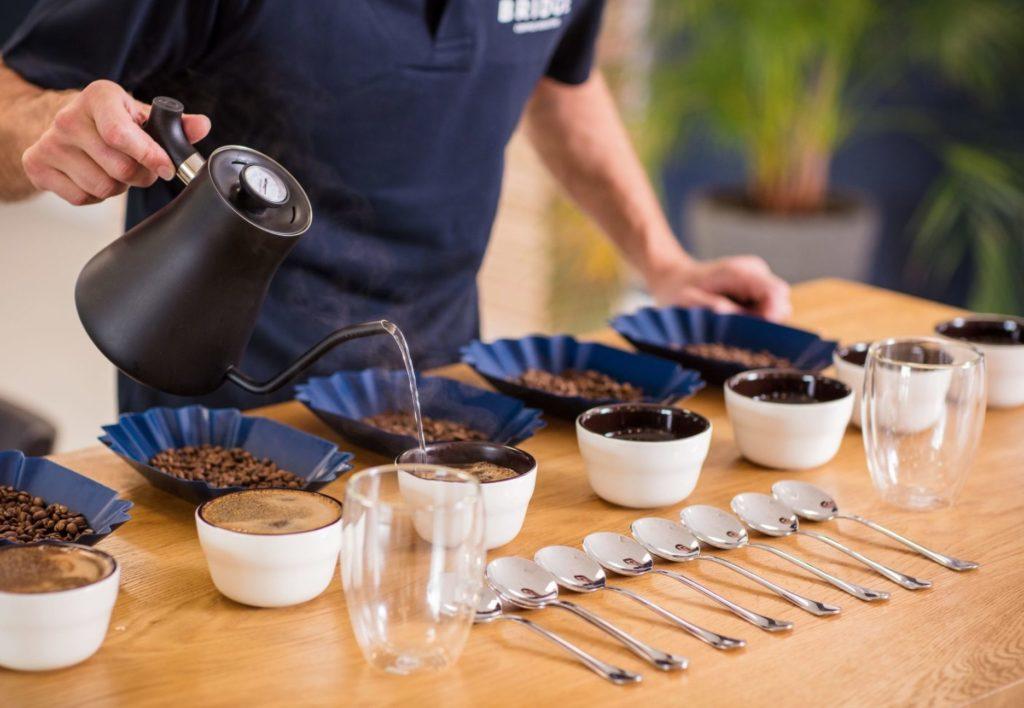
Aroma and flavor help buyers determine whether a coffee suits their intended market.
When tasting samples, consider the following characteristics:
Aroma: Notice the fragrance of the dry grounds and the aroma after adding hot water. Look for pleasant, recognizable notes and any unwanted odors.
Acidity: Assess whether the acidity feels bright, gentle, or muted. The preferred level depends on the product and target customer.
Sweetness: Look for impressions such as caramel, ripe fruit, honey, or chocolate. These are sensory descriptions rather than ingredients added to the coffee.
Body: Evaluate the weight and texture of the coffee in the mouth, from light and delicate to rich and full.
Aftertaste: Notice how the flavor develops after swallowing and whether the finish is clean, balanced, and pleasant.
Overall balance: Consider how the characteristics work together rather than focusing on a single tasting note.
A coffee intended for espresso with milk may need a different balance from one designed for pour-over or black coffee.
Step 4: Use the Same Testing Method for Every Sample
One of the most common mistakes in sample evaluation is comparing coffees under different conditions.
To make the results more meaningful, keep the following factors consistent:
-
Coffee-to-water ratio
-
Water quality and temperature
-
Grind size
-
Brewing equipment
-
Brewing time
-
Resting time after roasting, where applicable
For green coffee buyers, sample roasting is also important. Different roast profiles can influence the perceived sweetness, acidity, body, and aroma of the same coffee.
For roasted coffee buyers, test the products using the brewing methods most relevant to the final customer.
A standardized approach makes it easier to identify genuine differences between samples.
Step 5: Compare Samples Against Your Business Needs
The best sample is not necessarily the most expensive or the one with the most complex flavor.
Instead, evaluate each coffee against its intended application.
For example:
Cafés: Consider customer preferences, espresso performance, milk compatibility, and consistency across daily service.
Coffee roasters: Assess roast behavior, flavor development, and whether the coffee can deliver the desired profile.
Distributors and importers: Focus on product specifications, supply availability, quality expectations, packaging, and commercial feasibility.
Private-label brands: Evaluate whether the coffee matches the brand's positioning, target price, preferred flavor profile, and packaging requirements.
For a business offering several products, it may be useful to select different coffees for different purposes rather than expecting one coffee to meet every requirement.
Step 6: Request a Larger Trial Before Scaling Up
A small sample can help identify promising products, but it cannot always predict the performance of a commercial order.
Before confirming a large purchase, buyers may consider requesting a larger trial quantity or conducting a production test.
This is particularly useful when evaluating:
-
Espresso blends
-
Products requiring a specific roast profile
-
Coffee intended for retail packaging
-
Ground coffee or drip-bag applications
-
Private-label products with defined sensory requirements
During the trial, record any differences in flavor, roasting behavior, preparation, and product performance.
If the trial meets expectations, document the approved specifications and sample reference so both parties have a clearer basis for future orders.
Step 7: Discuss Commercial Terms Before Ordering
Once a sample has been approved, buyers should confirm the commercial details with the supplier.
These may include minimum order quantity (MOQ), price, packaging format, production lead time, payment terms, shipping arrangements, and required export documents.
Buyers should also clarify which specifications are guaranteed and which characteristics may naturally vary between harvests or production batches.
For international orders, confirm the agreed Incoterm, shipment destination, documentation requirements, and responsibility for freight and insurance.
Clear communication at this stage helps prevent misunderstandings after the order is confirmed.
A Simple Coffee Sample Evaluation Checklist
Before placing a wholesale order, ask yourself:
-
Does the coffee match the agreed specifications?
-
Is the aroma clean and appropriate for the product?
-
Does the flavor profile suit the target customer?
-
Has the sample been tested using consistent conditions?
-
Has the coffee been tested in its intended brewing or production application?
-
Have the supplier's MOQ, pricing, and lead time been confirmed?
-
Are packaging, shipment terms, and documentation clear?
-
Is there an agreed reference sample or quality specification for the order?
If important questions remain unanswered, clarify them with the supplier before committing to a larger quantity.
Start Your Coffee Sourcing Journey with Cầu Đất Bean
Selecting the right coffee starts with a clear understanding of your business needs and a careful evaluation of the available samples.
Cầu Đất Bean supplies Vietnamese coffee from highland growing regions, including Cầu Đất Arabica and Robusta selections. Depending on product availability and requirements, buyers can discuss different varieties, processing methods, roast profiles, and wholesale formats.
Whether you are a roaster, café owner, distributor, or private-label brand, our team can help you explore suitable coffee options for your business.
Contact us to discuss your requirements and sample availability.
CẦU ĐẤT BEAN
Showroom: 82B Trương Công Định, Đà Lạt, Lâm Đồng, Vietnam
Email: caudatbean@gmail.com
Phone / WhatsApp: +84 926 915 849
Website: https://caudatcoffee.com.vn
Try before you buy.


 Group4, Cau Dat Village, Xuan Truong commune, Da Lat City, Lam Dong Province, Vietnam
 +84 783 472 234
 caudatbean@gmail.com
 www.caudatbean.com