
Soil pH in Coffee Farming: Why Soil Acidity Matters for Coffee Plants
Healthy coffee plants begin with healthy soil. While farmers often focus on rainfall, sunlight, fertilizers, and harvesting, one important factor can easily be overlooked: soil pH.
Soil pH influences how nutrients behave in the soil and how effectively coffee plants can absorb them. Even when fertilizers are applied regularly, unsuitable soil conditions may prevent plants from using available nutrients efficiently.
For coffee producers, understanding soil acidity is an important part of maintaining productive farms and supporting long-term soil health.
In this article, Cầu Đất Bean explores what soil pH means, why it matters in coffee cultivation, and how farmers can monitor and manage soil acidity.
1. What Is Soil pH?
Soil pH is a measurement of how acidic or alkaline the soil is.
The pH scale generally ranges from 0 to 14:
-
Below 7: Acidic soil
-
Around 7: Neutral soil
-
Above 7: Alkaline soil
For coffee cultivation, slightly acidic soil is generally considered suitable. However, the ideal range can vary depending on coffee species, soil type, local climate, and agricultural recommendations.
Soil pH is not simply a number on a laboratory report. It provides useful information about the chemical environment surrounding coffee roots.
2. Why Does Soil pH Matter for Coffee Plants?
Coffee plants require several nutrients to develop healthy roots, leaves, flowers, and cherries.
These nutrients include nitrogen, phosphorus, potassium, calcium, magnesium, and various micronutrients.
Soil pH affects the availability of many of these elements.
Nutrient Availability
When soil becomes too acidic or too alkaline, certain nutrients may become less available to plants.
For example, phosphorus can become less available in strongly acidic soils because it may bind with iron and aluminum compounds.
This means that applying more fertilizer does not necessarily solve a nutrient problem if the underlying soil conditions remain unsuitable.
Root Development
Soil acidity can increase the availability of aluminum in forms that may become toxic to plant roots.
Excessive aluminum can restrict root growth and make it more difficult for coffee plants to absorb water and nutrients.
Soil Biological Activity
Soil contains microorganisms that contribute to organic matter decomposition and nutrient cycling.
Soil acidity can influence microbial communities and the biological processes that support soil fertility.
Maintaining suitable soil conditions therefore supports more than just the coffee plant itself.
3. What Is the Suitable Soil pH for Coffee?
Coffee generally performs well in slightly acidic soil, although recommendations differ between regions and production systems.
A commonly used reference range for coffee-growing soils is approximately pH 5.0–6.5. Some agricultural recommendations identify a narrower target depending on the coffee species and local soil conditions.
For example, guidance for coffee cultivation in Laos recommends a soil pH of approximately 5–6, while other agricultural sources provide somewhat different ranges.
This is why farmers should not apply a single pH target to every coffee farm without considering local conditions.
The most useful approach is to test the soil and interpret the results using recommendations suitable for the specific growing region.
4. What Causes Coffee Soil to Become Too Acidic?
Soil acidification can develop gradually through natural processes and agricultural activities.
Several factors may contribute to increasing soil acidity.
Heavy Rainfall and Nutrient Leaching
In areas with high rainfall, water moving through the soil can carry away important nutrients, including calcium and magnesium.
Over time, this may contribute to increased soil acidity.
Long-Term Fertilizer Use
Some nitrogen fertilizers can contribute to soil acidification when used repeatedly, especially without appropriate soil monitoring and nutrient management.
The effect depends on the fertilizer type, application rate, soil characteristics, and farming practices.
Intensive Coffee Cultivation
Long-term intensive cultivation can affect soil chemical properties, particularly when nutrient replacement and organic matter management are insufficient.
Research in Vietnam has highlighted soil acidification as a concern in intensively cultivated coffee areas in the Central Highlands.
Insufficient Soil Management
When farmers do not regularly monitor soil conditions, changes in pH may remain unnoticed until plant growth or nutrient availability is affected.
5. How Can Farmers Identify Soil Acidity Problems?
Visual observations can provide clues about plant health, but they cannot reliably determine soil pH.
Some symptoms of poor soil conditions may include:
-
Slow or uneven plant growth.
-
Weak root development.
-
Nutrient deficiency symptoms on leaves.
-
Reduced plant vigor.
-
Poor response to fertilizer applications.
However, these symptoms can also result from drought, pests, diseases, or other nutrient deficiencies.
A soil test is therefore the most reliable way to understand soil acidity.
Farmers should consider testing both pH and other important soil properties rather than relying on visual observations alone.
6. How to Test Soil pH in a Coffee Farm
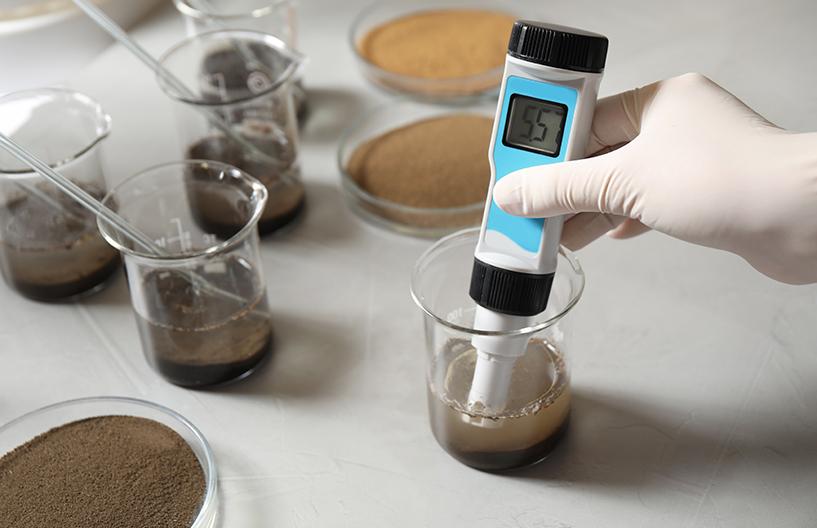
Regular soil testing helps farmers make better decisions about fertilization and soil improvement.
A practical soil sampling process includes several steps.
Step 1: Divide the Farm into Sampling Areas
Different parts of a coffee farm may have different soil conditions.
Separate areas with noticeably different slopes, soil types, plant conditions, or management histories.
Step 2: Collect Soil Samples
Collect small samples from several representative points within each area.
Avoid unusual locations such as fertilizer piles, drainage channels, or spots where organic materials have accumulated.
Step 3: Combine and Mix Samples
Combine the collected subsamples from the same management area into a representative composite sample.
Mix thoroughly before sending the sample for analysis.
Step 4: Send Samples to a Laboratory
A qualified agricultural laboratory can measure soil pH and assess other important properties.
Depending on the farm's needs, the analysis may include organic matter, nitrogen, phosphorus, potassium, calcium, magnesium, and exchangeable aluminum.
Step 5: Interpret the Results
Use the laboratory results to develop a soil management plan appropriate for the farm.
A soil test is most valuable when its results are used to guide actual farming decisions.
7. How Can Farmers Improve Acidic Coffee Soil?
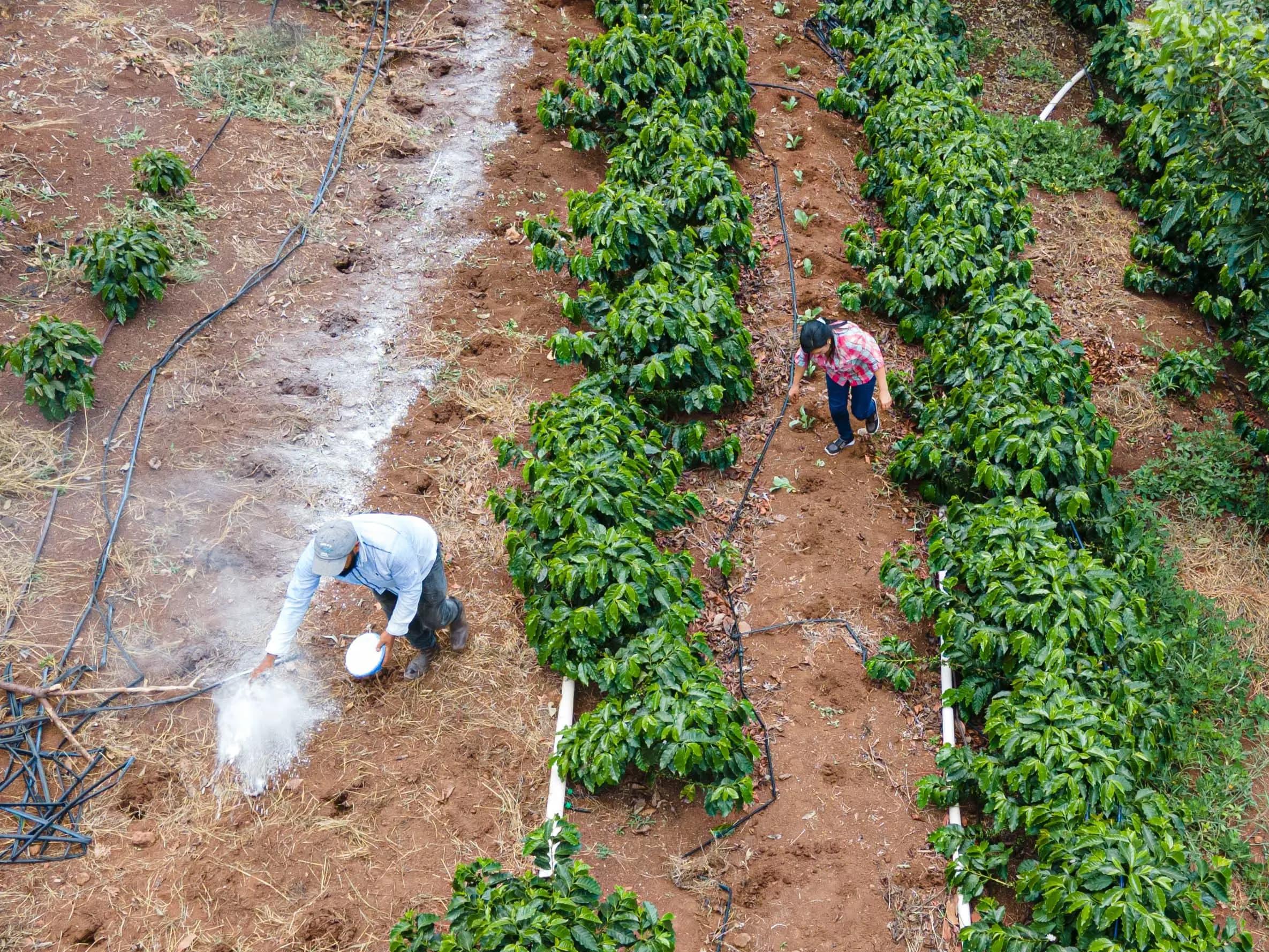
If soil testing identifies excessive acidity, farmers may consider several soil management practices.
Agricultural Lime
Agricultural lime is commonly used to reduce soil acidity.
The appropriate material and application rate depend on soil pH, soil texture, exchangeable acidity, and other laboratory measurements.
Dolomitic Lime
Dolomitic lime contains calcium and magnesium and may be useful when acidic soils also require these nutrients.
However, it should be selected based on the soil analysis rather than applied automatically.
Organic Matter Management
Compost, suitable organic materials, and crop residues can contribute to soil structure and nutrient cycling.
Maintaining organic matter is an important part of long-term soil management.
Balanced Fertilization
Fertilizer programs should reflect the actual nutritional needs of coffee plants and the condition of the soil.
Avoid applying fertilizers repeatedly without monitoring soil properties.
Regular Soil Monitoring
Soil conditions change over time. Regular testing helps farmers evaluate whether management practices are improving soil health.
Importantly, lime and other soil amendments should be applied according to professional recommendations. Excessive applications can create new nutrient imbalances.
8. Why Soil pH Management Matters in Vietnamese Coffee Farming
Vietnam has diverse coffee-growing regions, each with different soil characteristics, rainfall patterns, and cultivation conditions.
In the Central Highlands, intensive coffee cultivation and high rainfall can contribute to soil acidification over time.
Research conducted in Vietnamese coffee-growing areas has identified low soil pH and related nutrient limitations as important agricultural challenges.
For highland Arabica production, soil management also needs to account for local elevation, temperature, rainfall, drainage, and the characteristics of the growing area.
Healthy soil supports the development of coffee plants, but soil pH alone does not determine coffee quality.
Variety, farm management, harvesting maturity, processing, drying, storage, and roasting all contribute to the final cup.
Conclusion: Healthy Soil Is the Foundation of Coffee Production
Soil pH is an important indicator of soil conditions and nutrient availability in coffee farming.
When soil becomes too acidic or alkaline, coffee plants may struggle to absorb essential nutrients, even when fertilizers are applied.
By testing soil regularly, managing acidity, maintaining organic matter, and applying balanced fertilizers, farmers can make more informed decisions about long-term farm productivity.
Good coffee begins with careful management at every stage, including the soil beneath the coffee trees.
At Cầu Đất Bean, we believe that understanding coffee means appreciating the growing conditions, agricultural knowledge, and care behind every harvest.
Discover Vietnamese Coffee with Cầu Đất Bean
Explore Vietnamese Arabica and Robusta coffee from the highlands of Cầu Đất, Đà Lạt.
Cầu Đất Bean supplies green coffee beans and roasted coffee for roasters, cafés, distributors, and international buyers.
Contact our team to discuss available products, processing methods, specifications, and sample requests.
CẦU ĐẤT BEAN
Showroom: 82B Trương Công Định, Đà Lạt, Lâm Đồng, Vietnam
Email: caudatbean@gmail.com
Phone / WhatsApp: +84 926 915 849
Website: https://caudatcoffee.com.vn
Try before you buy.


 Group4, Cau Dat Village, Xuan Truong commune, Da Lat City, Lam Dong Province, Vietnam
 +84 783 472 234
 caudatbean@gmail.com
 www.caudatbean.com