
What Is Coffee Bean Color? What Green Coffee Color Can Tell You
When buying green coffee, one of the first things you may notice is the color of the beans.
Green coffee can appear pale green, yellowish, blue-green, or even slightly brown depending on the coffee's origin, processing method, moisture content, storage conditions, and age.
But does coffee bean color tell you whether the coffee is good or bad?
Not necessarily.
Color can provide useful clues when evaluating green coffee, but it should never be used as the only measure of quality. To understand a coffee properly, buyers and roasters should consider color together with moisture, density, screen size, defects, processing method, aroma, and cup quality.
What Color Should Green Coffee Beans Be?
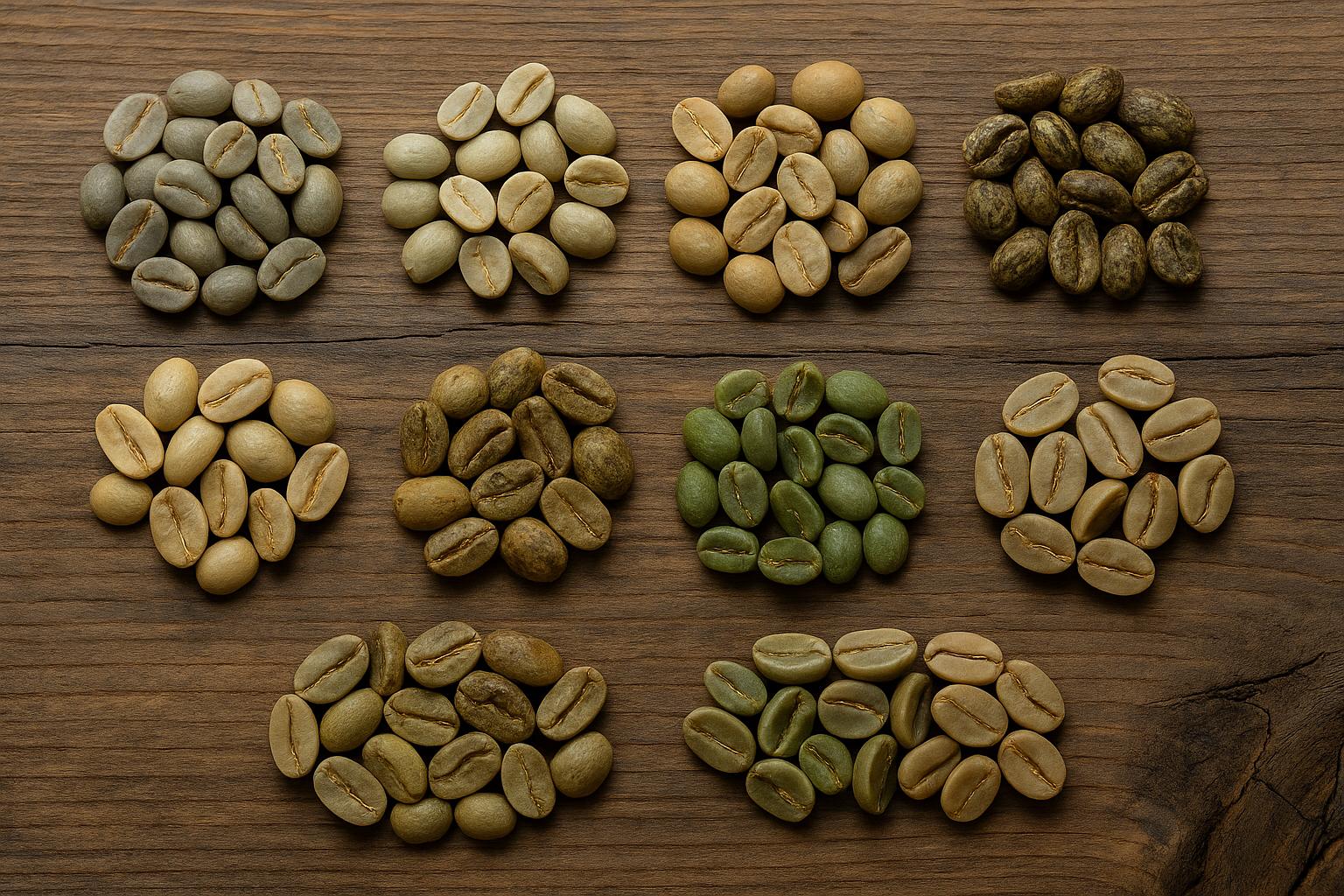
Despite being called “green coffee,” green beans are not always bright green.
Depending on the coffee, you may see colors such as:
-
Blue-green
-
Pale green
-
Yellow-green
-
Light beige
-
Yellowish
-
Slightly brown
The appearance can vary naturally between different coffees.
Freshly processed and well-preserved green coffee often has a relatively clean and consistent appearance. However, the exact color depends on the coffee variety, processing method, drying, storage, and age.
This is why there is no single “perfect” green coffee color.
Why Does Green Coffee Color Vary?
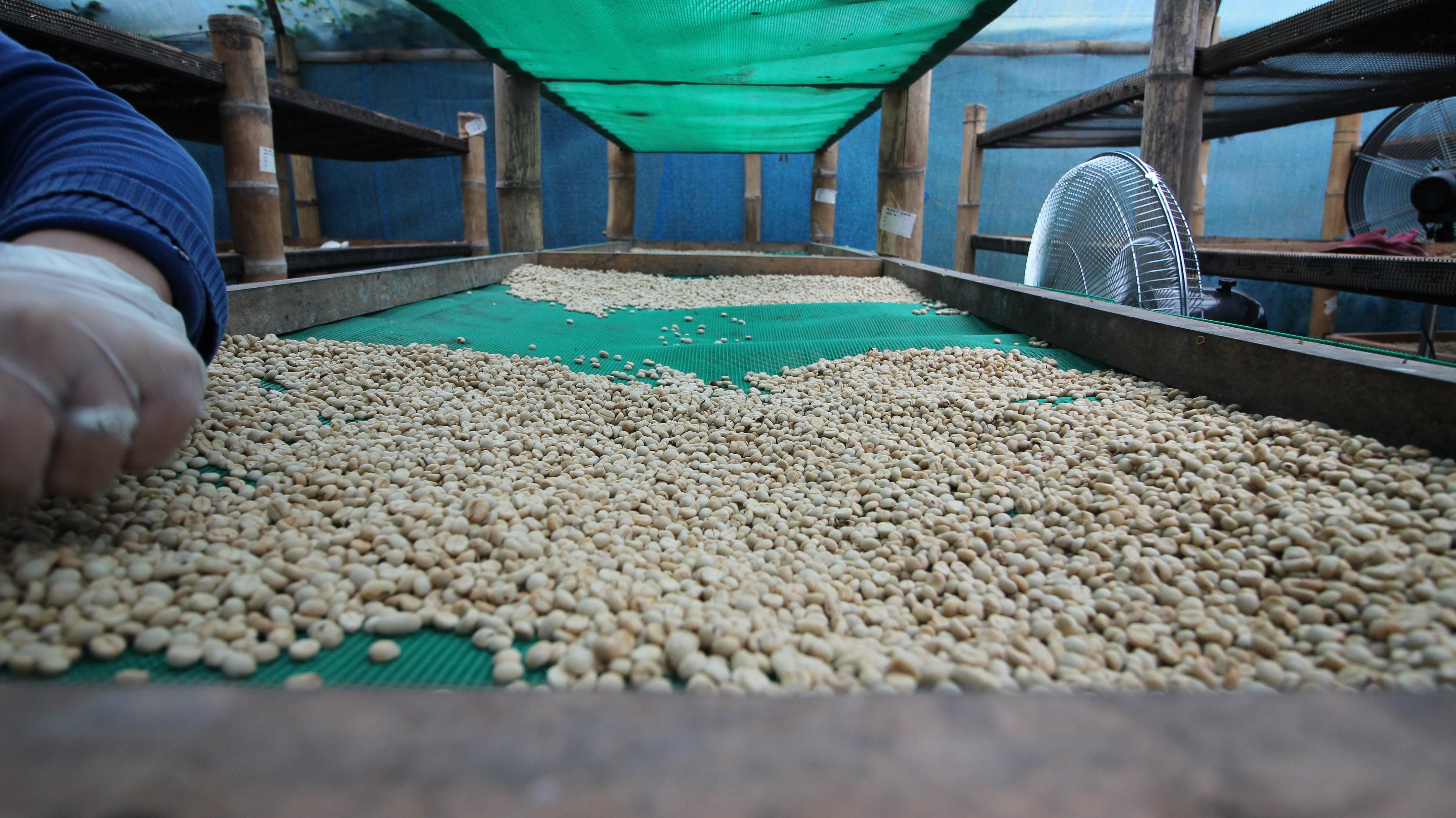
Several factors can influence the appearance of green coffee beans.
1. Coffee Variety
Different coffee varieties can naturally have slightly different colors and appearances.
Arabica varieties such as Typica, Bourbon, Yellow Bourbon, and Catimor may not look exactly the same even when processed under similar conditions.
The physical characteristics of the bean are influenced by genetics as well as growing conditions.
2. Processing Method
Processing has an important influence on the appearance of green coffee.
Washed coffee is often associated with a cleaner and more uniform appearance because much of the fruit material is removed before drying.
Natural coffee is dried with the coffee fruit still around the seed, which can contribute to a different visual appearance.
Honey processing sits between these approaches, with some mucilage remaining during drying.
The color of the finished green bean therefore needs to be considered together with the processing method.
3. Moisture Content
Moisture is another important factor.
Green coffee that has been properly dried and stored should remain within an appropriate moisture range for its intended use.
Changes in moisture can affect the physical condition and appearance of green coffee.
For professional coffee buyers, moisture should always be measured rather than judged only by looking at the beans.
4. Storage and Age
Green coffee changes over time.
Exposure to humidity, heat, oxygen, light, or unsuitable storage conditions can affect the coffee's physical appearance and quality.
Older green coffee may gradually lose some of the visual characteristics associated with fresher coffee.
However, color alone cannot determine exactly how old a coffee is.
Good storage conditions are therefore essential for maintaining green coffee quality.
Does Darker Green Coffee Mean Lower Quality?
Not necessarily.
A darker or more yellowish appearance does not automatically mean that the coffee is defective.
The appearance of green coffee can be influenced by variety, processing, moisture, storage, and age.
Instead of asking whether a bean is “green enough,” professional buyers should look at the entire quality picture.
For example, a coffee may have an attractive appearance but still contain defects or perform poorly in the cup.
On the other hand, a coffee with a slightly different color may produce an excellent cup.
This is why visual inspection is only one part of green coffee evaluation.
What Should Coffee Buyers Look at Besides Color?
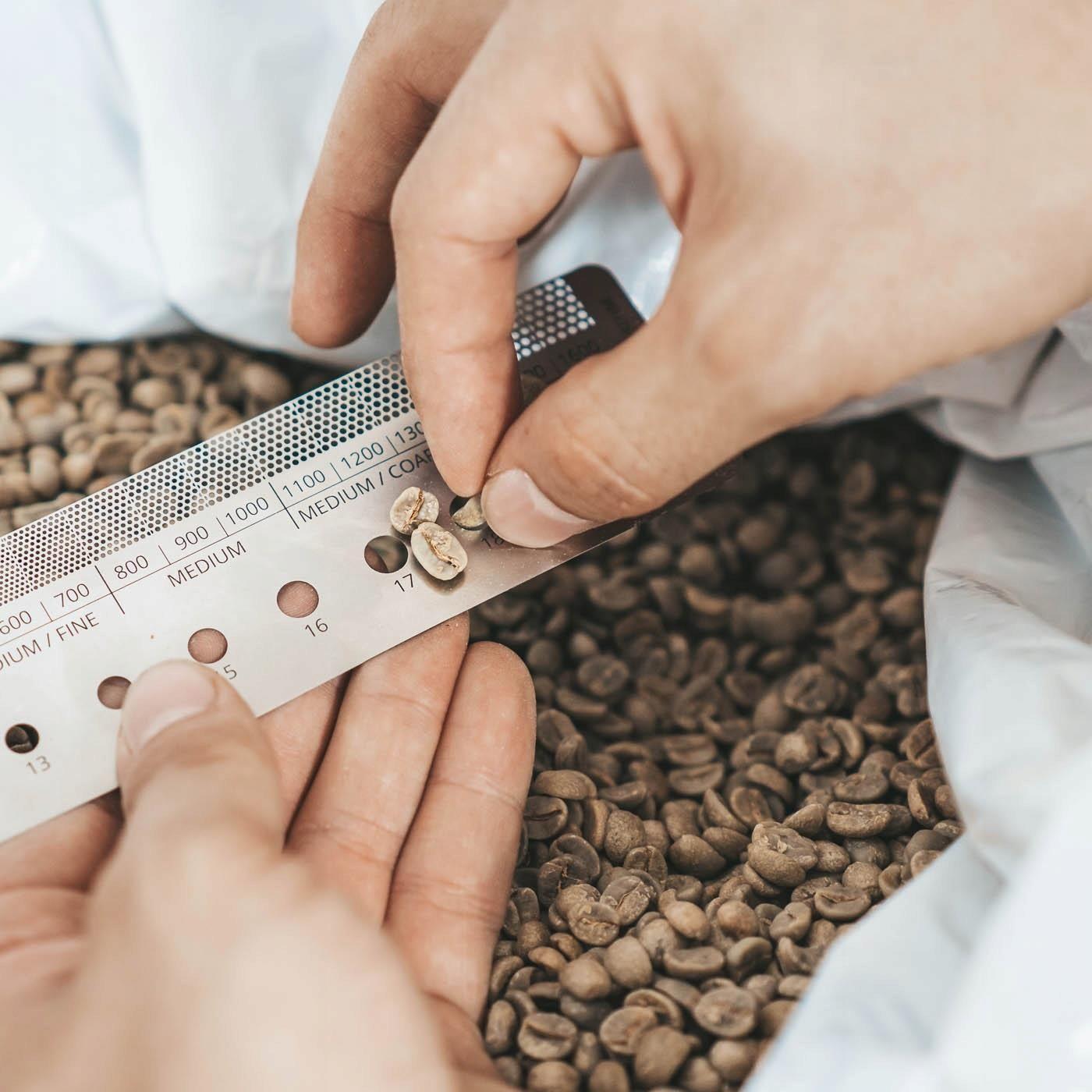
When evaluating green coffee, color is more useful when combined with other physical and sensory information.
Important factors include:
Moisture
Moisture affects storage stability and roasting behavior.
Screen Size
Screen size provides information about bean dimensions and helps buyers understand the physical distribution of a lot.
Defects
Primary and secondary defects can have a significant impact on coffee quality.
Density
Bean density can influence heat transfer and roasting behavior.
Aroma
Fresh green coffee should have an appropriate aroma for its processing and origin. Unusual odors may indicate storage or quality problems.
Cup Quality
Ultimately, the cup remains one of the most important ways to understand coffee.
A green coffee sample can look attractive, but roasting and cupping reveal much more about its actual sensory potential.
How Do Roasters Use Green Coffee Color?
Roasters may inspect green coffee visually before roasting to understand the condition and consistency of a lot.
After roasting, bean color becomes even more useful because roast development changes the appearance of the coffee.
Green coffee gradually changes color during roasting as the bean dries, expands, and undergoes a series of chemical reactions.
However, experienced roasters do not rely on color alone.
They also monitor:
-
Bean temperature
-
Rate of rise
-
Time
-
Roast development
-
Aroma
-
Crack stages
-
Weight loss
-
Final cup quality
This combination helps roasters develop a roast profile that matches the characteristics of the coffee.
Green Coffee Color and Vietnamese Arabica
Vietnamese Arabica from the highlands of Da Lat can show different physical characteristics depending on variety and processing.
Cau Dat is one of Vietnam's recognized Arabica-growing areas, with a long history of coffee cultivation in the Da Lat highlands.
At Cau Dat Bean, we work with selected Vietnamese coffees including Arabica from the Cau Dat region.
Different lots may vary in variety, processing method, screen size, moisture, and physical appearance.
For buyers, understanding these differences is important when comparing green coffee samples and selecting a coffee for roasting or export.
Can You Judge Green Coffee Quality by Looking at It?
Only to a certain extent.
Visual inspection is useful for identifying obvious differences, inconsistencies, foreign material, and visible defects.
But appearance cannot tell you everything.
Two green coffee samples can look similar but taste completely different after roasting.
Likewise, a coffee that looks slightly different from another lot may still deliver excellent cup quality.
A better approach is to combine:
Visual inspection + physical analysis + roasting + cupping.
This gives buyers and roasters a much clearer understanding of the coffee.
Why Green Coffee Evaluation Matters
For coffee buyers, especially those sourcing green coffee internationally, evaluating a sample before placing a larger order is an important step.
A sample allows you to examine:
-
Physical appearance
-
Bean size
-
Moisture
-
Defects
-
Aroma
-
Roast behavior
-
Cup profile
This helps buyers compare different lots and choose coffee that matches their quality requirements and target market.
At Cau Dat Bean, we believe that good coffee sourcing begins with understanding the bean before it reaches the roaster.
Explore Vietnamese Green Coffee with Cau Dat Bean
Cau Dat Bean supplies selected Vietnamese coffee from the Da Lat highlands, including Arabica from the Cau Dat growing region.
Our coffees can vary by variety, processing method, screen size, and roast profile, allowing buyers to explore different expressions of Vietnamese coffee.
If you are looking for Vietnamese green coffee for roasting, wholesale, or export, contact us to discuss available coffee lots and samples.
Cau Dat Bean Showroom
📍 82B Trương Công Định, phường Xuân Hương - Đà Lạt, Lâm Đồng, Việt Nam
📞 0926 915 849
📧 caudatbean@gmail.com
Frequently Asked Questions
What color should green coffee beans be?
Green coffee can range from blue-green and pale green to yellow-green or beige. There is no single color that defines good green coffee.
Does green coffee color indicate quality?
Color can provide useful information, but it cannot determine quality by itself. Moisture, defects, density, processing, storage, and cup quality should also be evaluated.
Why does green coffee turn yellow?
Green coffee may develop a more yellowish appearance due to factors such as processing, age, moisture changes, or storage conditions.
Is darker green coffee bad?
Not necessarily. A darker or yellowish appearance does not automatically indicate poor quality. The coffee should be evaluated using multiple physical and sensory factors.
How should buyers evaluate green coffee?
A good evaluation should combine visual inspection, moisture measurement, physical grading, sample roasting, and cupping.


 Group4, Cau Dat Village, Xuan Truong commune, Da Lat City, Lam Dong Province, Vietnam
 +84 783 472 234
 caudatbean@gmail.com
  www.caudatbean.com