
What Is a Coffee Quaker? Understanding Unevenly Ripe Coffee Beans
When coffee beans are roasted, most beans gradually develop a rich brown color.
But sometimes, one or two beans remain noticeably pale compared with the rest of the batch.
These unusual beans are commonly called coffee quakers.
Quakers are associated with coffee cherries that did not develop normally before harvest. They may be difficult to identify when the coffee is still green, but they can become much more obvious after roasting.
For coffee buyers, roasters, and quality-control teams, understanding quakers can provide useful insight into coffee harvesting, sorting, and roasting.
What Is a Coffee Quaker?
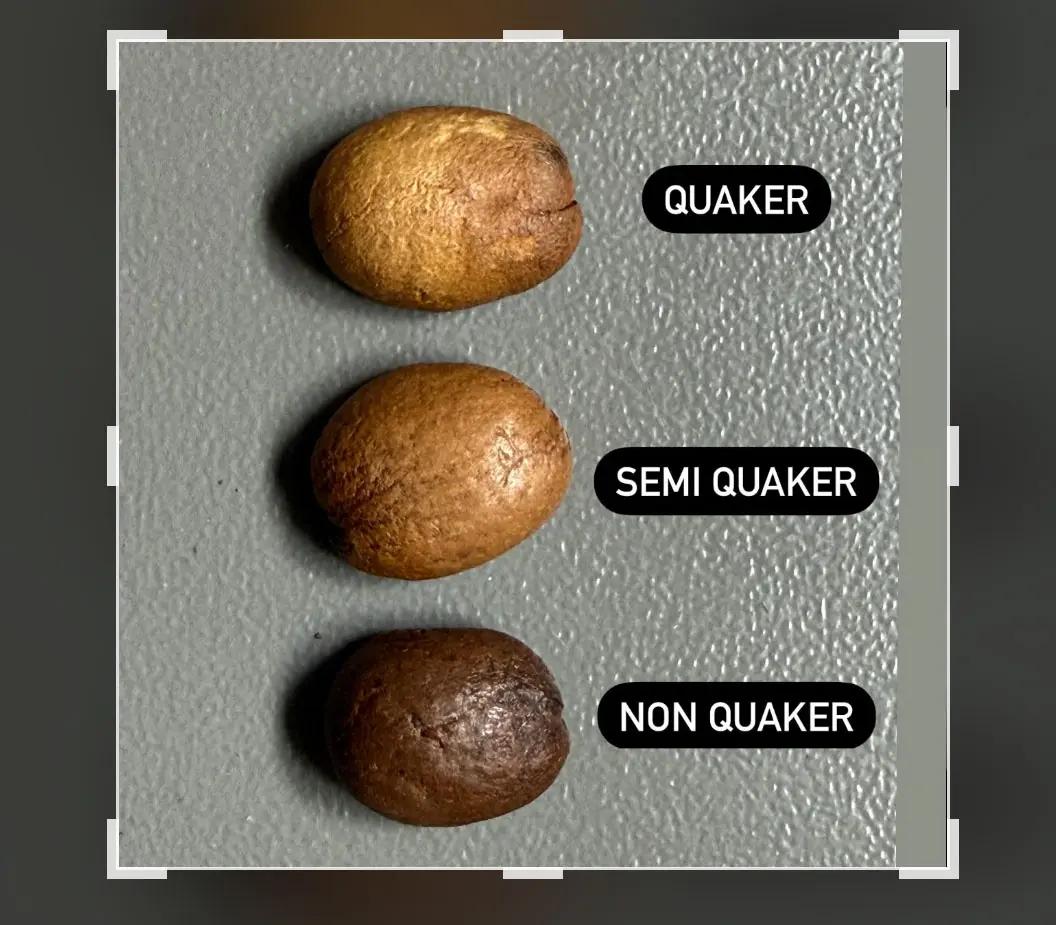
A coffee quaker is a coffee bean that remains unusually light in color after roasting compared with the surrounding beans.
A typical roasted coffee batch develops from green to shades of brown as roasting progresses.
A quaker may remain:
-
Pale
-
Yellowish
-
Light brown
-
Unevenly colored
The difference can be especially obvious when the beans are roasted together.
However, a quaker is not simply an under-roasted bean.
The reason it remains pale is generally related to the condition and development of the coffee before roasting.
Why Do Quakers Happen?
Quakers are commonly associated with coffee cherries that were not fully developed or ripe when harvested.
Coffee cherries go through a long development process before they are ready for harvest.
As the cherry matures, changes take place in:
-
Sugars
-
Acids
-
Moisture
-
Organic compounds
-
Bean development
When a coffee cherry does not mature properly, the seed inside may also develop differently.
This can affect the bean's behavior during roasting.
As a result, a bean that looks relatively normal when green may roast differently from the rest of the batch.
Are Quakers Caused by Under-Roasting?
Not necessarily.
This is an important distinction.
An under-roasted bean is a bean that has simply not received enough heat or roast development.
A quaker may remain pale even when the surrounding beans have been roasted correctly.
If you roast the entire batch longer just to make one pale bean darker, you could overdevelop the rest of the coffee.
For this reason, roasters should not automatically change the roast profile simply because a few pale beans appear.
What Do Quakers Look Like?
Before roasting, quakers can be difficult to identify.
They may not look dramatically different from other green coffee beans.
After roasting, however, the difference can become much clearer.
A quaker may appear:
-
Much lighter than the surrounding beans
-
Pale yellow or tan
-
Dull rather than evenly browned
-
Visibly different in surface texture
This is why post-roast inspection can sometimes reveal issues that were not obvious during green-bean inspection.
Do Quakers Affect Coffee Flavor?
They can.
A quaker may contribute undesirable sensory characteristics to a brewed coffee, particularly when present in larger quantities.
Depending on the coffee and the number of quakers, they may contribute notes described by tasters as:
-
Peanut-like
-
Grainy
-
Papery
-
Woody
-
Astringent
-
Unpleasantly dry
The exact sensory effect can vary.
One quaker in a large batch may have little noticeable impact.
A larger number can become much more obvious in the cup.
Does One Quaker Ruin a Batch of Coffee?
No.
Coffee is an agricultural product, so some natural variation is expected.
The presence of an occasional quaker does not automatically mean that an entire coffee lot is poor quality.
What matters is the overall condition of the lot, including:
-
Number of defects
-
Green coffee quality
-
Sorting
-
Processing
-
Moisture
-
Density
-
Cup quality
Professional coffee evaluation looks at the complete sample rather than judging a lot from a single bean.
Can Quakers Be Removed?
Yes.
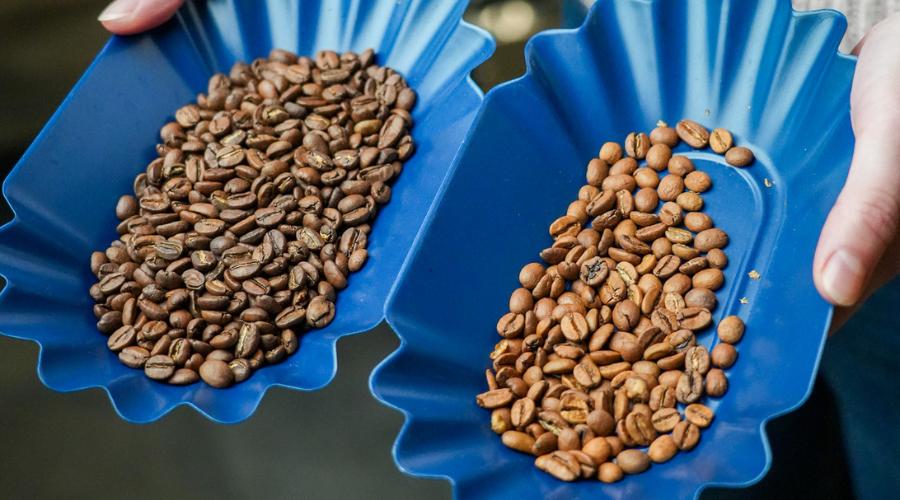
Depending on the scale of production, quakers can be identified and removed through sorting.
Sorting can happen at different stages:
Before Roasting
Green coffee can be inspected and sorted for visible defects and foreign material.
However, quakers can be difficult to identify before roasting because their appearance may not be significantly different from normal green beans.
After Roasting
Once the beans have been roasted, pale quakers are usually easier to spot.
This makes post-roast sorting one possible way to reduce their presence in the final product.
For specialty coffee, careful sorting can help improve consistency.
Why Is Harvesting Important?
One of the most important factors behind quakers is coffee cherry maturity.
Coffee cherries do not all mature at exactly the same time.
On the same coffee tree, you may find:
-
Green cherries
-
Yellow cherries
-
Red ripe cherries
-
Overripe cherries
Selective harvesting focuses on picking cherries at an appropriate stage of maturity.
This can help reduce the number of immature cherries entering the processing system.
Harvesting therefore has a direct connection with green coffee quality.
Why Does Selective Picking Matter?
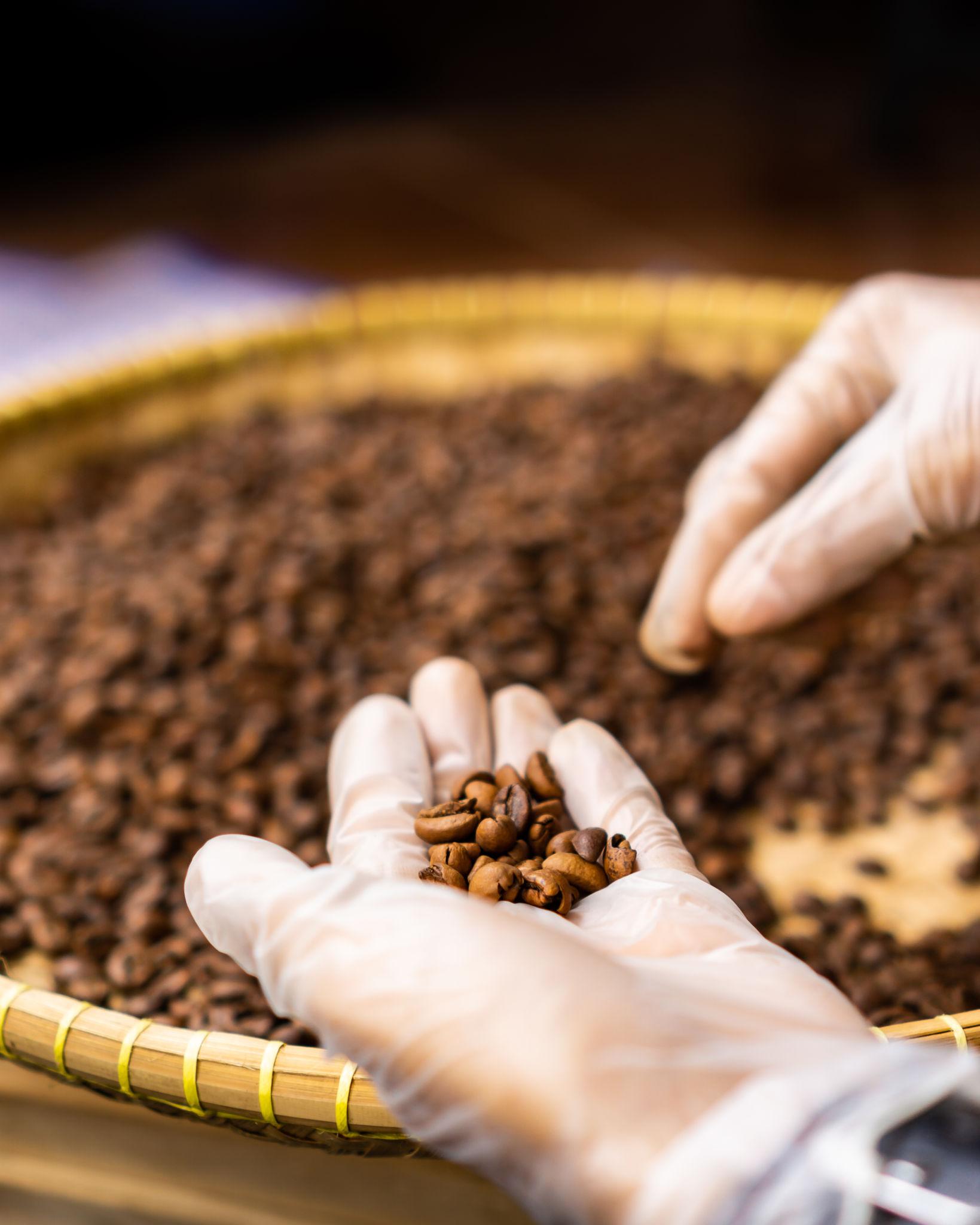
When coffee cherries are harvested at the right maturity, the seeds have had more time to develop.
This can support better consistency in the resulting green coffee.
For high-quality Arabica, selective harvesting can be particularly important because producers are working to preserve the characteristics of carefully cultivated lots.
However, selective picking is only one part of quality control.
Processing, drying, storage, sorting, and roasting also influence the final result.
Can Processing Cause Quakers?
Quakers are primarily associated with the development and maturity of the coffee cherry, but processing and post-harvest handling can influence the final physical condition of green coffee.
This is why quality control should consider the entire chain:
Harvest → Processing → Drying → Sorting → Storage → Roasting
Each stage contributes to the final quality of the coffee.
A strong quality-control system does not depend on a single step.
Quakers and Green Coffee Quality
For green coffee buyers, quakers are a reminder that visual inspection is useful but not enough.
A green coffee sample may look clean and consistent, but the real test comes when it is roasted and cupped.
A complete evaluation can include:
-
Physical inspection
-
Moisture measurement
-
Screen size
-
Density
-
Defect evaluation
-
Sample roasting
-
Color assessment
-
Cupping
This combination gives buyers a much better understanding of the coffee.
Can Quakers Be Seen During Cupping?
Yes.
During sample roasting and cupping, roasters may notice pale beans after roasting.
If quakers are present in meaningful numbers, their sensory impact may also become noticeable in the cup.
This is why sample roasting is such an important part of green coffee sourcing.
A specification sheet can tell you a lot about a coffee.
But the sample roast shows you how that coffee actually behaves.
Quakers and Roast Consistency
Coffee roasters aim for consistency.
When most beans in a batch have similar physical characteristics, they are more likely to respond to heat in a relatively predictable way.
Quakers behave differently because their composition and development can differ from fully mature beans.
This can create additional variation within the roast.
For roasters, reducing unnecessary variation before roasting can make it easier to achieve a consistent result.
What Is the Difference Between a Quaker and a Defective Bean?
Not every pale roasted bean should automatically be classified in exactly the same way.
Coffee defects can occur for many different reasons.
Examples include:
-
Immature beans
-
Insect-damaged beans
-
Black beans
-
Sour beans
-
Broken beans
-
Mold-affected beans
-
Foreign material
Quakers are specifically associated with beans that remain unusually pale after roasting and are commonly linked to immature or poorly developed coffee cherries.
The exact classification and grading criteria can vary depending on the quality system being used.
Quakers in Specialty Coffee
Specialty coffee places strong emphasis on cup quality and consistency.
That means producers, exporters, buyers, and roasters all have an interest in reducing defects that can negatively affect the final cup.
However, the goal is not to expect every agricultural product to be perfectly identical.
Instead, quality control aims to produce lots with:
-
Good maturity
-
Consistent processing
-
Controlled defects
-
Stable physical characteristics
-
Strong cup quality
Quakers are one small part of this larger quality-control process.
Quakers and Vietnamese Coffee
Vietnam produces coffee across a wide range of growing regions, varieties, and processing styles.
For Vietnamese Arabica from highland areas such as Cau Dat, careful harvesting and post-harvest handling are important for maintaining quality.
Coffee lots can vary according to:
-
Variety
-
Elevation
-
Harvest timing
-
Processing method
-
Drying
-
Moisture
-
Sorting
For buyers sourcing Vietnamese green coffee, sample roasting and cupping remain important steps before making larger purchasing decisions.
Cau Dat Arabica and Quality Control
Cau Dat is one of the well-known Arabica-growing areas in the Da Lat highlands.
The region's high elevation and cool climate create favorable conditions for Arabica cultivation.
But origin alone does not guarantee a specific cup profile.
Every coffee lot still needs to be evaluated according to its actual physical and sensory characteristics.
At Cau Dat Bean, green coffee evaluation can include factors such as:
-
Variety
-
Processing method
-
Screen size
-
Moisture
-
Defects
-
Roast behavior
-
Cup profile
Understanding defects such as quakers is part of understanding the complete journey from coffee cherry to green coffee and finally to the roasted bean.
How Can Buyers Reduce the Risk of Defects?
For buyers sourcing green coffee, a practical approach is to evaluate a representative sample before confirming a larger order.
A simple process can include:
1. Inspect the green coffee
Look at color, size, defects, and foreign material.
2. Check specifications
Review moisture, screen size, variety, processing, and other available information.
3. Sample roast
Observe how the coffee develops during roasting.
4. Inspect the roasted beans
Look for uneven color and visible defects.
5. Cup the coffee
Evaluate aroma, flavor, acidity, sweetness, body, balance, and aftertaste.
This process connects physical quality with actual cup performance.
Final Thoughts
A coffee quaker may look like just one pale bean in a batch, but it can tell us something about the journey of coffee before roasting.
Quakers are commonly associated with immature or poorly developed coffee cherries and may become much easier to identify after roasting.
For coffee producers, careful harvesting and post-harvest handling can help support consistency.
For buyers and roasters, sample roasting and cupping provide an opportunity to evaluate how a coffee actually performs.
And for anyone interested in specialty coffee, quakers are a good reminder that the quality of a cup begins long before the coffee reaches the roaster.
At Cau Dat Bean, we believe that understanding the green bean is the first step toward understanding the coffee in the cup.
Frequently Asked Questions
What is a coffee quaker?
A coffee quaker is a roasted coffee bean that remains unusually pale compared with the other beans in the batch. It is commonly associated with immature or poorly developed coffee cherries.
Can you identify a quaker before roasting?
It can be difficult. Quakers may not look significantly different from normal green coffee beans before roasting and often become much easier to identify after roasting.
Does a quaker affect coffee flavor?
It can. In sufficient quantities, quakers may contribute undesirable flavors such as peanut-like, grainy, papery, woody, or dry characteristics.
Is one quaker a sign of bad coffee?
Not necessarily. An occasional quaker does not automatically mean that the entire coffee lot is poor quality.
Can quakers be removed?
Yes. Depending on the production process, quakers can be removed through sorting, particularly after roasting when they are easier to identify.
Why is selective harvesting important?
Selective harvesting helps producers collect coffee cherries at an appropriate stage of maturity, which can support better consistency in the resulting green coffee.
Explore Vietnamese Green Coffee with Cau Dat Bean
Looking for Vietnamese green coffee for roasting, wholesale, or export?
Cau Dat Bean supplies selected Vietnamese coffee, including Arabica from the highlands of Da Lat.
Cau Dat Bean Showroom
📍 82B Trương Công Định, Phường Xuân Hương, Đà Lạt, Lâm Đồng, Vietnam
📞 +84 926 915 849
📧 caudatbean@gmail.com
Try before you buy.


 Group4, Cau Dat Village, Xuan Truong commune, Da Lat City, Lam Dong Province, Vietnam
 +84 783 472 234
 caudatbean@gmail.com
  www.caudatbean.com