
What Is a Coffee Cupping Score? How Coffee Quality Is Evaluated
When buying specialty coffee, you may come across numbers such as 80, 85, 88, or 90 points.
But what do these numbers actually mean?
A coffee score is often used by roasters, green coffee buyers, producers, importers, and coffee professionals to communicate the results of a coffee evaluation.
However, a score is only one part of understanding a coffee.
To properly evaluate a green coffee, professionals also consider its physical characteristics, sensory profile, defects, origin, processing method, traceability, and suitability for a particular market.
So, how does coffee scoring work?
And what should buyers really look for when they receive a coffee score?
What Is a Coffee Cupping Score?
A coffee cupping score is a numerical representation of a taster's overall assessment of a coffee.
Traditionally, the specialty coffee industry has widely used a 100-point scale to communicate overall coffee quality.
The number is based on sensory evaluation rather than simply looking at the green beans.
During cupping, trained evaluators examine characteristics such as:
-
Aroma and fragrance
-
Flavor
-
Acidity
-
Sweetness
-
Mouthfeel or body
-
Aftertaste
-
Balance
-
Overall impression
-
Defects and consistency
The exact evaluation system can vary depending on the protocol being used.
Today, coffee assessment is becoming more comprehensive, with greater attention to describing what a coffee actually tastes and smells like rather than reducing the entire experience to one number.
What Does a Coffee Score Tell You?
A score can provide a useful summary when comparing coffee samples.
For example, a buyer may receive several samples from different origins or producers.
The scores can provide an initial reference point.
But a score does not tell you everything about the coffee.
It does not automatically tell you:
-
Which flavors you will prefer
-
Whether the coffee fits your roasting style
-
Whether it matches your target market
-
Whether the coffee will perform well in espresso
-
Whether it will work well as a filter coffee
-
Whether the price is appropriate
-
Whether the supply will be consistent
A coffee with a higher score is not automatically the right coffee for every buyer.
The intended use and the buyer's preferences still matter.
How Is Coffee Evaluated During Cupping?
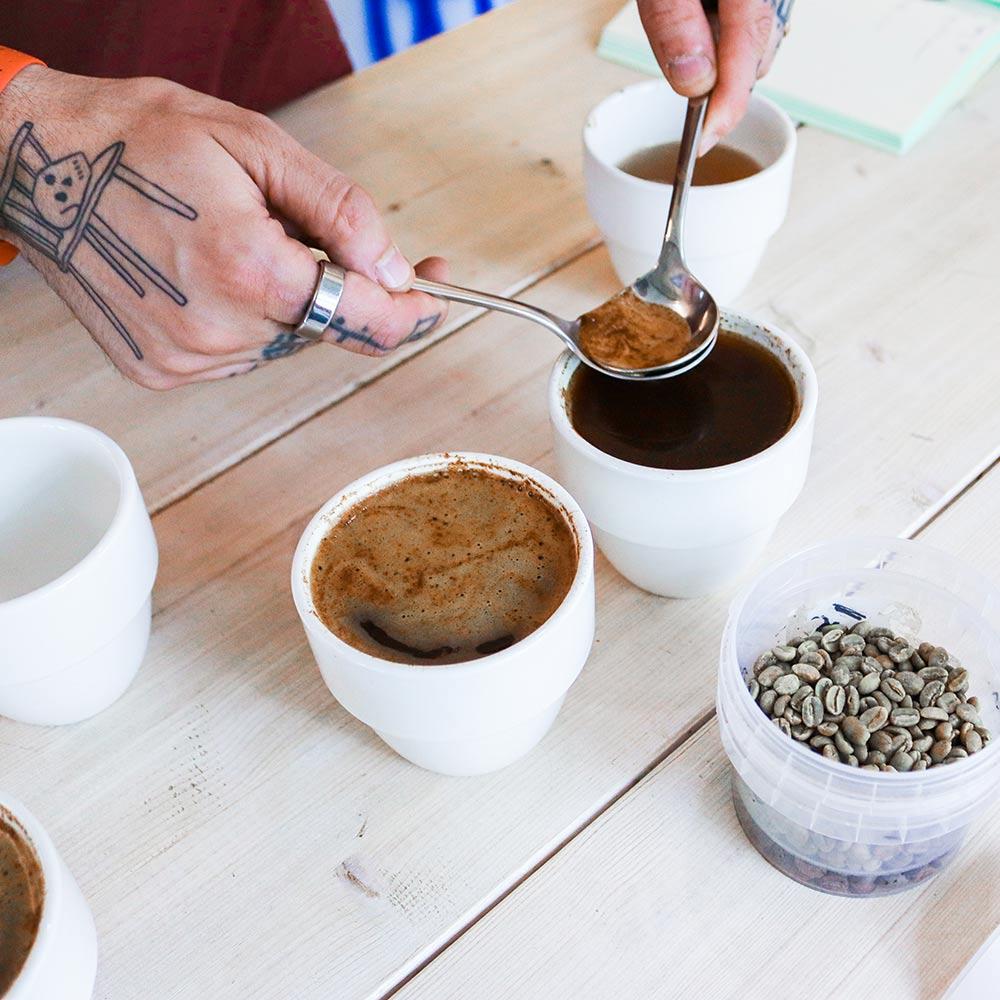
Cupping is designed to make it easier to compare coffees under controlled conditions.
Several coffee samples are prepared using consistent quantities, grind sizes, water, and brewing conditions.
The evaluator then examines the coffee at different stages.
1. Fragrance
The dry ground coffee is smelled before water is added.
This can reveal early aromatic characteristics.
2. Aroma
After hot water is added, the coffee releases additional aromatic compounds.
The evaluator smells the wet coffee and observes its fragrance.
3. Flavor
Once the coffee cools to a suitable tasting temperature, the evaluator assesses the overall flavor experience.
This may include notes such as:
-
Citrus
-
Stone fruit
-
Berries
-
Floral
-
Chocolate
-
Caramel
-
Nuts
-
Spices
Flavor descriptions depend on the coffee and the evaluator.
4. Acidity
Acidity describes the quality and character of acidity perceived in the cup.
It may remind the taster of characteristics such as:
-
Citrus
-
Apple
-
Grape
-
Stone fruit
-
Wine-like acidity
Acidity should not simply be interpreted as “sour.”
A well-developed coffee can have noticeable acidity while still tasting sweet and balanced.
5. Body or Mouthfeel
Body describes the physical sensation of the coffee in the mouth.
A coffee may feel:
-
Light
-
Silky
-
Creamy
-
Round
-
Heavy
Body can be influenced by the coffee itself, processing, roasting, and brewing.
6. Aftertaste
Aftertaste describes the sensations that remain after the coffee has been swallowed or spit out.
A longer, pleasant finish may be an important characteristic for some coffees.
7. Balance
Balance considers how different characteristics work together.
For example:
Acidity + sweetness + body + flavor
A coffee can have strong individual characteristics but still feel unbalanced if those elements do not work well together.
What Does 80+ Mean?
You may often see specialty coffee described as “80+,” “85+,” or “90+.”
These numbers are commonly used in the coffee industry as shorthand for quality levels under traditional scoring systems.
However, the number should not be treated as a universal definition of the coffee.
For example, an 85-point coffee can have a completely different flavor profile from another 85-point coffee.
One may be floral and tea-like.
Another may be chocolatey and sweet.
Both can receive a similar numerical evaluation while offering very different sensory experiences.
This is why the score should be accompanied by a description of the coffee.
Why Does the Same Coffee Receive Different Scores?
Coffee tasting is systematic, but sensory evaluation still involves human perception.
Different evaluators may notice different characteristics.
For example, one taster may strongly appreciate:
-
Floral aroma
-
Bright acidity
-
Tea-like body
while another may prefer:
-
Chocolate
-
Caramel
-
Fuller body
-
Lower acidity
Their impressions of the same coffee may therefore differ.
This does not necessarily mean that one taster is correct and the other is wrong.
It demonstrates why coffee value can depend partly on the preferences of the evaluator and the intended market.
Why Cupping Is Important for Green Coffee Buyers
A green coffee specification sheet can provide important information.
You may know:
-
Origin
-
Variety
-
Processing method
-
Altitude
-
Screen size
-
Moisture
-
Defect information
-
Packaging
But these specifications do not tell you exactly how the coffee tastes after roasting.
That is where sample roasting and cupping become important.
A buyer can roast a sample and evaluate:
Green coffee → Roast behavior → Cup profile
This provides much more information than a specification sheet alone.
Does a Higher Score Always Mean Better Coffee?
Not necessarily.
A score is useful, but coffee purchasing is more complicated than comparing two numbers.
Imagine two coffees:
Coffee A
Score: 87
Profile:
-
Floral
-
Bright acidity
-
Light body
-
Citrus
-
Tea-like finish
Coffee B
Score: 85
Profile:
-
Chocolate
-
Caramel
-
Nutty
-
Medium body
-
Low acidity
A buyer who wants a bright filter coffee may prefer the sensory profile of Coffee A.
Another buyer developing a milk-based espresso blend may prefer the characteristics of Coffee B.
The numbers alone cannot make that decision.
The intended application matters.
Score vs. Flavor Profile
This is why coffee buyers should always ask for the cup profile along with the score.
Instead of asking only:
“What is the score?”
It can be more useful to ask:
“What does the coffee taste like?”
For example:
Cau Dat Arabica – Washed
Possible description:
-
Floral aroma
-
Clean acidity
-
Gentle sweetness
-
Citrus and stone-fruit character
-
Medium-light body
-
Clean finish
This information gives the buyer a much clearer idea of what to expect.
The Importance of Sample Roasting
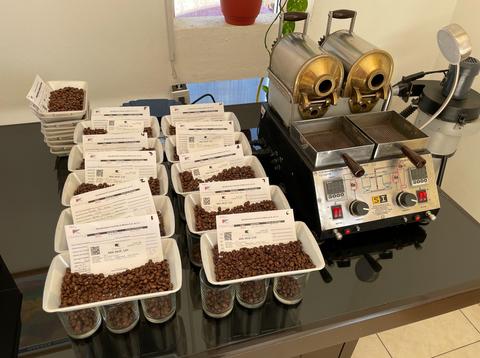
Green coffee can behave differently in the roaster depending on:
-
Density
-
Moisture
-
Screen size
-
Variety
-
Processing method
-
Bean structure
A sample roast helps the buyer understand these characteristics before committing to a larger quantity.
After roasting, cupping can reveal:
-
Aroma
-
Flavor
-
Acidity
-
Sweetness
-
Body
-
Aftertaste
-
Balance
-
Defects
This creates a much more complete picture of the coffee.
Physical Quality and Cup Quality Are Different
One important concept for green coffee buyers is the difference between physical quality and sensory quality.
A coffee can have:
-
Good screen size
-
Appropriate moisture
-
Low visible defects
-
Good uniformity
and still produce a cup that does not match your expectations.
Likewise, a coffee with unusual physical characteristics may still produce an interesting and enjoyable cup.
This is why professional evaluation combines physical inspection with roasting and sensory analysis.
What Is the Coffee Value Assessment?
Coffee evaluation is also evolving.
The Specialty Coffee Association's Coffee Value Assessment (CVA) is designed to provide a broader picture of coffee value rather than relying only on a single traditional score.
The framework includes four complementary areas:
Physical Assessment
Looks at physical characteristics such as color, defects, moisture, and size.
Descriptive Assessment
Records sensory characteristics such as aroma, flavor, texture, and aftertaste using standardized descriptive language.
Affective Assessment
Captures the evaluator's impression of quality and preference.
Extrinsic Assessment
Considers information outside the cup, such as origin, processing, certifications, and traceability.
This broader approach recognizes that coffee value can involve more than sensory quality alone.
Why Does This Matter for Coffee Buyers?
For an importer or roaster, the value of a coffee may depend on several factors.
For example:
Cup quality + Origin + Consistency + Traceability + Processing + Market Fit
A coffee with a specific score may be attractive for one market but less suitable for another.
A buyer may also care about:
-
Available volume
-
Price
-
Harvest timing
-
Packaging
-
Shipping requirements
-
Consistency between lots
-
Producer relationships
-
Processing method
This is why sourcing coffee is more than simply looking for the highest score.
How Should You Read a Coffee Score?
When you receive a coffee score from a supplier, consider it as one piece of information.
A practical evaluation can follow this order:
Step 1: Check the Origin
Where was the coffee grown?
Step 2: Check the Variety
Is it Catimor, Typica, Bourbon, Moka, or another variety?
Step 3: Check the Processing
Washed, Honey, Natural, or another process?
Step 4: Check the Physical Specifications
Look at:
-
Moisture
-
Screen size
-
Defects
-
Density
-
Uniformity
Step 5: Ask for the Cup Profile
What aromas and flavors were found during cupping?
Step 6: Request a Sample
Roast the sample using a suitable profile.
Step 7: Cup the Coffee Yourself
This is the most important step before making a larger purchasing decision.
What About Cau Dat Arabica?
Cau Dat is one of Vietnam's recognized Arabica-growing regions in the Da Lat highlands.
Depending on variety, elevation, processing method, harvest conditions, and roasting, Cau Dat Arabica can show different sensory characteristics.
A washed Arabica lot may emphasize:
-
Clean acidity
-
Floral aroma
-
Fruit characteristics
-
Sweetness
-
Clean finish
Other processing methods may create different expressions.
This is why buyers should evaluate each lot individually rather than assuming that every coffee from the same origin tastes exactly the same.
At Cau Dat Bean, green coffee lots are evaluated through their physical specifications, roasting behavior, and cup characteristics.
The goal is to help buyers understand what they are actually purchasing before moving to larger orders.
A Score Is a Starting Point, Not the Whole Story
Coffee scores are useful because they provide a common reference for communication.
But a single number cannot describe everything that makes a coffee valuable.
The story behind the coffee includes:
Origin → Variety → Cultivation → Harvest → Processing → Drying → Storage → Roasting → Cupping
Every stage contributes to the final product.
For coffee buyers, the best approach is therefore not to chase a number.
Instead:
Read the specifications.
Taste the sample.
Understand the profile.
Consider your market.
Then make your decision.
Final Thoughts
A coffee cupping score can be a useful tool for communicating coffee quality, but it should never be the only information used to evaluate a coffee.
The score becomes much more meaningful when combined with sensory descriptions, physical specifications, origin information, processing details, and the buyer's own tasting experience.
For specialty coffee, the most useful question is not simply:
“What score did this coffee receive?”
It is:
“What does this coffee offer, and is it right for what I want to produce?”
At Cau Dat Bean, we believe good coffee sourcing starts with understanding the complete coffee — not just one number.
Discover Vietnamese Green Coffee with Cau Dat Bean
Cau Dat Bean supplies selected Vietnamese green coffee for roasters, importers, coffee shops, and international buyers.
Our coffee portfolio includes Arabica from the Cau Dat highlands and selected Vietnamese Robusta lots, with different varieties, processing methods, and physical specifications depending on availability.
If you are looking for Vietnamese green coffee for wholesale, roasting, or export, contact us to request available coffee specifications and samples.
Cau Dat Bean Showroom
82B Trương Công Định, Phường Xuân Hương, Đà Lạt, Lâm Đồng, Vietnam
Phone / WhatsApp: +84 926 915 849
Email: caudatbean@gmail.com
Try before you buy.
Frequently Asked Questions
What is a coffee cupping score?
A coffee cupping score is a numerical representation of a taster's assessment of a coffee's sensory quality under a particular evaluation system.
Is an 85-point coffee better than an 80-point coffee?
A higher numerical score represents a higher evaluation within the same scoring system, but the number alone does not tell you whether that coffee is more suitable for your taste, roasting style, or market.
What factors are considered when cupping coffee?
Depending on the evaluation system, tasters may consider aroma, flavor, acidity, sweetness, mouthfeel, aftertaste, balance, overall impression, and defects or cup consistency.
Why can the same coffee receive different scores?
Sensory evaluation involves human perception. Different evaluators may perceive characteristics differently or have different preferences.
Should coffee buyers rely on the score when buying green coffee?
No. Buyers should consider the score together with origin, variety, processing, physical specifications, cup profile, sample roasting, and their own cupping results.
What is SCA's Coffee Value Assessment?
The Coffee Value Assessment is SCA's broader framework for evaluating coffee through physical, descriptive, affective, and extrinsic assessments.
Why is sample cupping important?
Sample cupping allows buyers to evaluate the actual sensory characteristics of a coffee before committing to a larger purchase.


 Group4, Cau Dat Village, Xuan Truong commune, Da Lat City, Lam Dong Province, Vietnam
 +84 783 472 234
 caudatbean@gmail.com
  www.caudatbean.com