
Why Does the Same Coffee Taste Different When Brewed in Different Ways?
Have you ever brewed the same coffee in two different ways and wondered why the cups tasted completely different?
The beans are the same.
The origin is the same.
Even the roast may be exactly the same.
Yet one cup can taste bright and delicate, while another feels rich and heavy. One may highlight fruity aromas, while another brings out chocolate, nuts, or deeper roasted notes.
This happens because coffee brewing methods change the way water interacts with the coffee grounds.
From espresso and pour-over to French press and the traditional Vietnamese phin, each brewing method uses a different combination of grind size, water, temperature, contact time, filtration, and extraction.
The result is a different expression of the same coffee.
Why Does Brewing Method Change Coffee Flavor?
Coffee contains hundreds of aroma and flavor compounds.
During brewing, hot water moves through or around the ground coffee and dissolves some of these compounds.
The brewing method determines how quickly and how thoroughly this happens.
Small changes in:
-
Grind size
-
Water temperature
-
Brewing time
-
Coffee-to-water ratio
-
Water flow
-
Pressure
-
Filtration
can change the final cup.
This is why coffee brewing is not simply about making coffee stronger or weaker.
It is about deciding which characteristics of the coffee become more noticeable.
1. Pour-Over Coffee: Clean and Detailed
Pour-over brewing is often associated with a clean and transparent cup.
Water is poured gradually over ground coffee, passing through the coffee bed and a paper filter before reaching the cup.
The paper filter removes many of the fine particles and coffee oils, which can create a lighter mouthfeel.
Depending on the coffee and recipe, pour-over brewing can highlight:
-
Floral aromas
-
Fruity notes
-
Citrus-like characteristics
-
Sweetness
-
Clean finish
This makes pour-over particularly popular for Arabica coffees where the brewer wants to explore the more delicate characteristics of the bean.
However, the final result depends heavily on technique.
Pouring too quickly, grinding too coarse, using unsuitable water, or changing the brewing ratio can all affect the extraction.
2. French Press: Richer Body and Texture
The French press uses a very different approach.
Coffee grounds are immersed directly in water for several minutes before the brewed coffee is separated using a metal filter.
Because the filter allows more oils and very fine particles to remain in the beverage, French press coffee often has a fuller mouthfeel than paper-filtered coffee.
You may notice:
-
More body
-
Richer texture
-
Pronounced coffee aroma
-
Deeper flavor
-
A longer mouthfeel
The same coffee that tastes light and clean through a paper filter may feel much heavier when prepared with a French press.
The beans have not changed.
The extraction environment has.
3. Espresso: Concentrated and Intense
Espresso is one of the most concentrated ways to brew coffee.
A relatively small amount of water is forced through finely ground coffee under pressure.
This creates a small beverage with intense aroma, concentrated flavor, and a characteristic layer of crema when the extraction is well developed.
Espresso can emphasize:
-
Body
-
Sweetness
-
Chocolate-like notes
-
Roasted flavors
-
Intensity
But espresso is highly sensitive to brewing parameters.
Small changes in grind size, dose, water temperature, brew time, or yield can significantly change the result.
This is why espresso preparation requires careful adjustment.
4. Vietnamese Phin: Slow, Rich, and Distinctive
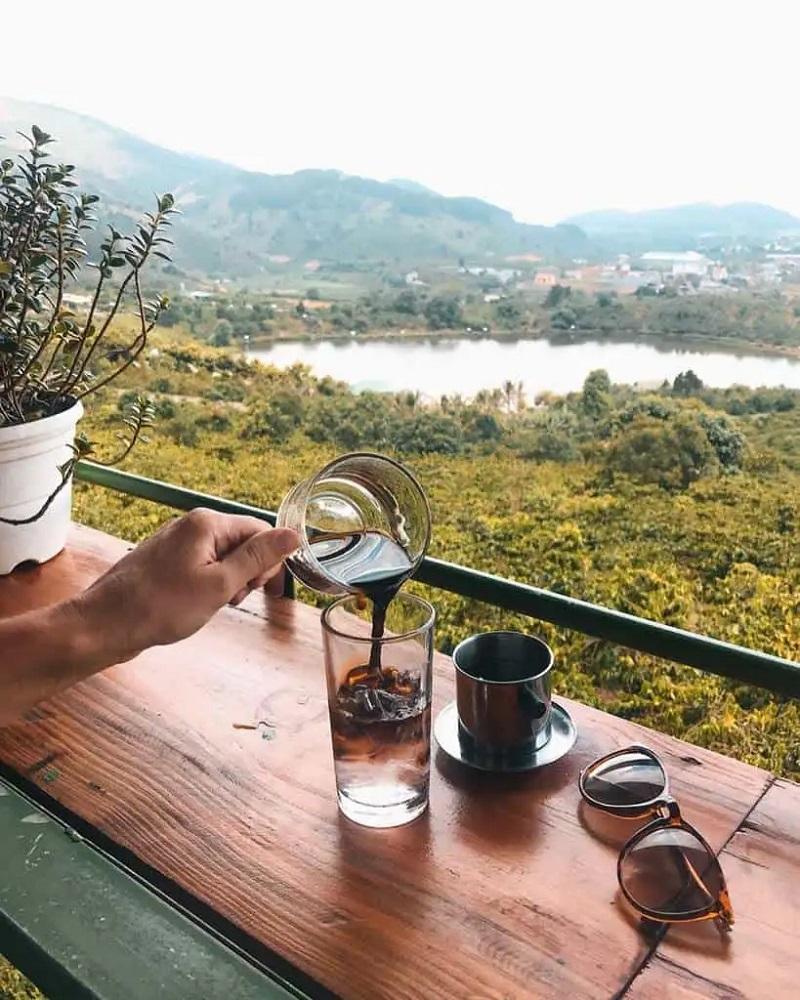
The traditional Vietnamese phin offers another way to experience coffee.
Coffee grounds are placed inside a small metal filter, hot water is added, and the coffee slowly drips into the cup.
The process is simple but produces a distinctive brewing experience.
Vietnamese phin coffee is often associated with a rich, concentrated cup that pairs naturally with black coffee or sweetened condensed milk.
When served over ice, it becomes the familiar Vietnamese iced coffee, or cà phê sữa đá.
The phin also encourages a slower relationship


 Group4, Cau Dat Village, Xuan Truong commune, Da Lat City, Lam Dong Province, Vietnam
 +84 783 472 234
 caudatbean@gmail.com
  www.caudatbean.com