
Why Does Coffee Filter Paper Matter? How Filters Change Your Cup
Primary Keyword: coffee filter paper
Secondary Keywords: coffee filter, paper coffee filter, coffee brewing, pour over coffee, coffee extraction, coffee flavor, coffee oils, brewing consistency
SEO Title: Why Does Coffee Filter Paper Matter? How Filters Change Your Cup
Meta Description: Learn how coffee filter paper affects extraction, clarity, body, coffee oils, and flavor, and discover why choosing the right filter matters.
URL Slug: coffee-filter-paper
Why Does Coffee Filter Paper Matter?
When making coffee, most people pay attention to the beans, grinder, water, and brewing temperature.
But there is another small detail that can make a noticeable difference: the coffee filter.
A paper filter may look simple, but it controls how water moves through the coffee grounds and which compounds remain in the final cup.
Two cups can use the same coffee beans, the same grind size, and the same water, yet taste noticeably different simply because different filters were used.
So, what exactly does coffee filter paper do?
What Is Coffee Filter Paper?
Coffee filter paper is a specially designed paper used to separate brewed coffee from coffee grounds.
During brewing, hot water passes through the ground coffee. The filter allows water and dissolved coffee compounds to pass through while retaining most of the coffee particles.
Paper filters are commonly used with:
-
Pour-over brewers
-
Drip coffee machines
-
Some manual brewing devices
-
Certain Vietnamese-style brewing setups
The filter therefore becomes part of the brewing system rather than simply being a container for the coffee grounds.
How Does a Paper Filter Affect Coffee Extraction?
Extraction is the process in which water dissolves flavor compounds from coffee grounds.
The filter itself does not extract coffee, but it influences how quickly water passes through the coffee bed and how much particulate material reaches the cup.
A filter that allows water to flow easily may produce a different brewing time from a filter with slower flow.
This can affect the final balance of:
-
Acidity
-
Sweetness
-
Bitterness
-
Body
-
Aroma
-
Clarity
That is why changing the filter can sometimes make a familiar coffee taste surprisingly different.
Paper Filters Can Produce a Cleaner Cup
One of the most noticeable characteristics of paper-filtered coffee is clarity.
Paper filters can retain a large amount of fine coffee particles and some coffee oils.
As a result, the brewed coffee often feels:
-
Cleaner
-
Lighter
-
More transparent
-
More delicate
This is one reason paper-filter brewing is popular for coffees with floral, fruity, or tea-like characteristics.
For high-quality Arabica, a clean filter can help delicate aromas and bright acidity stand out more clearly.
What Happens to Coffee Oils?
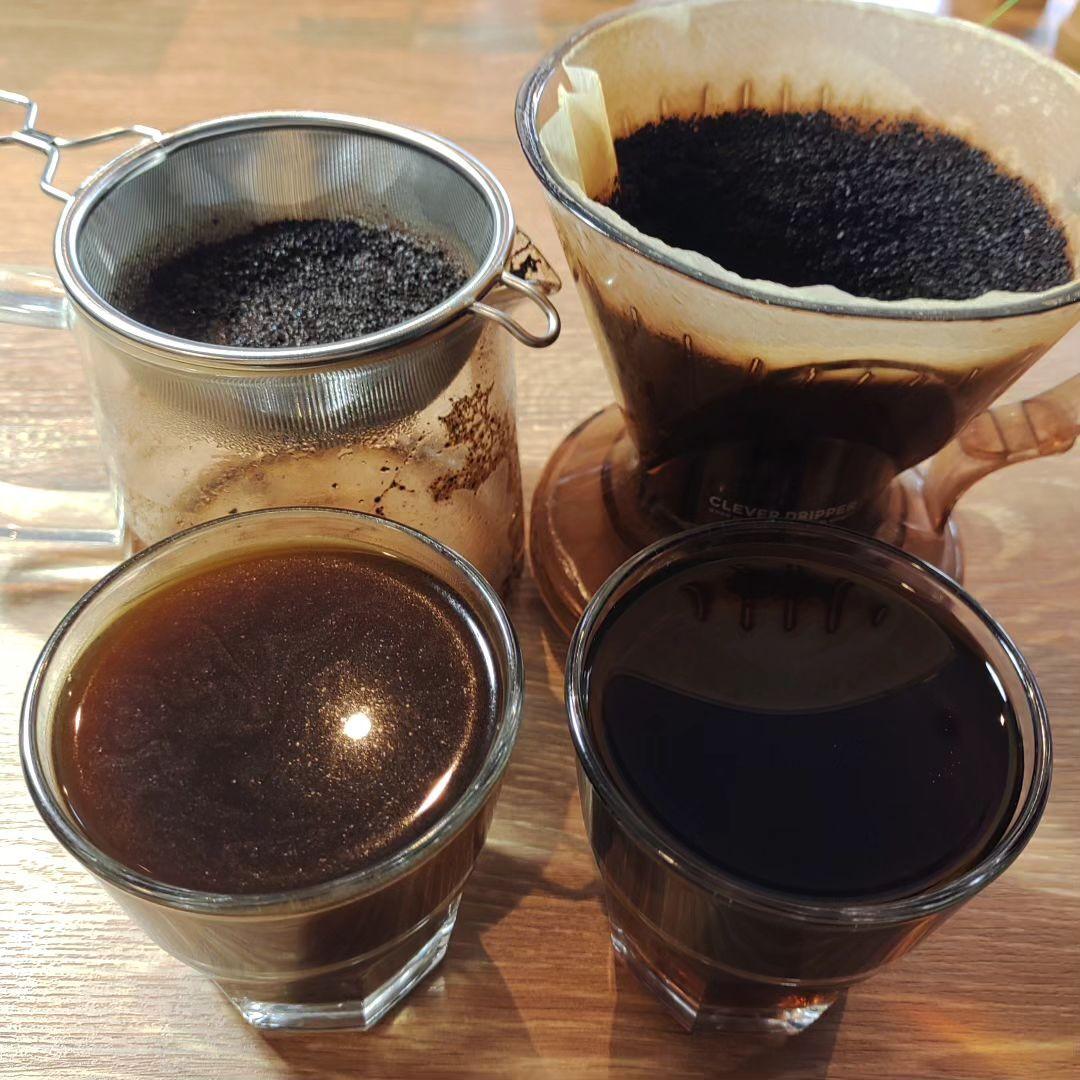
Coffee contains naturally occurring oils that contribute to aroma, body, and mouthfeel.
Different filters allow different amounts of these oils to pass into the cup.
A paper filter generally retains more oils and fine particles than many metal or cloth filters.
This can make the coffee feel lighter and cleaner.
By contrast, brewing methods that allow more oils and particles into the cup often produce a heavier mouthfeel.
Neither approach is automatically better.
It depends on the coffee and the flavor experience you want.
Does Filter Thickness Matter?
Yes.
Coffee filters are available in different thicknesses and constructions.
A thicker paper filter may provide greater filtration, but it can also influence water flow.
A thinner filter may allow water to pass more easily and can produce a somewhat different balance of body and clarity.
However, filter thickness should not be considered alone.
The actual brewing result also depends on:
-
Grind size
-
Coffee dose
-
Water temperature
-
Pouring technique
-
Brewing time
-
Filter shape
-
Brewer design
The filter is only one part of the complete brewing system.
Bleached vs. Unbleached Coffee Filters
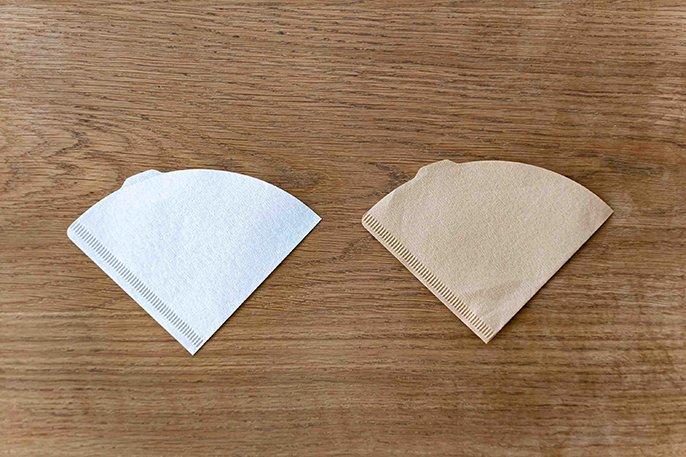
You may notice two common types of paper filters: bleached and unbleached.
Bleached Filters
Bleached filters are white because the paper has undergone additional processing.
Modern food-grade coffee filters are designed for brewing and generally do not require the strong paper taste people sometimes associate with older filters.
Unbleached Filters
Unbleached filters have a natural brown color.
Some people notice a stronger paper-like aroma or flavor when using them, especially if the filter is not rinsed before brewing.
This is why many coffee drinkers rinse paper filters with hot water before adding coffee.
Why Should You Rinse a Paper Filter?
Rinsing the filter with hot water has two useful purposes.
1. It Removes Some Paper Taste
Rinsing can reduce the papery aroma or flavor that may otherwise enter the coffee.
2. It Preheats the Brewer
Hot water also warms the brewing equipment.
A cold brewer can absorb heat from the brewing water, potentially lowering the temperature during extraction.
For pour-over brewing, rinsing the filter is therefore a simple step that can improve consistency.
Does the Shape of the Filter Matter?
Yes.
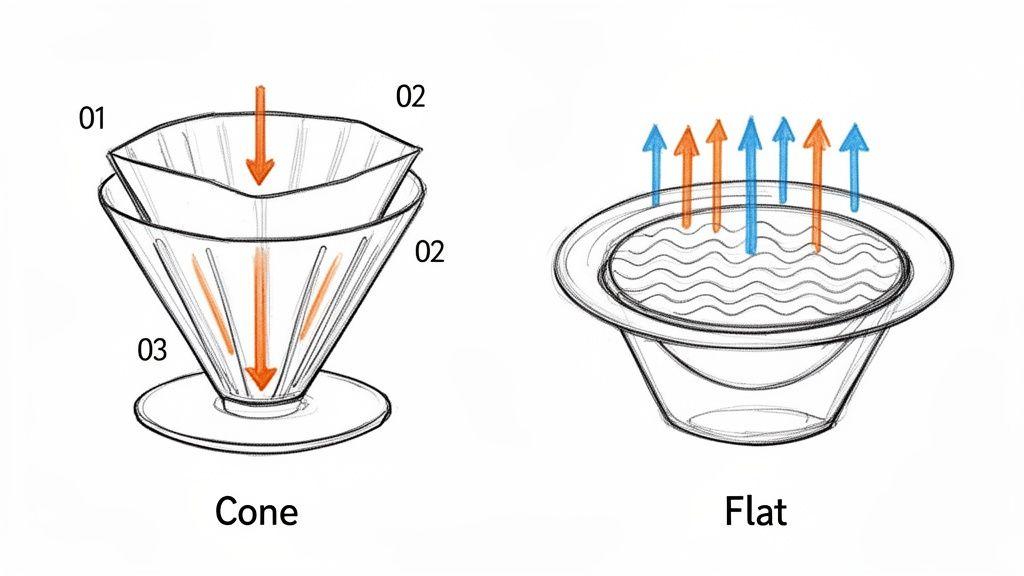
Coffee filters come in different shapes, including cone-shaped and flat-bottom designs.
The shape changes how the coffee bed is formed and how water moves through it.
For example, a cone-shaped filter creates a deeper coffee bed, while a flat-bottom design creates a broader and shallower bed.
This changes the relationship between:
water flow + coffee depth + grind size + brewing time.
That is why the same coffee recipe cannot always be transferred directly from one brewer to another.
Coffee Filter and Grind Size Work Together
Filter choice and grind size should be considered together.
If the coffee is ground too fine, water may move slowly through the filter. This can increase contact time and potentially lead to over-extraction.
If the coffee is too coarse, water may pass through too quickly, potentially producing a weak or under-extracted cup.
A change in filter can therefore require a small adjustment to grind size.
Instead of asking:
“What is the best grind size?”
it is often better to ask:
“What grind size works best with this coffee, filter, brewer, and recipe?”
Can the Same Coffee Taste Different with Different Filters?
Absolutely.
Imagine brewing the same Cầu Đất Arabica using two different paper filters.
The coffee, dose, water, and grind remain unchanged.
Yet one filter may produce a cleaner and brighter cup, while another may produce slightly more body or a different flow rate.
The difference does not necessarily mean one filter is better.
It means the brewing system has changed.
This is particularly important for specialty coffee, where subtle differences in aroma, acidity, sweetness, and mouthfeel can be easier to notice.
What About Vietnamese Coffee?
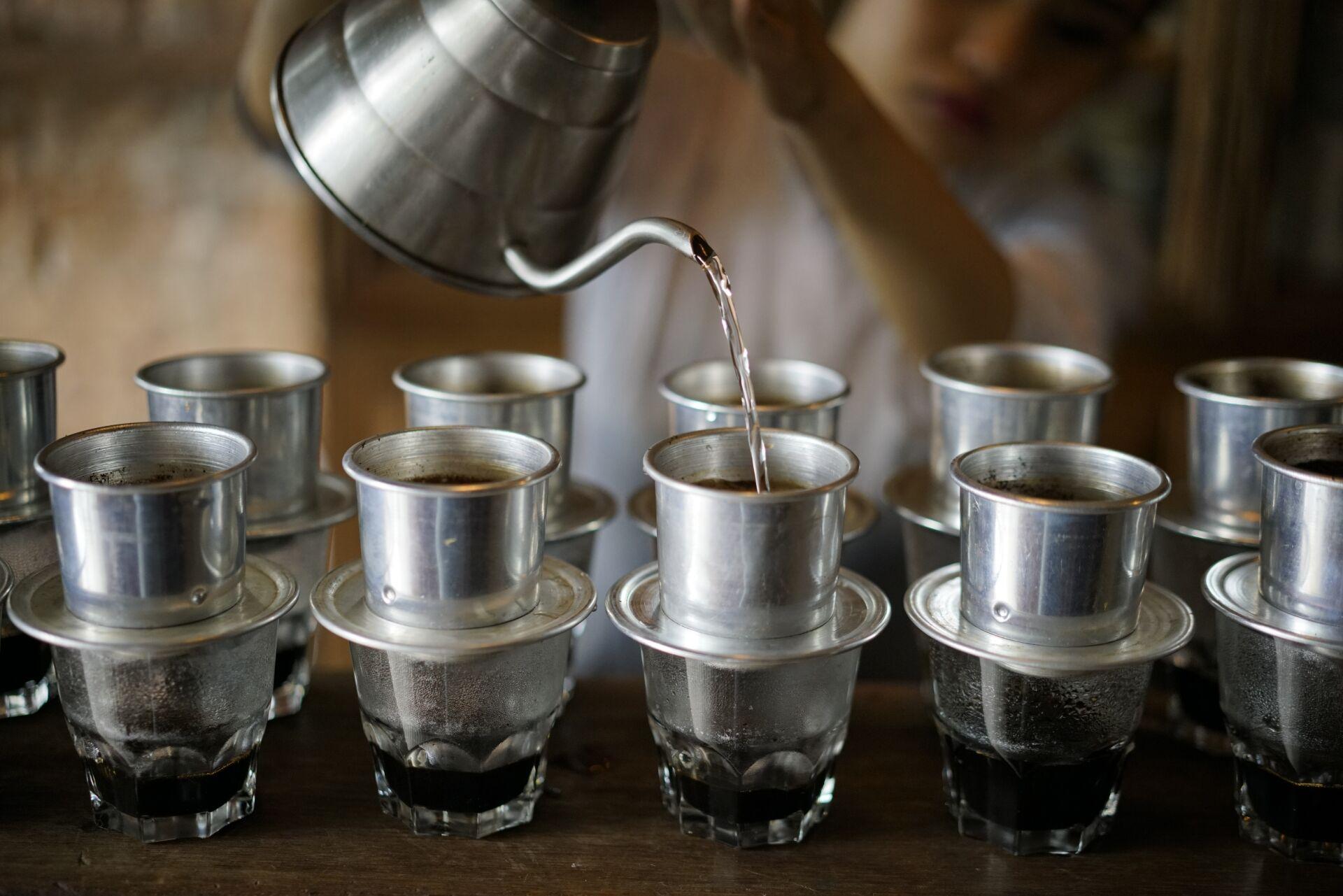
Vietnamese coffee is traditionally associated with the phin, which uses a metal brewing filter rather than paper.
This creates a different brewing experience.
Because a metal phin allows more oils and very fine particles to pass through, Vietnamese coffee often has a fuller body and stronger mouthfeel.
This makes the phin especially suitable for traditional Vietnamese coffee served black or with condensed milk.
It also shows an important principle:
The filter is part of the flavor.
A coffee bean does not have only one possible taste. Brewing equipment can change how its characteristics are expressed.
How to Choose a Coffee Filter
There is no single perfect filter for every coffee.
Instead, consider the style of coffee you enjoy.
Choose a paper filter if you prefer:
-
Clean flavors
-
Bright acidity
-
Clear aromas
-
Lighter body
-
Less sediment
Consider a metal filter if you prefer:
-
Fuller body
-
More coffee oils
-
Heavier mouthfeel
-
More texture
-
More sediment
For specialty Arabica, paper filtration can be especially useful when you want to highlight delicate floral, fruity, or citrus-like characteristics.
For traditional Vietnamese coffee, a metal phin remains an important part of the familiar brewing style.
Small Changes Can Make a Big Difference
Coffee brewing is not always about making dramatic changes.
Sometimes, a small adjustment — such as changing the filter, rinsing it properly, or adjusting the grind slightly — can noticeably change the cup.
This is why coffee brewing is both a science and a craft.
The beans provide the foundation.
The roast develops their potential.
The grinder controls particle size.
The water extracts the soluble compounds.
And the filter helps determine what finally reaches your cup.
Final Thoughts
Coffee filter paper may seem like a small part of brewing, but it can influence water flow, filtration, clarity, body, and the amount of coffee oils and particles that reach the cup.
Understanding your filter helps you understand your coffee.
If you are exploring specialty coffee from Vietnam, try brewing the same beans with different filters and compare the results.
You may discover that the coffee you already know has another side waiting to be tasted.
Discover Cầu Đất Coffee
At Cầu Đất Bean, we offer carefully selected Vietnamese coffee from the highlands of Đà Lạt, including Arabica and other coffee selections for different brewing styles.
Try before you buy.
📍 Showroom: 82B Trương Công Định, Phường Xuân Hương, Đà Lạt, Lâm Đồng, Vietnam
📞 Phone / WhatsApp: +84 926 915 849
📧 Email: caudatbean@gmail.com
Visit us and discover how different coffees and brewing methods can change your everyday cup.
Frequently Asked Questions
Does coffee filter paper change the taste?
Yes. Filter material, thickness, and flow characteristics can influence clarity, body, oils, and extraction.
Should I rinse a paper coffee filter?
Rinsing with hot water can reduce paper-like flavors and preheat the brewing equipment.
Is a thicker coffee filter better?
Not necessarily. A thicker filter may provide more filtration, but the best choice depends on the coffee, brewer, grind size, and desired flavor.
What is the difference between paper and metal coffee filters?
Paper filters generally produce a cleaner cup with less sediment and fewer oils, while metal filters allow more oils and fine particles through, creating a fuller mouthfeel.
Can I use the same grind size with different filters?
Not always. Changing the filter can change water flow, so a small grind adjustment may be necessary to maintain a balanced extraction.


 Group4, Cau Dat Village, Xuan Truong commune, Da Lat City, Lam Dong Province, Vietnam
 +84 783 472 234
 caudatbean@gmail.com
  www.caudatbean.com