
What Is Coffee Grind Distribution? Why Particle Size Matters
When people talk about grinding coffee, they usually ask one simple question:
“Should I grind finer or coarser?”
But there is another question that can be just as important:
“How consistent are the coffee particles?”
Two grinders can produce coffee that looks similar to the eye but behaves very differently during brewing.
One may produce particles that are relatively uniform in size.
Another may create a mixture of very small particles, medium particles, and large pieces.
This is called coffee grind distribution.
Understanding grind distribution can help explain why the grinder you use can have such a noticeable effect on extraction, flavor, and brewing consistency.
What Is Coffee Grind Distribution?
Coffee grind distribution describes the range of particle sizes produced when a roasted coffee bean is ground.
When you grind coffee, you do not usually create particles that are all exactly the same size.
Instead, the resulting grounds contain a range of sizes.
For example, a grind may contain:
-
Very fine particles
-
Fine particles
-
Medium particles
-
Coarse particles
-
Larger fragments
The proportion of these different particles is the grind distribution.
A grinder that produces a narrower range of particle sizes generally creates a more uniform grind.
A grinder that produces a wider range creates a less uniform distribution.
Why Doesn't Every Coffee Particle Have the Same Size?
Coffee beans are not perfectly uniform materials.
They have a complex internal structure that changes during roasting.
When a grinder breaks a coffee bean apart, the bean does not fracture into identical pieces.
Some parts break into smaller particles.
Other parts remain as larger fragments.
The grinder's burr design, alignment, condition, speed, and setting all influence the final distribution.
This means that even when two grinders are set to the same general grind size, they may produce different particle distributions.
Fine Particles and Coarse Particles
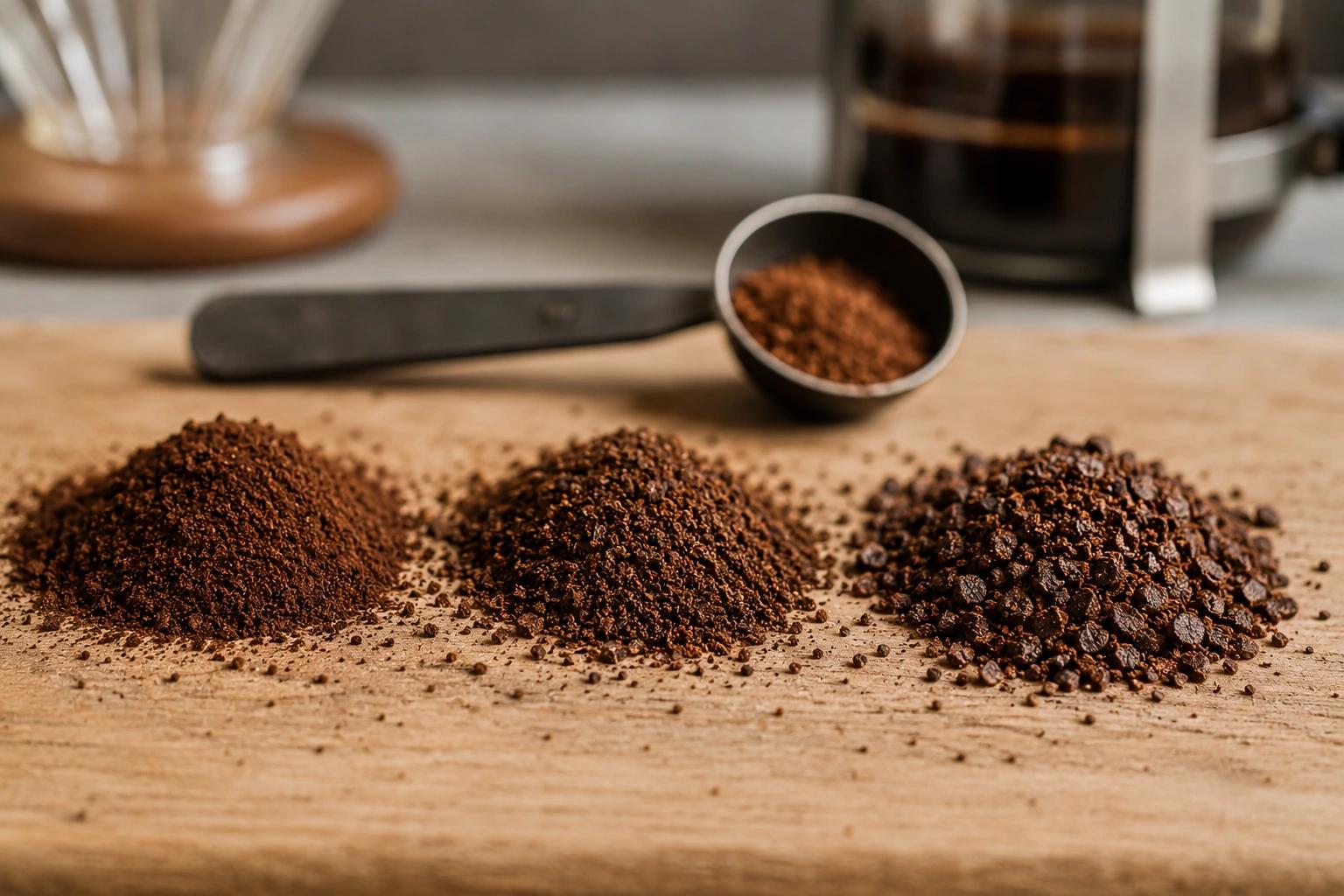
To understand grind distribution, it helps to look at the two ends of the range.
Fine Particles
Fine particles have a relatively large surface area compared with their mass.
Because of this, water can interact with them more quickly.
If there are too many fines, they can contribute significantly to extraction and may also slow the movement of water through the coffee bed.
Coarse Particles
Coarse particles have less surface area relative to their mass.
They generally take longer for water to extract.
If there are too many coarse particles, some parts of the coffee may remain relatively under-extracted while smaller particles are already extracting more quickly.
The challenge is not simply to make everything extremely fine or extremely coarse.
The goal is to create a particle distribution that works well for the brewing method.
Why Does Grind Distribution Affect Extraction?
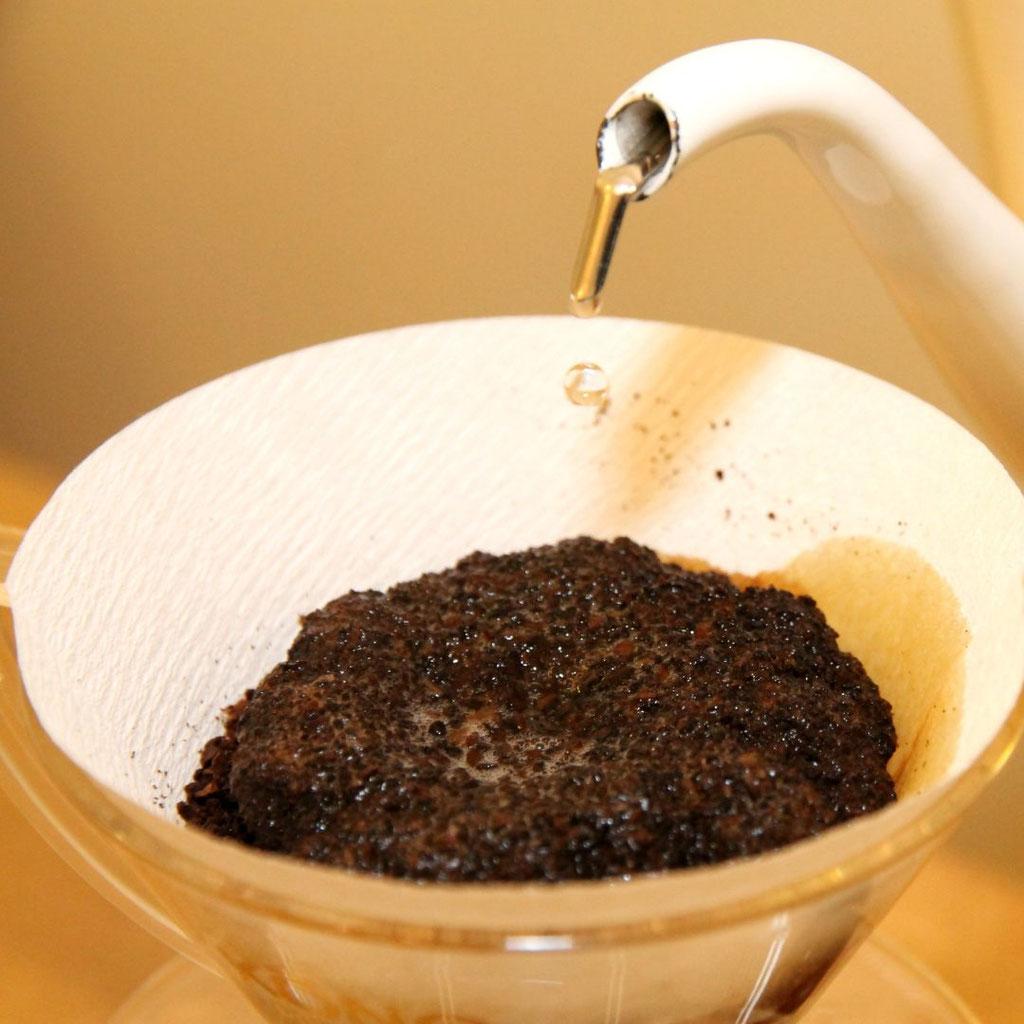
Coffee extraction happens when water dissolves soluble compounds from the coffee grounds.
Particle size influences how quickly this happens.
Smaller particles generally extract faster.
Larger particles generally extract more slowly.
Imagine brewing a coffee bed containing both very fine particles and very large pieces.
The fine particles may release soluble compounds quickly.
The large particles may still have plenty of material that has not been extracted.
Water therefore interacts with different parts of the coffee bed at different rates.
This can make it more difficult to achieve a uniform extraction.
What Happens When There Are Too Many Fines?
An excessive amount of fine particles can create several brewing challenges.
Fine particles can move into small spaces between larger particles.
This can reduce the spaces available for water to flow through the coffee bed.
In some brewing methods, this may slow the flow rate.
You might notice:
-
Longer brewing time
-
Slower drawdown
-
More resistance
-
Increased extraction from fines
-
Harsh or bitter flavors in some cases
However, fines are not automatically bad.
Every coffee grind contains some smaller particles.
The goal is to manage the distribution rather than eliminate fines completely.
What Happens When There Are Too Many Coarse Particles?
The opposite situation can also create problems.
If the grind contains too many large particles, water may pass through the coffee without extracting enough from those larger pieces.
The resulting cup may taste:
-
Thin
-
Weak
-
Sharp
-
Sour
-
Underdeveloped
Again, the issue is not simply “coarse is bad.”
Coarse grinding is appropriate for certain brewing methods.
The problem occurs when the particle distribution does not suit the brewing process.
Grind Size vs. Grind Distribution
These two terms are related, but they are not the same.
Grind Size
Grind size describes the general size of the coffee particles.
For example:
Fine → Medium → Coarse
Grind Distribution
Grind distribution describes how the particles are spread across different sizes.
Two coffees can both be described as “medium grind,” but one may contain a relatively narrow range of particle sizes while the other contains many fines and larger fragments.
This is why simply saying “medium grind” does not tell us everything about the coffee.
Why Grinder Quality Matters
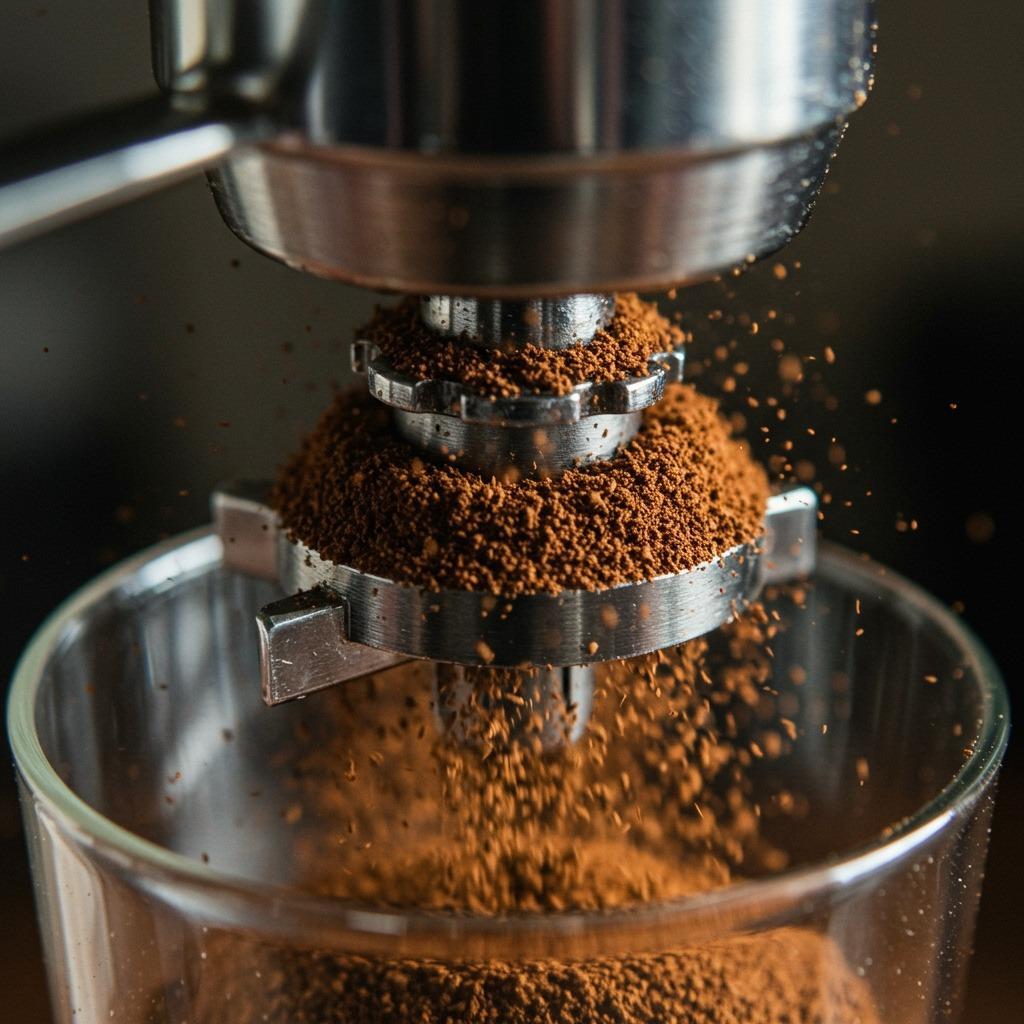
The grinder plays a major role in grind distribution.
A well-designed grinder can produce a more controlled particle distribution.
The burr geometry, burr condition, alignment, and grinder construction can all influence how coffee is fractured.
A grinder that produces a more consistent distribution can make dialing in a recipe easier.
This does not mean that the most expensive grinder automatically makes the best coffee.
It means that grinder performance is one variable that can influence extraction consistency.
Burr Grinders and Particle Distribution
Burr grinders crush and cut coffee beans between two grinding surfaces.
Different burr shapes and designs produce different particle distributions.
Some grinders are designed to emphasize consistency for filter coffee.
Others are optimized for espresso or a broader range of brewing methods.
The design affects how the bean is fractured and therefore what kind of particle distribution reaches the brewer.
This is one reason coffee professionals often pay close attention to grinder performance.
Why Does the Same Coffee Taste Different With Different Grinders?
Imagine using the same:
-
Coffee beans
-
Roast
-
Water
-
Brewing ratio
-
Brewing temperature
-
Brewing method
but changing only the grinder.
The resulting coffee can still taste different.
One grinder may produce a distribution that allows water to move through the coffee bed more evenly.
Another may create more fines or larger particles.
This can change extraction and therefore influence:
-
Sweetness
-
Acidity
-
Bitterness
-
Body
-
Clarity
-
Aftertaste
The coffee itself has not changed.
The way it has been prepared has.
How Can You Tell if Your Grind Distribution Is Causing Problems?
You do not need a laboratory to start observing the effects.
Pay attention to the brewing process.
For pour-over coffee, look at:
Brewing Time
Is the coffee draining much faster or slower than expected?
Coffee Bed
Does the bed appear muddy or compact after brewing?
Flavor
Does the coffee taste unusually bitter, dry, sour, or thin?
Consistency
Does the same recipe produce noticeably different results from one brew to another?
These observations do not prove that grind distribution is the only problem, but they can help identify when the grinder deserves attention.
Can You See Grind Distribution With Your Eyes?
To some extent.
If you look closely at freshly ground coffee, you may notice that the particles are not identical.
However, visual inspection has limitations.
Two samples can look similar while having different distributions at the microscopic level.
Professional coffee laboratories may use particle-size analysis to measure the distribution more precisely.
For everyday brewing, however, taste and brewing behavior are often more useful than simply looking at the grounds.
Does Grind Distribution Matter for Espresso?
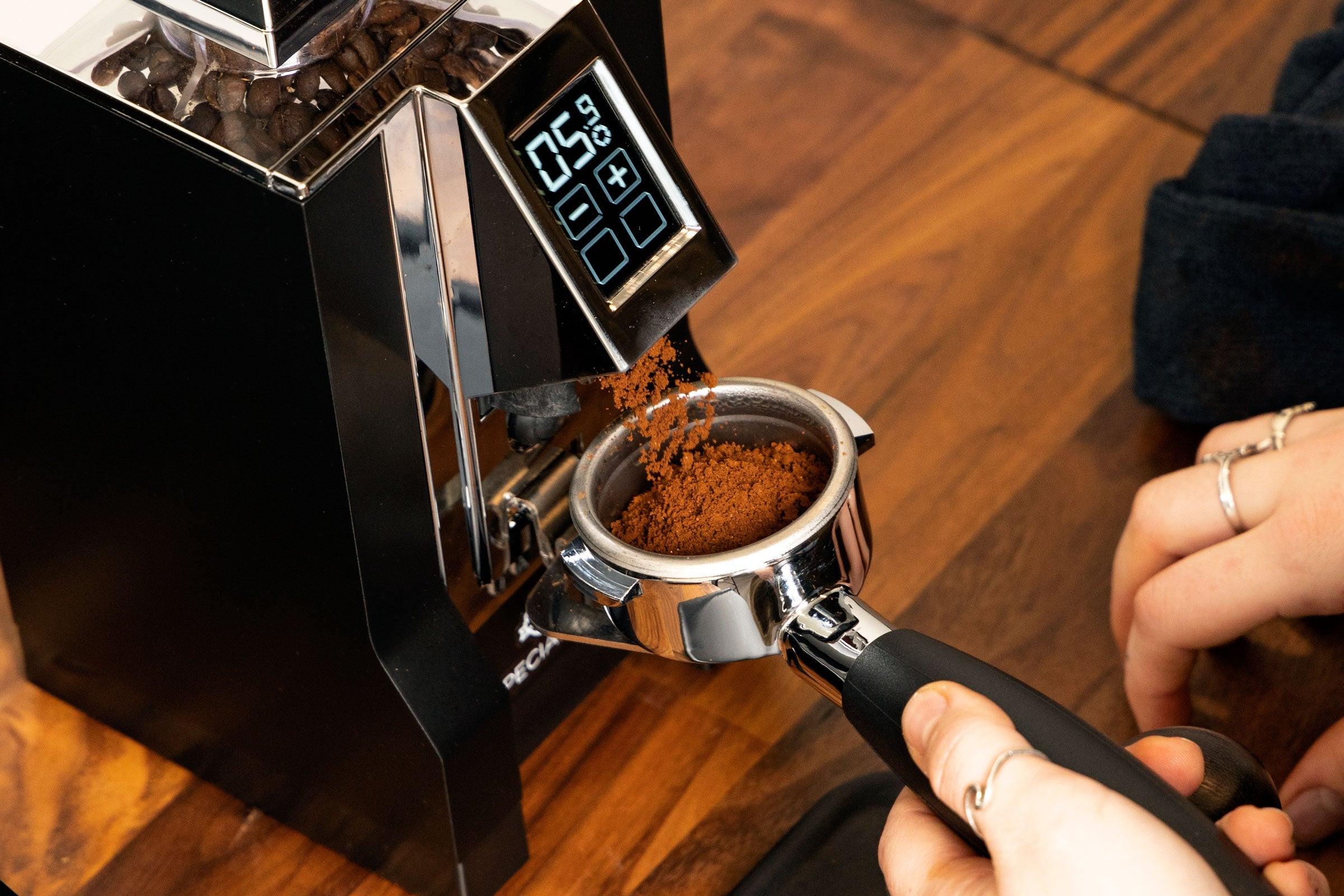
Very much.
Espresso uses finely ground coffee and relatively short extraction times.
Small changes in particle distribution can therefore have a noticeable effect.
Too many fines may increase resistance and slow the flow of water through the coffee puck.
Too many coarse particles may contribute to uneven extraction.
This is one reason espresso grinders are designed to provide a controlled fine grind suitable for high-pressure brewing.
Dialing in espresso is often a process of finding the right relationship between grind setting, dose, yield, time, and the behavior of the coffee.
Does Grind Distribution Matter for Pour-Over?
Yes.
Pour-over brewing relies on water flowing through a bed of coffee grounds.
Particle distribution can influence how quickly that water moves and how evenly different particles are extracted.
A relatively consistent grind can make it easier to reproduce a brewing recipe.
However, grind distribution is only one factor.
Pouring technique, filter type, water composition, temperature, coffee freshness, and brewing ratio also matter.
What Is a Good Grind Distribution?
There is no single perfect grind distribution for every coffee.
The ideal distribution depends on:
-
Brewing method
-
Coffee variety
-
Roast level
-
Processing method
-
Grinder
-
Water
-
Recipe
-
Desired flavor
An espresso grinder and a filter grinder may intentionally produce different distributions because they are designed for different extraction environments.
Therefore, the goal is not to find one universal distribution.
The goal is to find a distribution that supports the brewing method and produces a good cup.
How Can You Improve Grind Consistency?
A few simple practices can help.
Keep Your Grinder Clean
Coffee residue can accumulate inside the grinder and affect performance.
Check the Burrs
Worn burrs may produce a different particle distribution from when they were new.
Use a Consistent Dose
Weighing coffee helps make comparisons more reliable.
Change One Variable at a Time
When dialing in coffee, avoid changing grind size, water, ratio, and temperature simultaneously.
Taste the Result
The final cup remains the most important measurement.
A Simple Grind Distribution Experiment
You can compare two grinders using the same coffee.
Step 1: Choose One Coffee
Use the same roasted coffee for both tests.
Step 2: Use the Same Dose
For example, use 20 g of coffee.
Step 3: Use the Same Brewing Recipe
Keep the water, temperature, ratio, and brewing method consistent.
Step 4: Change Only the Grinder
Prepare the coffee using two different grinders.
Step 5: Compare the Results
Pay attention to:
-
Brewing time
-
Flow rate
-
Aroma
-
Sweetness
-
Acidity
-
Bitterness
-
Body
-
Clarity
You may be surprised by how different the two cups can taste even though the coffee itself is exactly the same.
Grind Distribution and Vietnamese Coffee
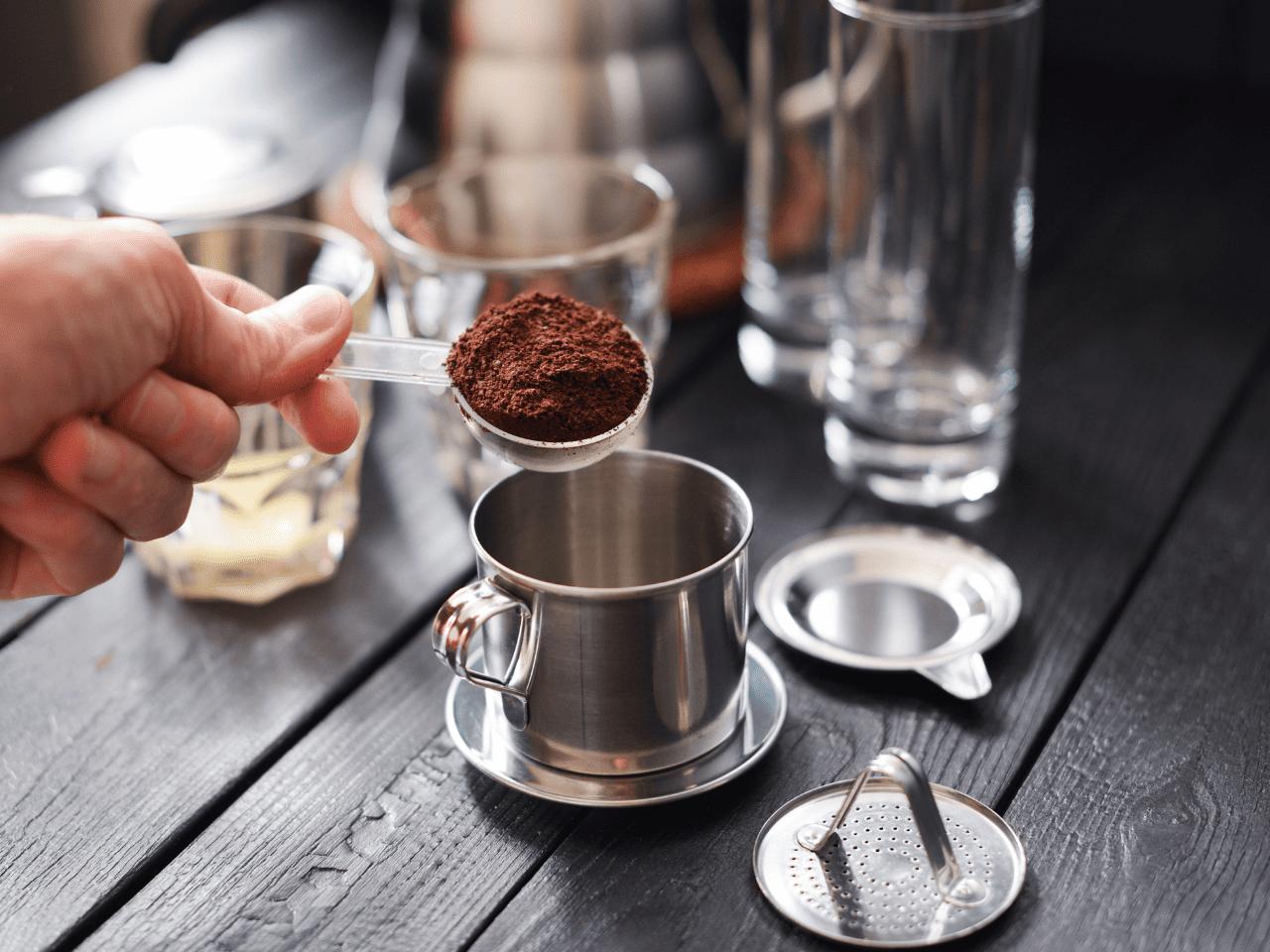
Vietnamese coffee is traditionally prepared in a phin, but Vietnamese Arabica can also be brewed through pour-over methods.
The grind required for a phin is different from the grind used for a typical paper-filter pour-over.
Because the brewing environment changes, the desired particle distribution also changes.
A grinder that works well for espresso may not necessarily be the best choice for phin brewing.
This is why brewing method should always be considered when choosing a grind setting.
Grind Distribution and Cầu Đất Arabica
Cầu Đất Arabica can show delicate characteristics such as sweetness, floral notes, fruit-like acidity, and clean flavors depending on the variety, processing method, roast, and lot.
When brewing these coffees, grind consistency becomes particularly useful because it allows the brewer to make controlled adjustments.
Instead of changing several things at once, you can adjust the grind and observe how the cup changes.
A small change in particle distribution can sometimes reveal a different side of the same coffee.
The Goal Is Not Perfect Particles
It is easy to become obsessed with the idea of perfectly uniform coffee grounds.
But coffee brewing is not about creating mathematically identical particles.
Coffee beans are natural agricultural products.
Their physical structure varies.
Different coffees behave differently.
Different brewing methods require different extraction conditions.
The real goal is control and repeatability.
A grinder that gives you predictable results makes it easier to understand your coffee and reproduce a recipe.
Final Thoughts
Coffee grind distribution is one of the hidden factors behind a good cup of coffee.
While grind size tells us whether coffee is generally fine, medium, or coarse, grind distribution tells us how many particles exist across that range.
Too many fines can extract quickly and slow water flow.
Too many coarse particles can extract slowly and contribute to under-extraction.
A controlled particle distribution can make brewing more predictable and help water interact with the coffee more evenly.
But there is no single perfect distribution.
The right result depends on the coffee, grinder, brewing method, and recipe.
So next time you adjust your grinder, don't think only about finer or coarser.
Think about what kind of particles your grinder is actually producing.
That small difference can have a big impact on the final cup.
Discover Cau Dat Bean
At Cau Dat Bean, we work with Vietnamese coffee from the highlands of Da Lat, including Arabica from the Cầu Đất region.
Whether you are looking for green coffee, roasted coffee, or coffee for café and roasting applications, understanding how the coffee behaves from bean to brew can help you choose the right product and preparation method.
Cau Dat Bean Showroom
📍 82B Truong Cong Dinh, Xuan Huong Ward, Da Lat, Lam Dong, Vietnam
📞 +84 926 915 849
📧 caudatbean@gmail.com
Try before you buy.
Frequently Asked Questions
What is coffee grind distribution?
Coffee grind distribution describes the range and proportion of particle sizes produced when coffee beans are ground.
Is grind distribution the same as grind size?
No. Grind size describes the general particle size, while grind distribution describes how particles are spread across different sizes.
Why are coffee fines important?
Fines extract relatively quickly because of their high surface area. Too many fines can increase extraction and may slow water flow.
Are coarse particles bad for coffee?
No. Coarse particles are appropriate for some brewing methods. The issue is whether the overall particle distribution suits the brewing method.
Does grinder quality affect coffee flavor?
Yes. Grinder design and performance can influence particle distribution, which can affect extraction consistency and flavor.
Does grind distribution matter for Vietnamese phin coffee?
Yes. A phin requires a different grind and extraction environment from espresso or paper-filter pour-over, so the grinder and resulting particle distribution matter.
How can I improve my grind consistency?
Keep the grinder clean, maintain the burrs, use a consistent dose, make small adjustments, and evaluate the final cup rather than relying only on the appearance of the grounds.


 Group4, Cau Dat Village, Xuan Truong commune, Da Lat City, Lam Dong Province, Vietnam
 +84 783 472 234
 caudatbean@gmail.com
  www.caudatbean.com