
What Is Coffee Bloom? Why Does Coffee Rise During Brewing?
If you have ever brewed coffee using a pour-over method, you may have noticed something interesting.
After adding a small amount of hot water to freshly ground coffee, the coffee bed begins to expand.
It rises.
Small bubbles appear.
The grounds may look as if they are gently breathing.
This process is called the coffee bloom.
But why does it happen?
Is a bigger bloom always better?
And what does coffee blooming tell us about the beans?
Let's take a closer look.
What Is Coffee Bloom?
Coffee bloom is the expansion and bubbling that occurs when hot water first comes into contact with freshly ground coffee.
During roasting, coffee beans produce and retain carbon dioxide (CO₂). Some of this gas remains trapped inside the porous structure of the roasted bean.
When you grind the coffee and add water, the water begins to release this trapped gas.
The result is the familiar bubbling and expansion known as the bloom.
In simple terms:
Roasting → CO₂ remains inside the bean → Grinding → Hot water releases CO₂ → Coffee blooms
The bloom is therefore closely connected to the freshness and physical structure of roasted coffee.
Why Does Coffee Bloom?
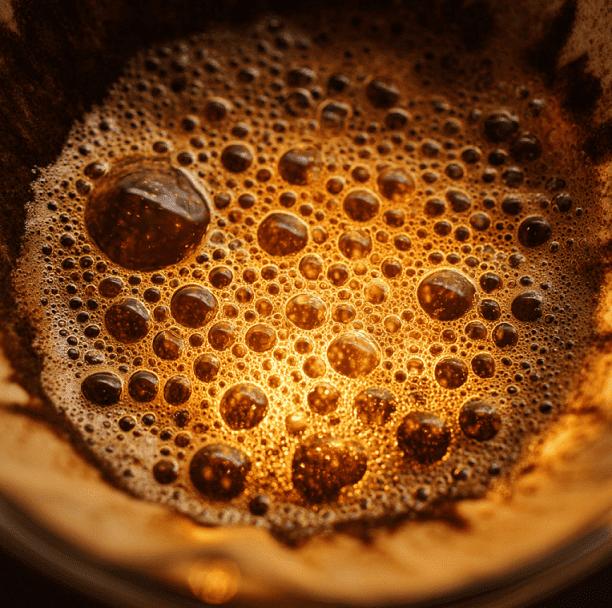
The main reason coffee blooms is carbon dioxide release.
Roasted coffee is not completely empty of gas after roasting.
As the beans cool, some CO₂ remains inside the bean structure.
When the coffee is ground, the surface area increases dramatically.
Then, when hot water reaches the grounds, the gas begins to escape.
This is why you may see bubbles forming across the coffee bed.
The more recently roasted and properly stored the coffee is, the more noticeable the bloom may be.
However, a large bloom does not automatically mean that the coffee will taste better.
What Happens During a Coffee Bloom?
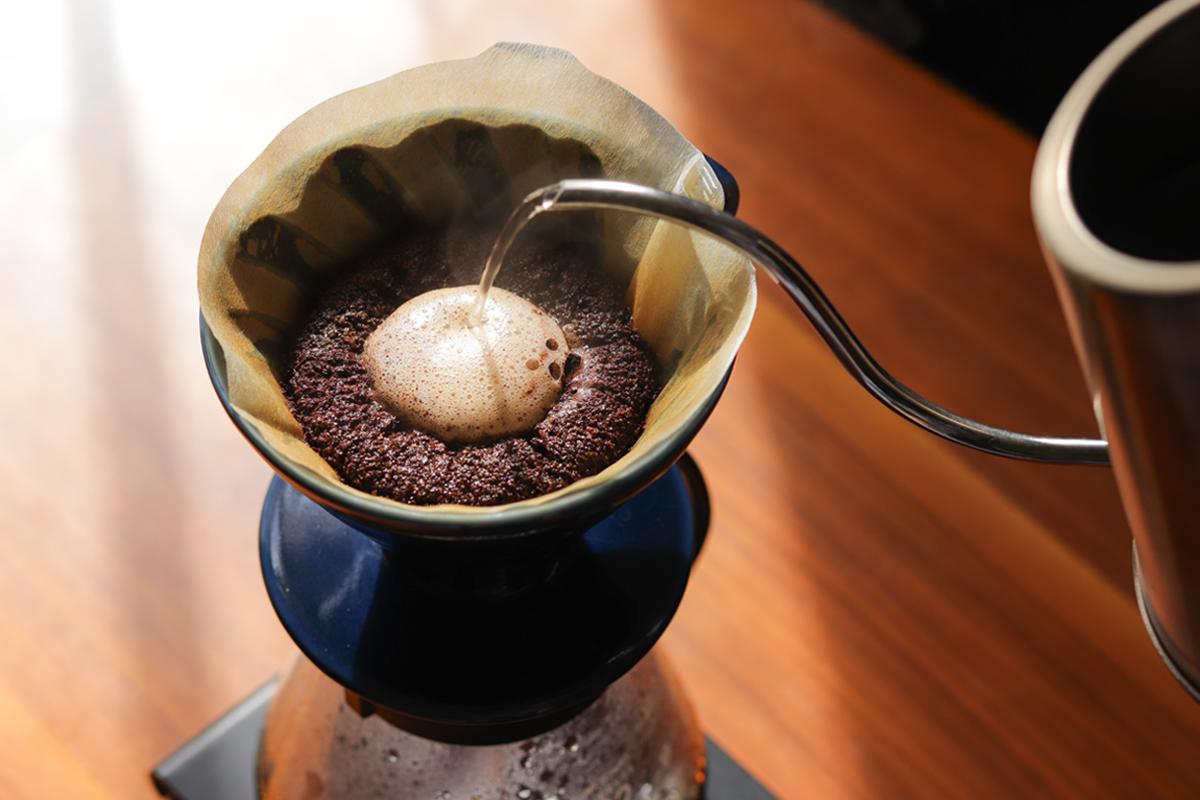
Blooming is more than simply watching bubbles form.
Several things are happening at the same time.
1. Water Reaches the Coffee Grounds
Hot water begins to wet the dry coffee particles.
2. CO₂ Starts to Escape
The trapped gas moves out of the coffee structure.
3. The Coffee Bed Expands
As gas escapes, the grounds can rise and swell.
4. The Coffee Becomes More Fully Wetted
Water begins interacting with more of the coffee particles.
This prepares the coffee for the main extraction phase.
For pour-over brewing, blooming is therefore an important part of the brewing process.
Does Fresh Coffee Bloom More?
Generally, freshly roasted coffee tends to release more CO₂ than older coffee.
This can result in a more visible bloom.
However, freshness alone does not determine how dramatic the bloom will be.
Other factors also matter, including:
-
Roast level
-
Grind size
-
Coffee variety
-
Bean density
-
Processing method
-
Storage conditions
-
Roasting profile
-
Brewing method
A coffee roasted several days ago may bloom more noticeably than another coffee roasted more recently if the two coffees have different physical characteristics.
So, bloom size should not be treated as a simple freshness meter.
Does Roast Level Affect Coffee Bloom?
Yes.
Roasting changes the physical structure of the coffee bean.
As the coffee is heated, the bean expands and becomes more porous.
Different roast profiles can therefore influence how much gas remains inside the bean and how quickly that gas escapes.
Light, medium, and dark roasted coffees can behave differently during blooming.
This is one reason why you may need to adjust your brewing technique when switching between different coffees.
What About Grind Size?
Grind size also affects blooming.
When coffee is ground more finely, the total surface area increases.
This changes how water interacts with the coffee particles.
A finer grind may also influence how quickly gases escape and how the water moves through the coffee bed.
A coarse grind behaves differently.
The ideal grind depends on the brewing method and recipe, so bloom should always be considered as part of the complete brewing process rather than as an isolated step.
How Much Water Should You Use for the Bloom?
There is no single amount that works perfectly for every coffee.
A common approach is to use enough water to thoroughly wet the coffee grounds before continuing with the main pour.
Many brewers use roughly 2 to 3 times the weight of coffee as bloom water.
For example:
20 g coffee → approximately 40–60 g bloom water
The exact amount can be adjusted according to the coffee, grinder, filter, and brewing method.
The goal is simple:
Wet the coffee evenly without unnecessarily disturbing the brewing process.
How Long Should Coffee Bloom?
Bloom time is also not universal.
Many pour-over recipes use around 30–45 seconds for the initial bloom.
But this is a starting point, not a strict rule.
Some coffees may benefit from a shorter bloom.
Others may respond well to a longer one.
If the coffee is very fresh and releases a lot of CO₂, giving it enough time to degas can help water contact the grounds more evenly.
If the coffee is older and has already released much of its CO₂, an extended bloom may not provide the same benefit.
Is a Bigger Bloom Better?
Not necessarily.
This is one of the biggest misconceptions about coffee blooming.
A dramatic bloom can be visually impressive, but it does not automatically indicate higher coffee quality.
A coffee can produce a large bloom and still taste unbalanced.
Another coffee may produce a relatively small bloom and taste excellent.
The quality of the final cup depends on many factors:
-
Green coffee quality
-
Roasting
-
Freshness
-
Grind size
-
Water
-
Brewing ratio
-
Temperature
-
Extraction
-
Brewing technique
Bloom is only one part of the process.
What If My Coffee Does Not Bloom?
Don't worry.
A small bloom does not necessarily mean something is wrong.
There are several possible reasons.
The Coffee May Be Older
Older coffee has usually released more CO₂.
The Coffee May Have Been Ground Earlier
Pre-ground coffee loses gas and aroma faster than whole beans.
The Coffee May Have Been Stored Poorly
Heat, oxygen, moisture, and time can affect coffee freshness.
The Coffee May Have a Different Roast Profile
Different roasting approaches can produce different gas-release behavior.
The Coffee May Naturally Behave Differently
Variety, processing, density, and other physical characteristics can influence blooming.
Instead of judging the coffee by bloom size alone, taste the final brew.
Why Is Blooming Important for Pour-Over Coffee?
Pour-over brewing depends heavily on how water moves through the coffee bed.
If the coffee grounds are dry in some areas and saturated in others, extraction may become uneven.
Blooming gives the initial water time to contact the grounds and allows trapped gas to escape before the main pour.
This can help create more consistent contact between water and coffee.
However, technique still matters.
Pouring too aggressively can disturb the coffee bed.
Pouring too gently may leave dry areas.
The goal is controlled and even saturation.
Blooming and Coffee Extraction
Coffee extraction is the process of dissolving soluble compounds from the coffee grounds into water.
During the bloom, the coffee is beginning this extraction process.
At the same time, CO₂ is escaping.
If too much gas remains trapped between the coffee particles, it can interfere with water contacting the grounds evenly.
Allowing the coffee to bloom can therefore help prepare the coffee bed for the main extraction.
This is particularly relevant for fresh roasted coffee.
Can You Bloom Coffee with a Vietnamese Phin?
.jpg)
Yes, although the process looks different from a typical pour-over bloom.
A Vietnamese phin uses a metal filter and a relatively slow brewing process.
Instead of pouring water in several controlled pulses as you might with a pour-over, you can add a small amount of water first to wet the coffee grounds before adding more water.
This allows the coffee to begin absorbing water and releasing some gas.
The exact technique depends on the coffee, grind size, filter design, and recipe.
For Vietnamese-style coffee, the bloom can be a simple way to improve consistency without changing the traditional character of the brewing method.
Blooming Different Coffee Processes
Coffee processing can also influence the physical characteristics of roasted beans.
Washed, honey, and natural coffees can behave differently during roasting and brewing.
However, it would be too simple to say that one processing method always creates a larger bloom.
Bloom behavior depends on many variables working together.
This is another reason why every new coffee can require a little experimentation.
What Can Coffee Bloom Tell You?
Bloom can provide some useful clues.
A strong bloom may suggest that the coffee contains a noticeable amount of retained CO₂.
A weak bloom may indicate that the coffee has already released much of its gas.
But bloom should not be used alone to determine:
-
Coffee quality
-
Freshness
-
Roast quality
-
Flavor potential
Think of it as one piece of information rather than a final judgment.
A Simple Coffee Bloom Experiment
Want to understand blooming for yourself?
Try this simple experiment.
Step 1: Choose One Coffee
Use freshly roasted whole-bean coffee.
Step 2: Weigh Your Coffee
Try 20 g of coffee.
Step 3: Grind Immediately Before Brewing
Use the grind size appropriate for your pour-over method.
Step 4: Add 40–60 g of Water
Pour enough water to wet the coffee evenly.
Step 5: Watch the Bloom
Observe:
-
How quickly the coffee expands
-
How many bubbles appear
-
How much the coffee bed rises
-
How quickly the bubbles disappear
Step 6: Continue Brewing
After around 30–45 seconds, continue with the rest of your brewing recipe.
Then taste the coffee.
Repeat the experiment with the same coffee several days later.
You may notice that the bloom changes as the coffee ages.
Bloom Is Part of the Coffee's Journey
The coffee bloom is a small moment, but it represents a much bigger story.
Before the bloom happens, the coffee has already gone through:
Growing → Harvesting → Processing → Drying → Sorting → Roasting → Degassing → Grinding → Brewing
By the time hot water reaches the grounds, the coffee has already experienced many transformations.
The bloom is simply the moment when some of those changes become visible.
Coffee Bloom and Cầu Đất Coffee
Cầu Đất Arabica can be roasted and brewed in different styles, depending on the characteristics of the coffee and the desired flavor profile.
When brewing freshly roasted Arabica, observing the bloom can be an interesting way to understand how the coffee behaves.
A coffee from the highlands of Da Lat may express different aromas and flavors depending on its variety, processing method, roast profile, and brewing technique.
Rather than following one fixed recipe for every coffee, paying attention to how the coffee blooms can help you make more informed brewing adjustments.
Final Thoughts
Coffee bloom is one of the most interesting visual moments in pour-over brewing.
It happens when hot water reaches freshly ground coffee and releases carbon dioxide retained inside the roasted beans.
The coffee expands, bubbles appear, and the grounds become increasingly saturated.
But remember:
A bigger bloom does not automatically mean better coffee.
Bloom is influenced by freshness, roast level, grind size, storage, variety, processing, and other physical characteristics.
The most important thing is still the final cup.
Use the bloom as a clue.
Observe how the coffee behaves.
Adjust your recipe when necessary.
And most importantly, taste the result.
That is where the real story of the coffee begins.
Discover Cau Dat Bean
Explore Vietnamese coffee from the highlands of Da Lat and discover how roasting, freshness, brewing, and origin shape the final coffee experience.
Cau Dat Bean Showroom
📍 82B Truong Cong Dinh, Xuan Huong Ward, Da Lat, Lam Dong, Vietnam
📞 +84 926 915 849
📧 caudatbean@gmail.com
Try before you buy.
Frequently Asked Questions
What is coffee bloom?
Coffee bloom is the expansion and bubbling that occurs when hot water first contacts freshly ground coffee, mainly because trapped carbon dioxide is released from the roasted beans.
Why does fresh coffee bloom more?
Freshly roasted coffee generally retains more carbon dioxide, which can create a more visible bloom when water reaches the grounds.
How long should coffee bloom?
A common starting point for pour-over coffee is around 30–45 seconds, but the ideal time depends on the coffee and brewing recipe.
How much water should I use for blooming?
A common starting point is around 2–3 times the coffee dose. For 20 g of coffee, approximately 40–60 g of bloom water can work well.
Is a bigger coffee bloom better?
No. Bloom size is influenced by many factors and does not directly determine coffee quality.
Can I bloom coffee in a Vietnamese phin?
Yes. You can add a small amount of water first to wet the grounds and allow them to release some gas before continuing the brew.
Does bloom affect coffee flavor?
It can. Allowing the coffee grounds to become evenly saturated and release trapped gas can influence how water interacts with the coffee during extraction.


 Group4, Cau Dat Village, Xuan Truong commune, Da Lat City, Lam Dong Province, Vietnam
 +84 783 472 234
 caudatbean@gmail.com
  www.caudatbean.com