
How to Store Green Coffee Beans: Temperature, Humidity & Packaging
Buying good green coffee is only the beginning.
After coffee is harvested, processed, dried, sorted, and packed, proper storage becomes an important part of protecting its quality.
Green coffee is an agricultural product. It can interact with its surrounding environment, especially changes in humidity, temperature, and packaging conditions.
So, how should green coffee beans be stored?
In this guide, we look at the key factors that coffee buyers, roasters, and exporters should understand when storing green coffee.
Why Is Green Coffee Storage Important?
Green coffee may spend weeks or months in storage before it is roasted.
During this period, unsuitable conditions can affect the physical condition of the beans and their behavior during roasting.
Good storage aims to keep the coffee as stable as possible.
Important factors include:
-
Temperature
-
Relative humidity
-
Moisture
-
Packaging
-
Ventilation
-
Cleanliness
-
Storage duration
-
Protection from strong odors and contamination
Storage does not improve the quality of green coffee.
Instead, the goal is to protect the quality that already exists.
1. Keep Temperature Stable
Temperature is one of the important environmental factors in green coffee storage.
Large temperature changes can contribute to changes in the surrounding humidity and the way coffee interacts with its environment.
For commercial storage, a cool and stable environment is generally preferred.
A commonly referenced range for green coffee storage is around 18–22°C, although the appropriate conditions can vary depending on the facility, packaging, climate, and storage duration.
The most important principle is not simply choosing one temperature.
It is maintaining stable conditions and avoiding unnecessary temperature fluctuations.
2. Control Relative Humidity
Humidity is particularly important because green coffee can absorb moisture from the surrounding air.
If the storage environment is excessively humid, coffee may gain moisture over time.
If the environment is extremely dry, the coffee may lose moisture.
Either situation can affect the physical condition of the beans.
For this reason, many professional storage recommendations aim to keep relative humidity controlled, often around or below 60%, depending on the storage system and packaging.
A warehouse should therefore be monitored rather than judged only by how dry it looks.
3. Protect Green Coffee From Moisture
Moisture is one of the most important considerations when storing green coffee.
Green coffee specifications commonly include a moisture value.
For example, a lot may have a maximum moisture specification of 12.5%.
However, the moisture level measured when coffee arrives at the warehouse is only one part of the story.
Storage conditions also matter.
If coffee is exposed to humid air for an extended period, it can absorb moisture.
This may affect:
-
Bean weight
-
Physical condition
-
Storage stability
-
Roasting behavior
-
Consistency between batches
This is why moisture should be monitored throughout the supply chain rather than checked only once.
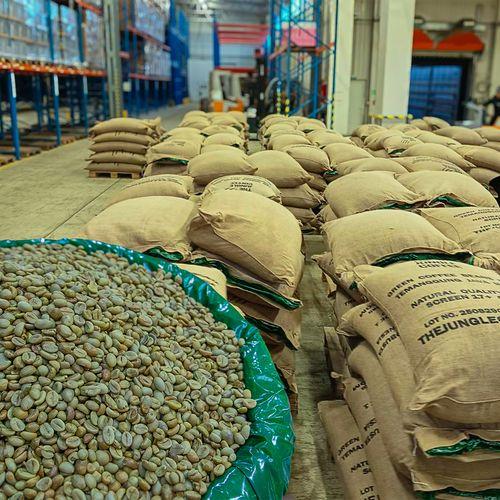
4. Choose the Right Packaging
Packaging creates a barrier between green coffee and its surrounding environment.
Traditional jute bags are widely used for transporting and storing coffee.
For higher-value or longer-term storage, coffee may also be placed inside a hermetic or high-barrier inner bag before being packed into an outer jute or woven bag.
These packaging systems can provide additional protection against moisture exchange and environmental changes.
The right packaging depends on:
-
Coffee value
-
Storage duration
-
Shipping distance
-
Climate
-
Destination
-
Buyer requirements
There is no single packaging solution for every coffee.
5. Keep Coffee Off the Floor
Green coffee bags should not be placed directly on the warehouse floor.
Using pallets or an appropriate raised storage system helps create separation between the bags and the floor.
This can reduce exposure to:
-
Moisture
-
Dirt
-
Water spills
-
Cleaning chemicals
-
Pests
-
Other contaminants
It also makes warehouse inspection and handling easier.
For commercial coffee storage, good organization is part of quality control.
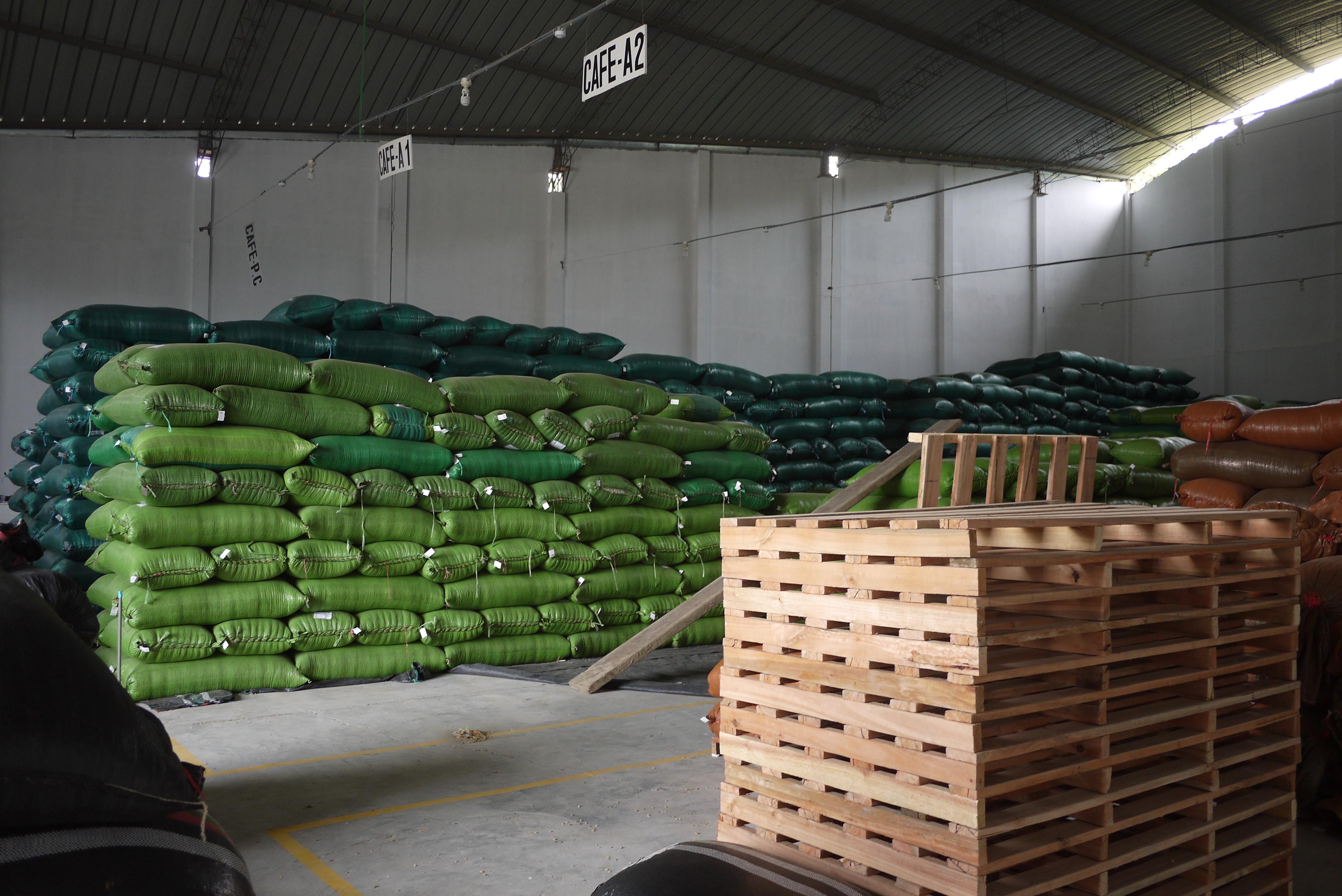
6. Leave Enough Space Around the Coffee
Stacking coffee bags too tightly can make warehouse inspection and air movement more difficult.
Organized stacks with appropriate access paths allow staff to:
-
Inspect bags
-
Check for damage
-
Monitor storage conditions
-
Move lots safely
-
Identify different batches
A well-organized warehouse is not only easier to work in.
It also makes it easier to detect potential problems before they affect a larger quantity of coffee.
7. Protect Coffee From Strong Odors
Green coffee can be affected by its surrounding environment.
For this reason, coffee should not be stored next to materials that produce strong odors.
Examples include:
-
Chemicals
-
Fuel
-
Cleaning products
-
Paint
-
Strong spices
-
Other strongly scented materials
A clean coffee warehouse should be dedicated to food-safe storage and protected from unnecessary contamination.
This is especially important for specialty coffee, where delicate aromas are an important part of the final cup.
8. Keep the Warehouse Clean
A clean storage environment helps reduce contamination and pest risks.
Regular warehouse management should include:
-
Cleaning floors and storage areas
-
Checking packaging for damage
-
Monitoring for pests
-
Removing unnecessary materials
-
Keeping storage areas dry
-
Maintaining clear access paths
Coffee storage is not simply about temperature and humidity.
The overall warehouse environment matters too.
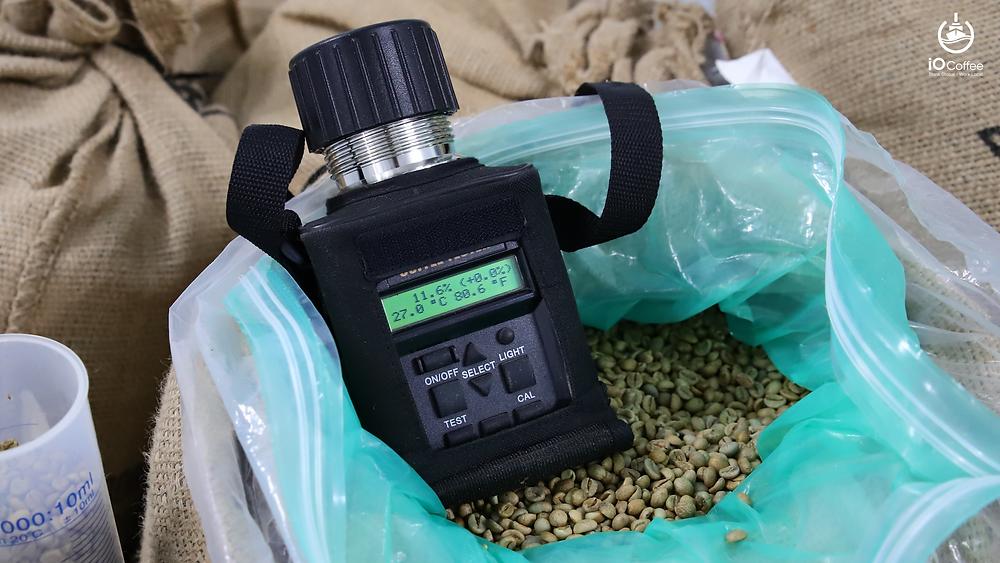
9. Monitor Moisture During Long-Term Storage
One common mistake is assuming that coffee's moisture condition will remain exactly the same after packing.
Environmental conditions can change.
Coffee can interact with surrounding humidity depending on the packaging and storage environment.
For this reason, long-term storage may require periodic checks.
Moisture measurement can help identify changes before they become a larger quality issue.
For green coffee buyers and exporters, keeping records can also help with traceability and quality control.
10. Water Activity Can Provide Additional Information
Moisture content is not the only measurement related to water in green coffee.
Another measurement is water activity (aw).
Moisture content tells us approximately how much water is present in the coffee.
Water activity provides information about how available that water is within the product.
These are different measurements.
For this reason, professional quality control may consider both moisture and water activity when evaluating green coffee.
Neither measurement should be treated as a standalone definition of coffee quality.
Instead, they are pieces of information that help describe the condition of the green bean.
11. Storage Duration Matters
Green coffee is not designed to be stored indefinitely.
Even when storage conditions are controlled, coffee changes over time.
Long storage can gradually affect:
-
Aroma
-
Cup characteristics
-
Physical appearance
-
Roasting behavior
-
Overall freshness
The rate of change depends on the coffee, packaging, storage conditions, and duration.
For this reason, buyers should plan inventory according to expected roasting and shipping schedules rather than keeping unnecessarily large quantities in storage.
12. Use First-In, First-Out Inventory
For warehouses handling multiple coffee lots, a simple inventory system can help manage storage time.
One practical approach is FIFO — First In, First Out.
The coffee that entered storage first is prioritized for shipment or production before newer stock.
This can help reduce unnecessarily long storage periods.
Each lot should ideally be identified with information such as:
-
Origin
-
Variety
-
Processing method
-
Lot number
-
Crop year
-
Packing date
-
Quantity
-
Storage location
Clear identification makes inventory management much easier.
13. Keep Different Lots Separate
Different coffee lots should be clearly separated and identified.
For example, a warehouse may contain:
Cau Dat Arabica – Washed
Cau Dat Arabica – Honey
Robusta G1 – Screen 16/18
Robusta Clean
Robusta Honey
Keeping lots separate helps prevent mixing and makes it easier to maintain traceability.
For exporters, this is particularly important when customers have specific requirements for origin, variety, processing method, or physical specifications.
Green Coffee Storage During International Shipping
Storage does not stop when coffee leaves the warehouse.
Green coffee may encounter different environments during:
Warehouse → Truck → Port → Container → Ocean Shipping → Destination Warehouse → Roastery
Temperature and humidity can change throughout the journey.
This is why packaging and handling become particularly important for international shipments.
For higher-value specialty coffee, buyers may have specific packaging requirements designed to provide additional protection during transportation.
What Happens If Green Coffee Is Stored Poorly?
Poor storage does not always cause an immediate visible problem.
Changes may develop gradually.
Depending on the conditions, poorly stored green coffee may experience:
-
Moisture changes
-
Unwanted odors
-
Physical deterioration
-
Increased storage risk
-
Inconsistent roasting behavior
-
Changes in cup quality
This is why prevention is generally better than trying to correct the problem later.
Once green coffee has significantly deteriorated, roasting cannot simply restore its original condition.
A Simple Green Coffee Storage Checklist
For coffee buyers, exporters, and roasters, a simple checklist can help:
Environment
☐ Stable temperature
☐ Controlled relative humidity
☐ Good ventilation
☐ Clean and dry warehouse
Packaging
☐ Appropriate coffee bags
☐ No damaged packaging
☐ Additional barrier packaging when required
☐ Protection from moisture and odors
Warehouse
☐ Coffee stored on pallets
☐ Clear access between stacks
☐ No strong chemicals or odors nearby
☐ Pest monitoring
☐ Regular cleaning
Quality Control
☐ Moisture checked
☐ Water activity checked when relevant
☐ Lot identification maintained
☐ Storage dates recorded
☐ FIFO inventory management
This simple system can make a significant difference when managing commercial quantities of green coffee.
How Storage Connects to Roasting
Green coffee storage and roasting are closely connected.
A roaster may develop a specific profile based on the physical characteristics of a coffee.
If the coffee condition changes significantly during storage, the same roasting profile may not produce exactly the same result.
This is why professional roasters pay attention to green coffee before roasting.
They may evaluate:
-
Moisture
-
Density
-
Screen size
-
Defects
-
Color
-
Water activity
-
Aroma
-
Sample roast
-
Cup quality
The more stable the green coffee remains, the easier it is to work toward consistent roasting results.
Green Coffee Storage and Cau Dat Arabica
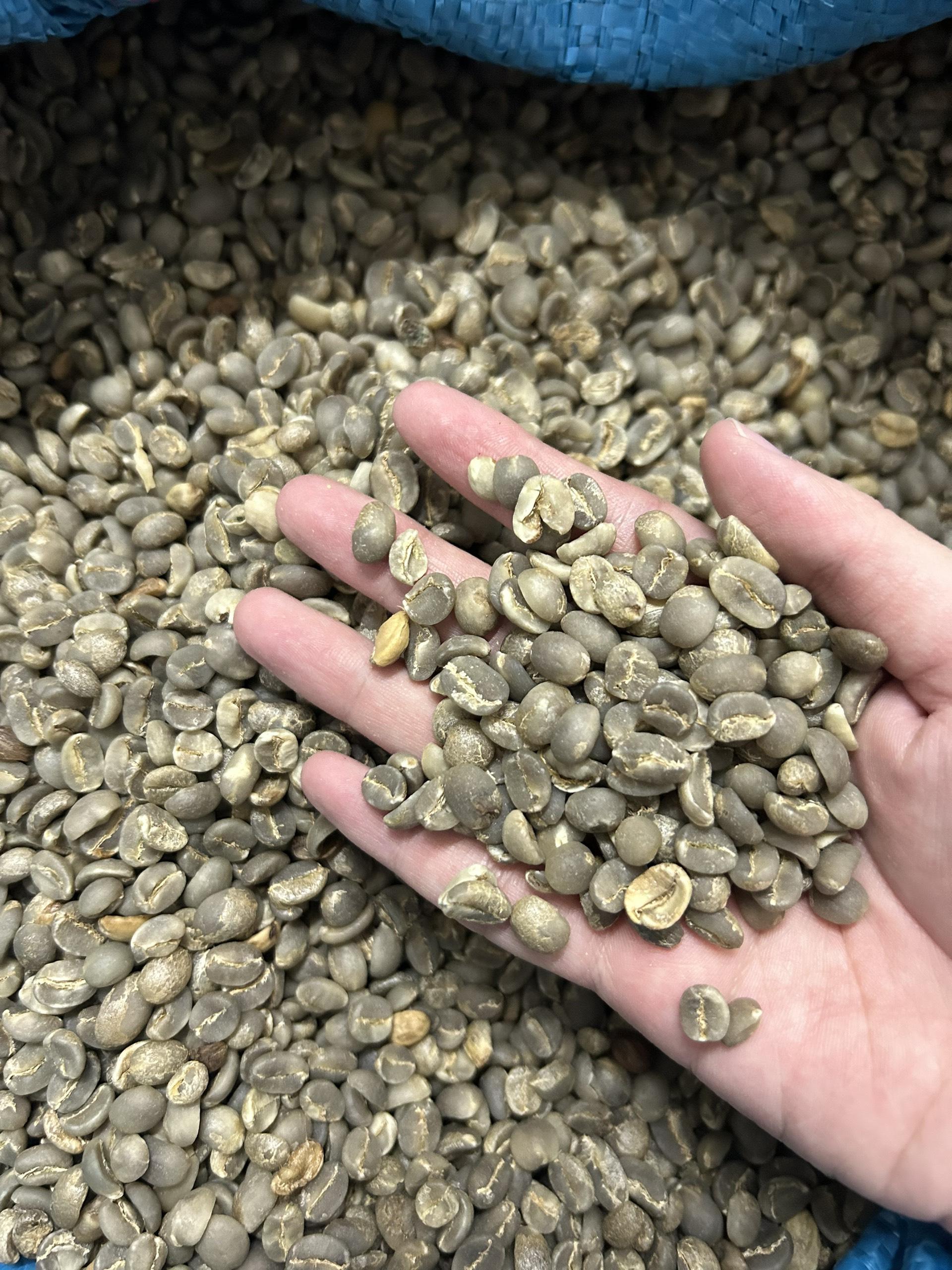
Cau Dat Arabica is grown in the highlands of Da Lat, where coffee is produced at relatively high elevation and processed through different methods.
Once coffee has been processed and prepared as green coffee, proper storage becomes another important step in protecting its characteristics.
For buyers sourcing Vietnamese Arabica, it is useful to look beyond the coffee specification itself.
Ask about:
-
How the coffee was processed
-
How it was dried
-
Moisture condition
-
Packaging
-
Storage conditions
-
Lot traceability
-
Sample roasting
-
Cup quality
Good coffee sourcing is not only about finding the right green bean.
It is also about maintaining its condition from the producer to the roaster.
Final Thoughts
Proper storage is an important but sometimes overlooked part of the green coffee supply chain.
Good storage does not make an average coffee become a great coffee.
Its role is simpler:
Protect the quality of the coffee that already exists.
Stable temperature, controlled humidity, suitable packaging, clean storage conditions, good inventory management, and regular quality checks can all help reduce unnecessary quality changes.
For green coffee buyers, exporters, and roasters, understanding storage is another step toward more consistent coffee.
Because quality does not begin at the roaster.
It begins much earlier — and it needs to be protected all the way to the final cup.
Discover Vietnamese Green Coffee with Cau Dat Bean
At Cau Dat Bean, we supply selected Vietnamese green coffee for roasting, wholesale, and export, including Arabica from the Cau Dat growing region and different Robusta selections.
If you are looking for green coffee with clear specifications and traceable lot information, contact us to discuss available coffees and samples.
Cau Dat Bean Showroom
82B Trương Công Định, Phường Xuân Hương, Đà Lạt, Lâm Đồng, Vietnam
Phone / WhatsApp: +84 926 915 849
Email: caudatbean@gmail.com
Try before you buy.
Frequently Asked Questions
How should green coffee beans be stored?
Green coffee should be stored in a clean, dry, stable environment away from excessive humidity, heat, strong odors, and contaminants.
What temperature is suitable for green coffee storage?
A commonly referenced range is around 18–22°C, but the appropriate range depends on the storage facility, packaging, climate, and duration.
What humidity is suitable for green coffee?
Controlled relative humidity is important. Many storage recommendations aim for around or below 60%, while the appropriate condition depends on packaging and the local environment.
Should green coffee be stored in jute bags?
Jute bags are widely used for green coffee. For longer storage or higher-value coffee, an additional hermetic or high-barrier inner bag may provide greater protection.
Can green coffee absorb moisture?
Yes. Green coffee can interact with surrounding humidity and may gain or lose moisture depending on environmental conditions and packaging.
How long can green coffee be stored?
There is no single storage period that applies to every coffee. Coffee condition, packaging, temperature, humidity, and storage duration all influence how well quality is preserved.
Why is green coffee stored on pallets?
Pallets help keep coffee bags separated from the floor and reduce exposure to moisture, dirt, spills, and other contaminants.
Does storage affect coffee roasting?
Yes. Changes in the physical condition of green coffee can influence roasting behavior and consistency.


 Group4, Cau Dat Village, Xuan Truong commune, Da Lat City, Lam Dong Province, Vietnam
 +84 783 472 234
 caudatbean@gmail.com
  www.caudatbean.com