
How Coffee Packaging Protects Freshness: Oxygen, Light, and One-Way Valves
When people choose coffee, they often focus on the origin, roast level, aroma, and flavor. But there is another factor that deserves attention: packaging.
Coffee packaging does much more than make a product look attractive on the shelf. It helps protect roasted coffee from oxygen, moisture, light, and other environmental factors that can gradually affect its quality.
For coffee roasters, retailers, and coffee lovers, understanding packaging is an important step toward preserving the characteristics of good coffee.
So, what makes coffee packaging effective, and why do many roasted coffee bags include a small circular valve?
Why Does Coffee Need Protective Packaging?
Roasted coffee is sensitive to its surroundings. After roasting, chemical and physical changes continue, while exposure to oxygen and moisture can gradually affect aroma and flavor.
Good packaging helps create a more stable environment for the coffee between production and consumption.
The main factors to consider are:
-
Oxygen: Exposure can accelerate oxidation and reduce desirable aroma compounds.
-
Moisture: Humidity can affect coffee quality and storage stability.
-
Light: Strong light, particularly over prolonged periods, can contribute to quality deterioration.
-
Heat: High storage temperatures can accelerate changes in coffee quality.
-
External odors: Coffee can absorb unwanted odors when stored in unsuitable conditions.
Packaging cannot stop every change that occurs after roasting, but a suitable barrier material can help slow deterioration and protect the coffee during storage and distribution.
How Does Oxygen Affect Roasted Coffee?
Oxygen is one of the main factors that coffee packaging is designed to manage.
Roasted coffee contains many aromatic compounds that contribute to its distinctive smell and taste. Exposure to oxygen can gradually change these compounds and contribute to the loss of freshness.
This is why many commercial coffee bags use multilayer materials designed to limit oxygen transmission.
The effectiveness of the package depends on several factors, including the material structure, seal quality, closure design, and handling conditions.
For coffee businesses, choosing suitable packaging is not simply a visual decision. It is part of maintaining product quality throughout the supply chain.
Why Does Coffee Packaging Need a Light Barrier?
Have you noticed that many specialty coffee bags are opaque rather than transparent?
One reason is light protection.
Prolonged exposure to light can contribute to the deterioration of roasted coffee, particularly when combined with other environmental factors.
Opaque packaging helps reduce direct light exposure during storage and retail display.
However, an attractive package should also provide practical protection. A beautiful design is valuable, but it should not come at the expense of the barrier properties needed to protect the coffee.
For roasters selecting packaging, both appearance and functional performance deserve consideration.
What Is the Small Valve on a Coffee Bag?
Many bags of freshly roasted coffee have a small circular component on the front or back. This is called a one-way degassing valve.
After roasting, coffee beans continue to release carbon dioxide (CO₂). If freshly roasted coffee is sealed in a package, this gas can accumulate inside.
A one-way valve allows gas to escape while helping prevent outside air from entering under normal operating conditions.
This helps manage pressure inside the bag without requiring the package to remain open.
The valve is particularly useful for packaging freshly roasted whole-bean coffee, although the need for one depends on the product and packaging process.
How Does a One-Way Degassing Valve Work?
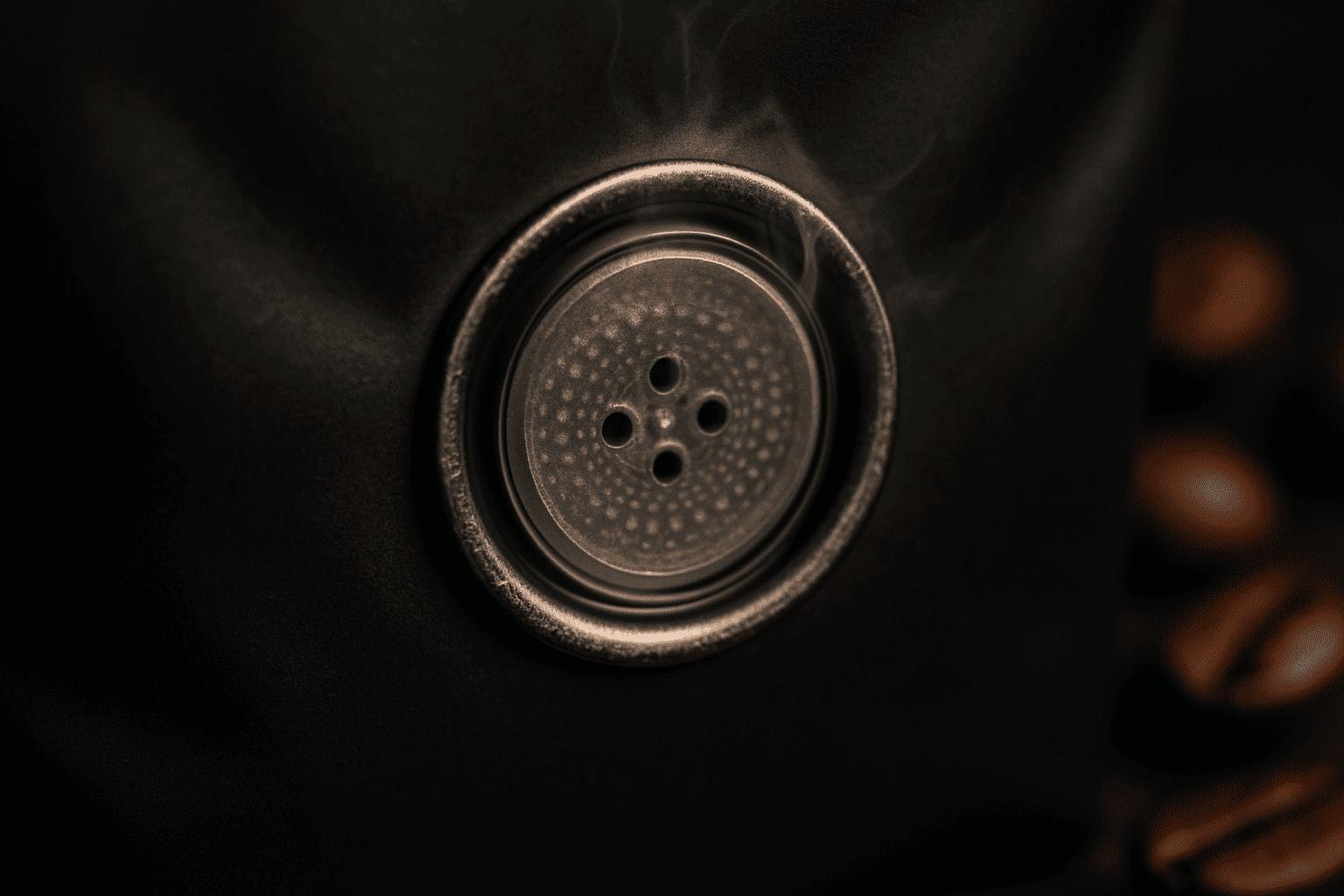
The principle is straightforward.
1. Coffee releases carbon dioxide
Roasting produces gases that remain in the beans and gradually escape after roasting.
2. Gas accumulates inside the package
When coffee is packed in a sealed bag, the released gas can increase internal pressure.
3. The valve releases excess gas
The valve opens under suitable pressure conditions, allowing gas to escape from the package.
4. The valve helps limit outside-air entry
When pressure conditions change, the valve closes again, helping protect the coffee from external air.
The valve does not eliminate oxygen already inside the package, nor does it replace a suitable barrier material. It is one component of a complete packaging system.
Does Every Coffee Bag Need a Valve?
Not necessarily.
The right packaging depends on the coffee product and how it is processed, packed, stored, and distributed.
For freshly roasted whole beans, a one-way valve can be useful because the beans continue releasing carbon dioxide after roasting.
Other packaging systems may use different approaches depending on the product, timing, and packaging technology.
For example, some commercial systems control the residual oxygen inside the package or use modified-atmosphere packaging.
The best choice depends on the roaster's requirements, intended shelf life, package size, and distribution conditions.
A valve should therefore be selected based on the packaging process rather than treated as an automatic requirement for every coffee product.
Why Is a Resealable Zipper Useful?
A one-way valve and a resealable zipper serve different purposes.
The valve helps manage gas released by coffee inside a sealed package.
A zipper allows consumers to close the bag again after opening it.
Once a coffee bag has been opened, repeated exposure to air and humidity can gradually affect the coffee. Closing the package carefully after each use helps limit unnecessary exposure.
However, a zipper is not necessarily equivalent to the original factory seal. It cannot restore the same protective conditions that existed before opening.
For the best results, consumers should reseal the bag properly and store it in a cool, dry place away from direct sunlight and strong odors.
What Makes a Good Coffee Packaging Material?
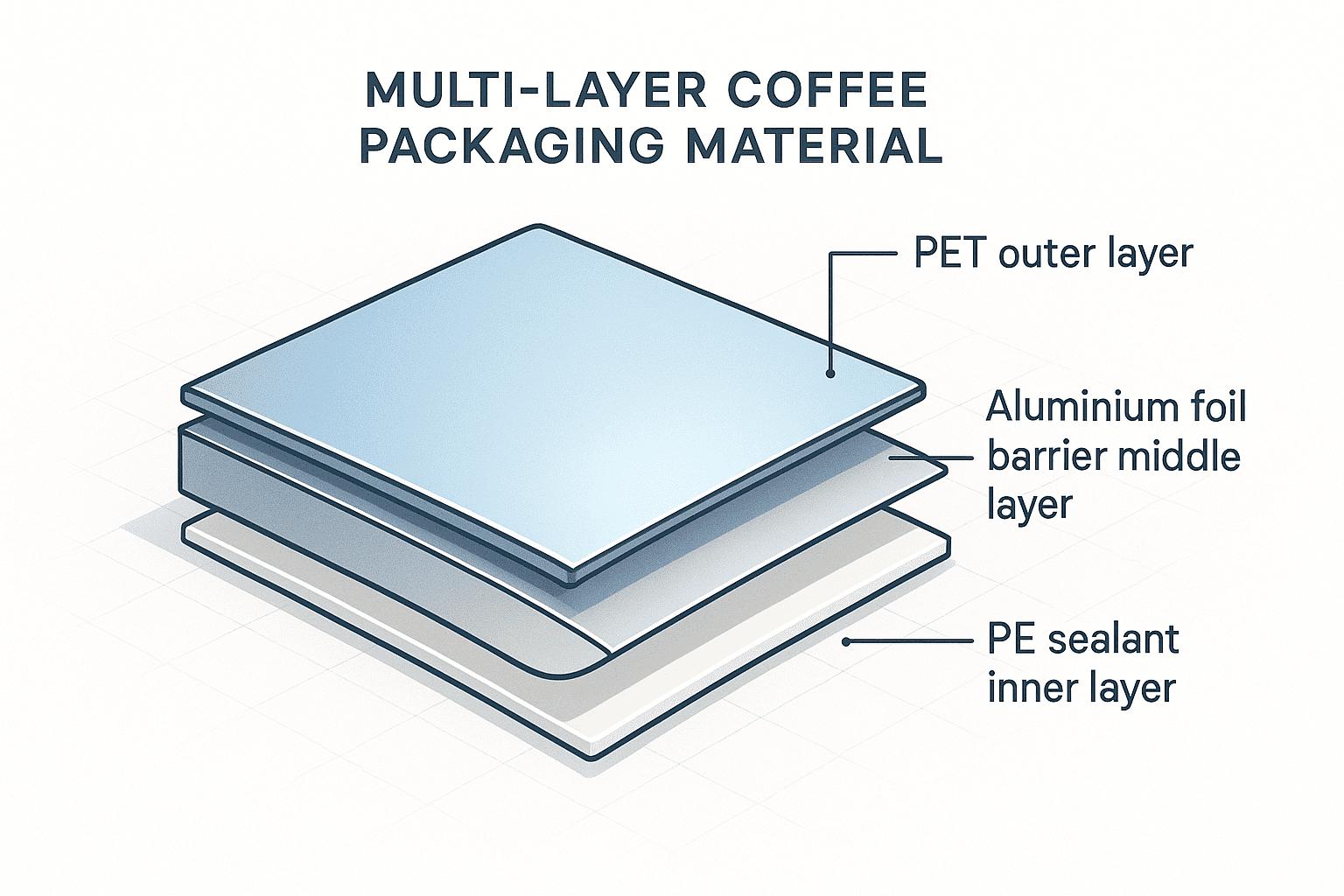
Coffee bags may use several layers of material, each serving a different function.
Depending on the packaging design, these layers can contribute to:
-
Mechanical strength
-
Protection against oxygen
-
Moisture resistance
-
Light protection
-
Heat-sealing performance
-
Print quality and appearance
Some packages use foil or metallized layers to improve barrier performance. Others use alternative structures designed to balance protection, cost, appearance, and recyclability.
There is no single material that is automatically best for every product.
Roasters should consider the coffee type, storage conditions, distribution route, package size, and expected shelf life when selecting a packaging structure.
Food-contact compliance and reliable sealing are also essential considerations.
Whole Beans vs. Ground Coffee: Does Packaging Matter?
Yes. Both whole-bean and ground coffee benefit from protective packaging, but their storage behavior can differ.
Grinding increases the surface area of coffee exposed to air. As a result, ground coffee can lose its desirable aroma more quickly than whole beans under similar storage conditions.
This makes suitable barrier packaging especially important for ground coffee.
For whole beans, packaging must also accommodate gas released after roasting when the beans are packed relatively fresh.
In both cases, the goal is to protect the coffee from unnecessary exposure to environmental factors while supporting the intended storage and distribution process.
How Should You Store Coffee After Opening the Bag?
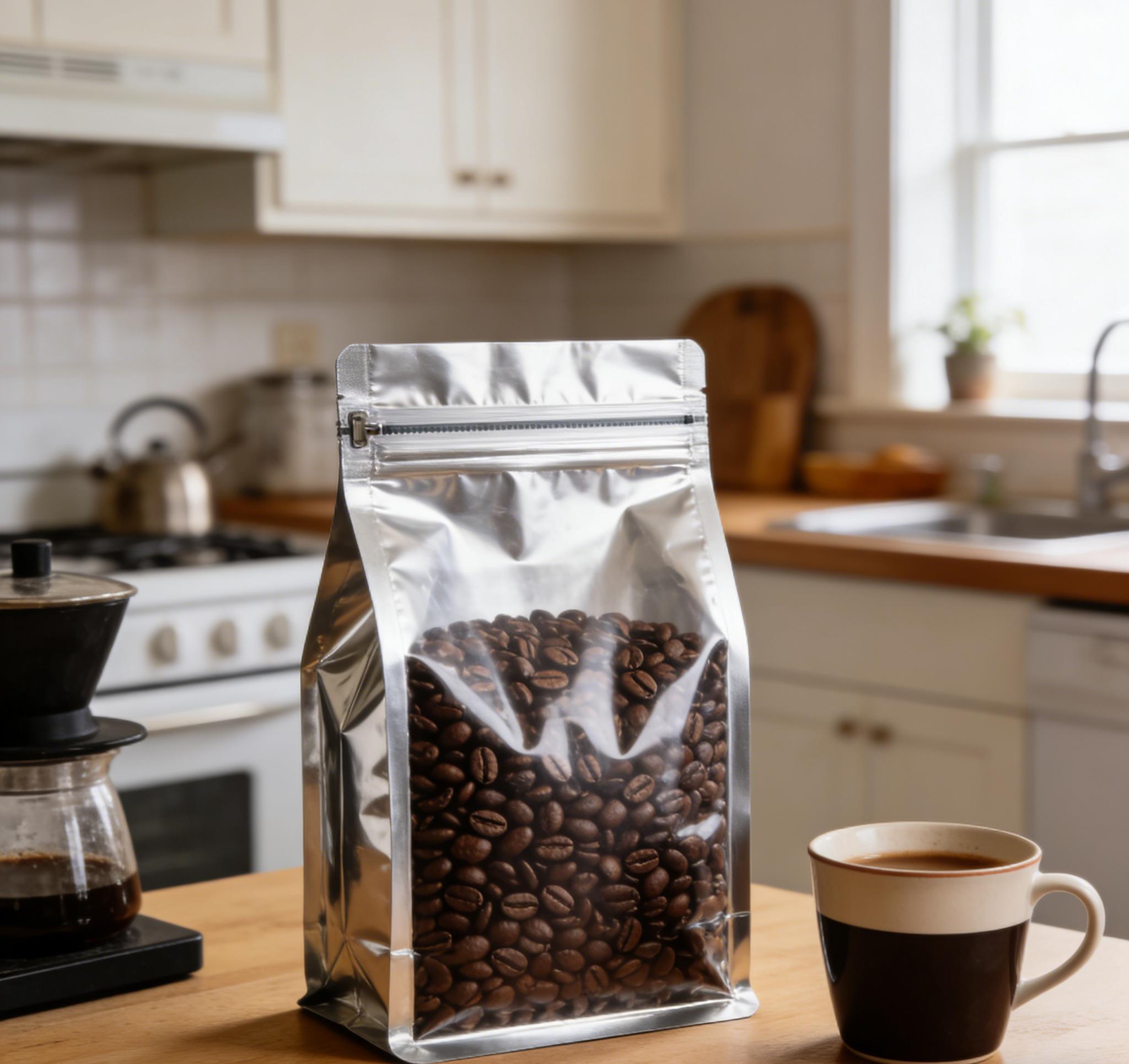
Even well-designed packaging cannot protect coffee indefinitely once it is opened and repeatedly exposed to air.
A few simple habits can help:
-
Close the package securely after each use.
-
Store coffee in a cool, dry place.
-
Keep it away from direct sunlight and heat sources.
-
Avoid storing it near strong-smelling foods or household products.
-
Buy an amount that suits your usual consumption rate.
Refrigeration is generally unnecessary for everyday coffee storage and can introduce moisture or odor-transfer concerns when coffee is repeatedly taken in and out.
For longer-term storage, an appropriate airtight container or carefully sealed package can help limit exposure, provided moisture and condensation are managed.
Why Packaging Matters for Coffee Businesses
For coffee roasters, packaging influences more than product presentation.
It can affect product protection during transport, storage, retail display, and delivery to customers.
For wholesale and export businesses, the packaging decision should reflect the full journey from the packing facility to the final destination.
Important questions include:
-
Is the barrier material suitable for the intended storage conditions?
-
Are the seals reliable?
-
Is a one-way valve appropriate for the product?
-
Can the package withstand handling and transport?
-
Does the packaging meet the destination market's requirements?
-
Are sustainability and recyclability goals compatible with the required barrier performance?
A well-designed package balances product protection, practicality, cost, branding, and environmental considerations.
Final Thoughts
Coffee packaging is an important part of preserving quality after roasting.
Suitable barrier materials help protect coffee from oxygen, moisture, and light. One-way degassing valves manage carbon dioxide released by freshly roasted beans, while resealable closures help consumers store coffee more carefully after opening.
No package can keep coffee unchanged forever. However, choosing the right materials and using them correctly can help preserve desirable aroma and flavor throughout storage and distribution.
At Cầu Đất Bean, we believe that coffee quality depends on every stage of the journey, from selecting the beans to roasting, packaging, and preparing the final cup.
Discover Cầu Đất Coffee
Explore Vietnamese coffee from the highlands of Đà Lạt with Cầu Đất Bean.
Try before you buy.
Showroom: 82B Trương Công Định, Phường Xuân Hương, Đà Lạt, Lâm Đồng, Vietnam
Phone / WhatsApp: +84 926 915 849
Email: caudatbean@gmail.com
Frequently Asked Questions
What is the valve on a coffee bag for?
It is a one-way degassing valve that allows carbon dioxide to escape while helping limit outside-air entry.
Does a coffee bag valve keep coffee fresh forever?
No. It helps manage gas and protect the package, but coffee quality still changes over time. Packaging material, sealing, storage, and handling all matter.
Why are many coffee bags opaque?
Opaque packaging helps protect coffee from direct light exposure, which can contribute to quality deterioration over time.
Is a resealable coffee bag enough to preserve freshness?
Resealing helps reduce exposure to air and humidity after opening, but it does not recreate the original factory seal.
Is packaging important for ground coffee?
Yes. Ground coffee has a larger exposed surface area than whole beans and can lose desirable aroma more quickly under similar storage conditions. Protective packaging is therefore important for both products.


 Group4, Cau Dat Village, Xuan Truong commune, Da Lat City, Lam Dong Province, Vietnam
 +84 783 472 234
 caudatbean@gmail.com
  www.caudatbean.com