
Why Green Coffee Density Matters: What Roasters Should Know Before Buying
When coffee buyers look at a green coffee specification sheet, they often focus on origin, variety, processing, screen size, and moisture.
But there is another physical characteristic that can tell roasters a lot about how a coffee may behave during roasting:
Density.
Green coffee density is not usually the first specification that new coffee buyers ask about.
However, for professional roasters, understanding density can help explain why two coffees with similar screen sizes and moisture levels may behave very differently in the roaster.
So, what exactly is green coffee density?
And why does it matter?
What Is Green Coffee Density?
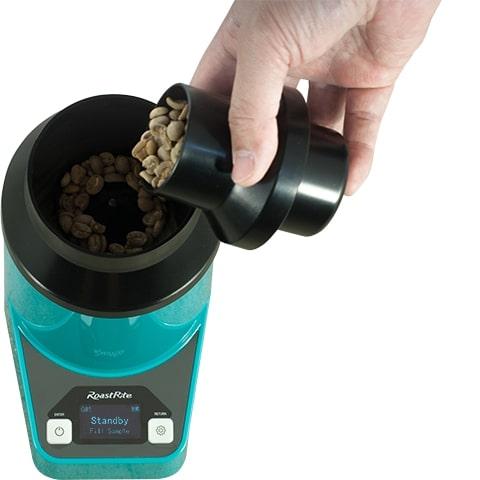
In simple terms, density describes how much mass is contained within a given volume.
A denser coffee bean contains more matter packed into the same amount of space.
For green coffee, density can be influenced by several factors, including:
-
Growing altitude
-
Temperature
-
Coffee variety
-
Cherry development
-
Moisture
-
Processing
-
Bean structure
-
Growing conditions
Density is therefore another piece of information that can help roasters understand a coffee before roasting it.
It is not a direct measurement of cup quality.
But it can provide useful clues about how the green coffee may respond to heat.
Why Does Coffee Density Matter to Roasters?
Roasting is essentially the controlled application of heat.
But green coffee does not respond to heat in exactly the same way.
Different beans can absorb, retain, and transfer heat differently depending on their physical structure.
A denser bean can behave differently from a less dense bean during the roasting process.
This can influence:
-
Heat transfer
-
Rate of temperature change
-
Development time
-
First crack behavior
-
Roast progression
-
Final roast profile
For this reason, experienced roasters do not simply use one roast profile for every coffee.
They adjust the approach according to the characteristics of the green bean.
High-Altitude Coffee and Density
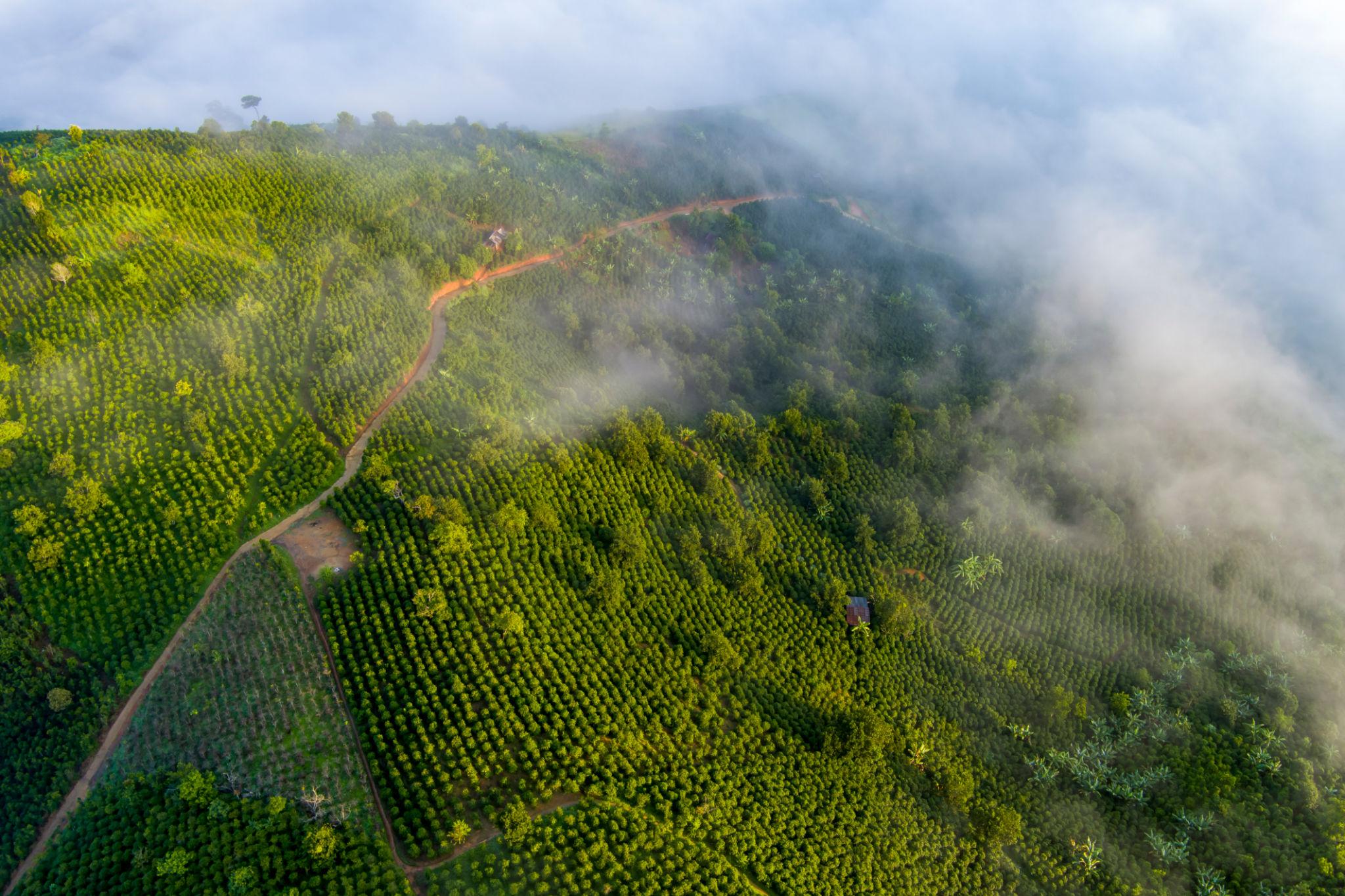
One of the most interesting relationships in coffee is between elevation and bean density.
Coffee grown at higher elevations generally develops in cooler conditions.
The cooler environment can slow the maturation of the coffee cherry.
This slower development can contribute to denser bean structure.
Cau Dat is a highland coffee-growing area around Da Lat, with Arabica production at elevations commonly associated with approximately 1,500–1,650 meters above sea level.
The region's cool climate and high elevation are important characteristics of its coffee-growing environment.
However, it is important to remember:
High altitude does not automatically mean high density.
Density is influenced by multiple factors, not elevation alone.
Variety, climate, agricultural practices, cherry maturity, processing, drying, and moisture can all contribute to the physical characteristics of the bean.
What Does a Dense Coffee Look Like?
Density cannot be determined reliably simply by looking at a green coffee bean.
Two beans can look almost identical in size but have different internal structures.
This is why screen size and density should not be confused.
For example:
Screen size tells you about the physical dimensions of the bean.
Density tells you how much mass is packed into that volume.
A Screen 18 bean is not automatically denser than a Screen 16 bean.
A larger bean can be less dense, while a smaller bean can be highly dense.
This is why professional green coffee evaluation considers multiple physical characteristics together.
Density and Screen Size Are Not the Same Thing
This is an important distinction for coffee buyers.
Imagine two coffee beans:
Coffee A
-
Screen 18
-
Large physical size
-
Medium density
Coffee B
-
Screen 16
-
Smaller physical size
-
Higher density
Coffee A is physically larger.
But Coffee B may contain more mass relative to its volume.
Therefore:
Bigger does not always mean denser.
This is one reason why screen size should never be used as the only indicator of green coffee quality.
Density and Moisture
Moisture is another factor that needs to be considered.
Green coffee naturally contains a certain amount of water after processing and drying.
Changes in moisture can affect the physical characteristics of the beans.
This means a density measurement should be interpreted together with moisture rather than viewed completely on its own.
For professional coffee buyers, a useful green coffee evaluation may therefore include:
Density + Moisture + Screen Size + Defects + Sample Cupping
Together, these provide a much clearer picture of the coffee.
How Does Density Affect Roasting?
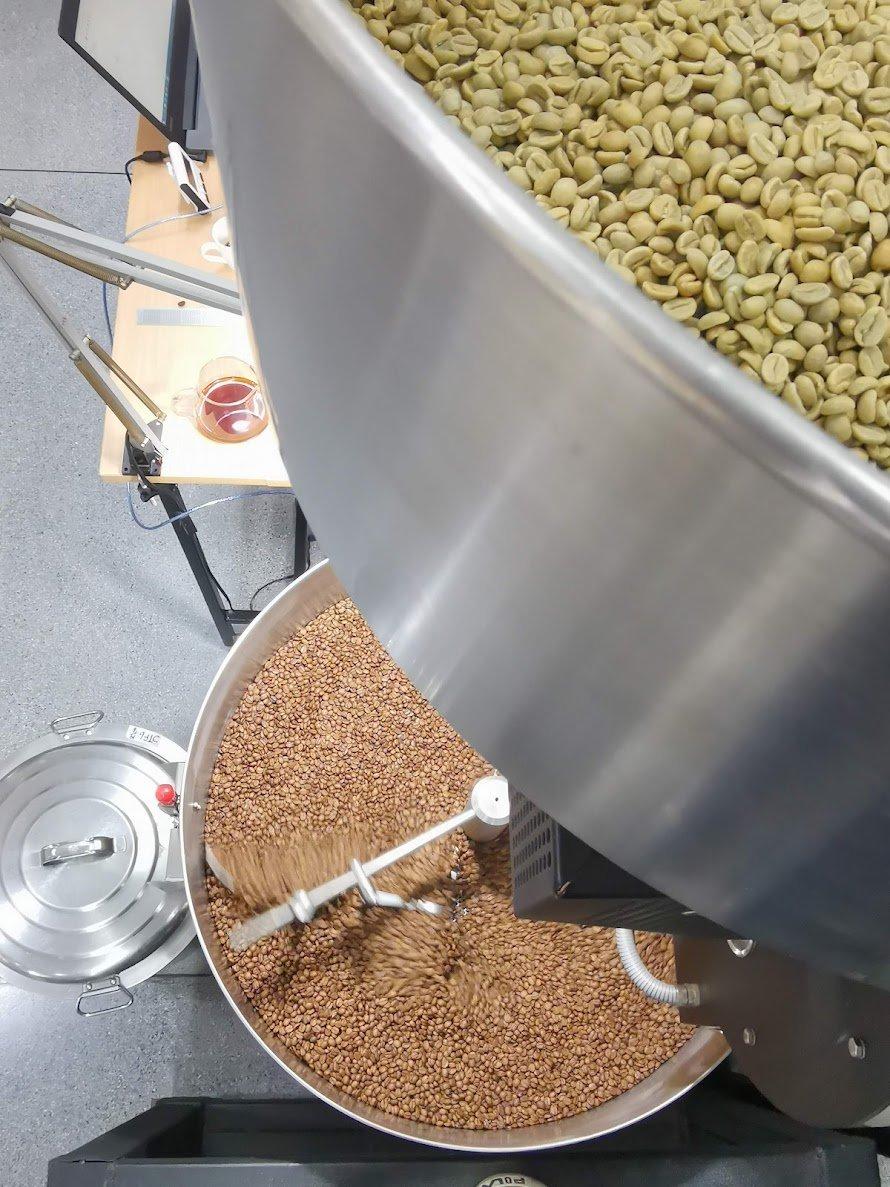
One of the main reasons roasters care about density is heat transfer.
A denser coffee may require a different roasting approach compared with a less dense coffee.
For example, a roaster may need to consider:
-
Initial charge temperature
-
Rate of temperature increase
-
Heat application
-
Airflow
-
Development time
-
End temperature
The exact approach depends on the coffee.
There is no universal rule saying:
“High-density coffee must always be roasted this way.”
Instead, density is one of several variables that helps the roaster build an appropriate profile.
High-Density Coffee and Roast Development
Dense green coffee can sometimes require more energy during roasting to develop the interior of the bean properly.
If the roast progresses too aggressively, the outside of the bean may develop faster than the inside.
If the roast is too gentle or lacks sufficient energy, the coffee may not develop enough.
This is why experienced roasters pay attention to the relationship between:
Energy + Time + Bean Structure
The goal is not simply to roast the bean darker.
The goal is to develop the coffee evenly while preserving the characteristics that make the origin and variety interesting.
Can Density Affect Flavor?
Density itself is not a flavor.
You will not taste “high density” in the same way that you taste acidity, sweetness, or chocolate.
Instead, density can influence how the coffee responds to roasting.
Roasting then affects the development of:
-
Sweetness
-
Acidity
-
Body
-
Aroma
-
Flavor
-
Finish
This creates an indirect relationship:
Growing conditions → Bean structure → Density → Roasting behavior → Cup characteristics
This is one reason coffee is so fascinating.
The final flavor is influenced by a chain of events that begins long before brewing.
Why Slow Growth Can Matter
Coffee grown in cooler highland environments often develops more slowly.
This is one of the reasons high-altitude coffee is frequently associated with distinctive physical and sensory characteristics.
Cau Dat's highland environment around Da Lat is known for cool temperatures, mist, and elevation. These conditions form part of the terroir behind its Arabica production.
But again, we should avoid oversimplifying the relationship.
Slow growth does not automatically guarantee better coffee.
Good coffee requires the right combination of:
-
Suitable variety
-
Healthy plants
-
Appropriate climate
-
Good agricultural practices
-
Careful harvesting
-
Proper processing
-
Effective drying
-
Good storage
-
Skilled roasting
Every stage matters.
Why Density Matters When Buying Vietnamese Arabica
Vietnam is widely recognized as a major Robusta-producing country.
But the highlands around Da Lat offer a different side of Vietnamese coffee.
Cau Dat is particularly known for Arabica production at high elevations, with varieties including Catimor and Typica among the coffees associated with the region.
For international roasters sourcing Vietnamese Arabica, understanding physical characteristics such as density can help them approach the coffee more confidently.
Instead of asking only:
“What does this coffee taste like?”
A roaster can also ask:
“How does this green coffee behave?”
That question can be extremely useful when developing a roasting profile.
Density Is Especially Useful for Roasting Trials
When a new green coffee arrives at a roastery, the first roast is often an experiment.
The roaster is trying to understand the coffee.
Questions may include:
-
How quickly does it absorb heat?
-
When does the color begin to change?
-
How does it behave approaching first crack?
-
How much development does it need?
-
Does it respond better to stronger or gentler heat?
-
How does the cup change when the profile is adjusted?
Density can provide another clue when answering these questions.
It does not give the roaster the final answer.
But it helps build a better starting point.
How Should Coffee Buyers Evaluate Density?
If you are buying green coffee, do not look at density in isolation.
A more complete evaluation should include:
1. Origin
Where was the coffee grown?
2. Variety
What coffee variety produced the beans?
3. Elevation
What is the growing altitude?
4. Processing
Was it washed, honey, natural, or another process?
5. Moisture
How much moisture remains in the green beans?
6. Screen Size
What is the bean size distribution?
7. Defects
How clean and uniform is the lot?
8. Density
How is the bean structure characterized?
9. Cupping
Most importantly:
How does the coffee taste?
The best purchasing decision combines physical information with sensory evaluation.
Density Does Not Replace Cupping
This is worth repeating.
A coffee can have impressive physical specifications and still fail to meet a roaster's flavor expectations.
Likewise, a coffee with less impressive-looking physical characteristics can sometimes produce an excellent cup.
That is why green coffee evaluation should always connect the physical bean to the sensory result.
At Cau Dat Bean, we believe that specifications are important, but they are only part of the story.
The final test is always the coffee itself.
From Cau Dat Green Bean to Roasting Room
Imagine a green coffee grown in the highlands of Cau Dat.
It begins with a coffee tree.
The tree grows in a cool environment.
The cherries develop slowly.
Ripe cherries are harvested.
The coffee is processed and dried.
The green beans are sorted and prepared.
Then the coffee arrives at the roastery.
At this point, the roaster takes over.
The green bean's physical characteristics become important.
Density.
Moisture.
Size.
Structure.
All of these factors help the roaster understand how to approach the coffee.
Then heat transforms the green bean into something completely different.
Aromas develop.
The bean expands.
Color changes.
Acidity, sweetness, body, and flavor begin to take shape.
And eventually, the coffee reaches the cup.
What Does This Mean for Coffee Buyers?
For coffee buyers, understanding density can make communication with a roaster much easier.
Instead of buying green coffee based only on:
Origin + Price
you can begin evaluating:
Origin + Variety + Process + Physical Quality + Density + Cup Profile
This creates a much more complete sourcing strategy.
It also helps buyers select coffees based on their intended roasting style.
A coffee chosen for a light filter roast may have different requirements from a coffee intended for a dark espresso blend.
The right green coffee depends on the final goal.
Why Cau Dat Is Interesting for Roasters
Cau Dat offers something valuable to coffee professionals:
A highland Vietnamese Arabica origin with its own environmental identity.
The combination of elevation, cool climate, local varieties, farming practices, and processing creates coffees that can be explored from different roasting perspectives.
Some lots may highlight floral and bright characteristics.
Others may emphasize sweetness and body.
Processing can further change the expression.
And the roasting profile determines which characteristics become most prominent in the final cup.
That gives roasters room to experiment.
Discover Vietnamese Arabica with Cau Dat Bean
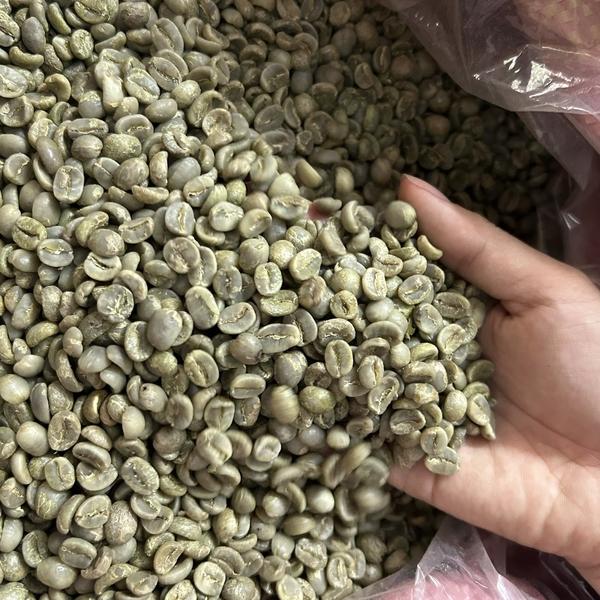
At Cau Dat Bean, we work with Vietnamese coffee from the highlands of Da Lat, including Arabica from the Cau Dat area.
Our green coffee offerings include varieties and processing methods selected according to each available lot, with specifications such as screen size, moisture, and physical quality provided for buyers.
For roasters and importers, our goal is not simply to provide coffee beans.
It is to provide information that helps buyers understand the coffee before it reaches the roasting machine.
Because better sourcing begins with better understanding.
Final Thoughts
Density may not be the first thing a coffee drinker notices.
But for a roaster, it can be an important piece of information.
It helps connect the physical green bean to the roasting process.
And it reminds us that coffee quality begins long before the roast.
From the highlands of Cau Dat to the roasting room, every stage influences the final cup.
The farm shapes the bean.
The bean shapes the roast.
The roast shapes the flavor.
And understanding the green coffee is the first step toward bringing out its full potential.
Frequently Asked Questions
What is green coffee density?
Green coffee density describes how much mass is contained within a specific volume of green coffee. It is influenced by factors such as growing conditions, variety, moisture, and bean structure.
Is high-density coffee better?
Not necessarily. Density is a physical characteristic, not a direct measurement of cup quality. A coffee's flavor depends on many factors, including variety, origin, processing, roasting, and brewing.
Does high altitude produce denser coffee?
Higher altitude and cooler temperatures can contribute to slower coffee development and may be associated with denser beans, but elevation alone does not determine density.
Is density the same as screen size?
No. Screen size describes the physical size of coffee beans, while density describes how much mass is contained within a given volume.
Why does density matter to coffee roasters?
Density can influence how green coffee responds to heat. Understanding it can help roasters develop an appropriate roasting approach and make better use of roasting trials.
Can I determine coffee density by looking at the beans?
Not reliably. Beans of similar size can have different densities. Physical measurement provides more useful information.
Does density affect coffee flavor?
Density does not create a specific flavor by itself. However, it can influence roasting behavior, which in turn affects aroma, sweetness, acidity, body, and other cup characteristics.
What should I check when buying green coffee?
Look at the complete picture: origin, variety, elevation, processing, screen size, moisture, defects, density when available, and most importantly, the cupping results.


 Group4, Cau Dat Village, Xuan Truong commune, Da Lat City, Lam Dong Province, Vietnam
 +84 783 472 234
 caudatbean@gmail.com
  www.caudatbean.com