
What Is Coffee Water Activity? Why It Matters for Green Coffee Quality
When buying green coffee, buyers often look at moisture content, screen size, density, defects, and processing method.
But there is another measurement that can provide important information about how coffee behaves during storage:
Water activity.
Water activity, commonly written as aw, is different from moisture content. While moisture tells us how much water is present in coffee, water activity helps describe how available that water is within the coffee.
For green coffee buyers, exporters, and roasters, understanding water activity can provide another useful perspective when evaluating coffee quality and storage stability.
What Is Water Activity?
Water activity describes the availability of water in a product.
In simple terms, it tells us how freely water can participate in physical, chemical, and biological processes.
Water activity is measured on a scale from:
0 to 1.00
Pure water has a water activity close to 1.00.
Coffee has a much lower value because water is held within the structure of the green coffee bean.
This is important because two coffees can have similar moisture content but behave differently if their water activity is different.
Water Activity vs. Moisture Content
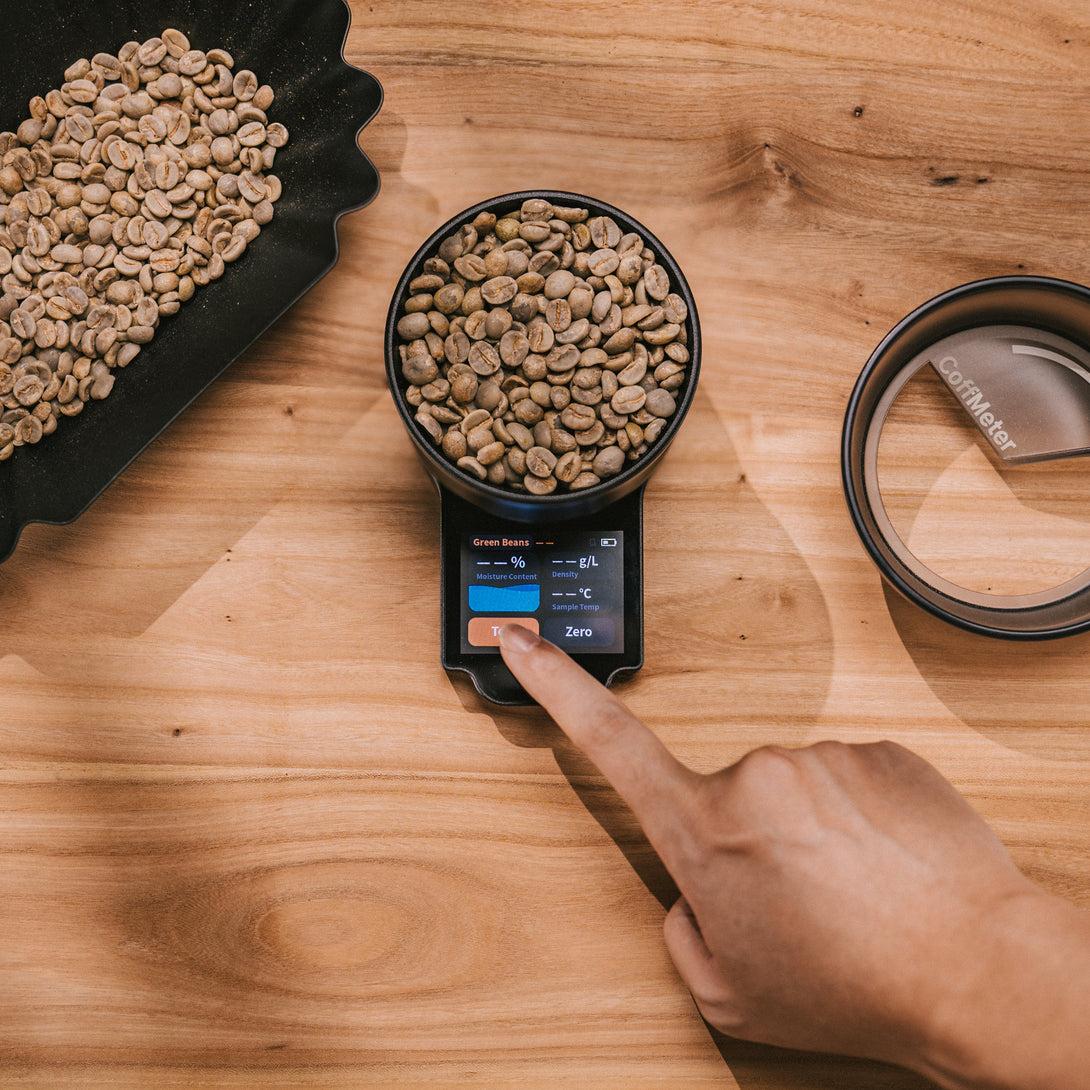
These two measurements are related, but they are not the same.
Moisture Content
Moisture content tells us the amount of water contained in the coffee.
For example, a green coffee specification may state a maximum moisture level such as 12.5%.
This is useful information for buyers and roasters.
Water Activity
Water activity tells us more about the availability of that water.
It is therefore possible for two green coffees to have similar moisture content but different water activity.
This difference can be important when evaluating storage stability and the behavior of the coffee over time.
In simple terms:
Moisture content = how much water is present
Water activity = how available that water is
Both measurements can provide useful information, but they answer different questions.
Why Does Water Activity Matter in Green Coffee?
Green coffee is an agricultural product.
After processing and drying, the beans still contain a certain amount of moisture.
The way that moisture is distributed and held inside the bean can influence how the coffee behaves during storage and roasting.
Water activity can therefore provide useful information related to:
-
Storage stability
-
Moisture movement
-
Quality preservation
-
Microbial growth potential
-
Roasting behavior
-
Green coffee consistency
For buyers handling coffee over longer periods or shipping coffee internationally, these factors can become especially important.
Can Water Activity Affect Coffee Storage?
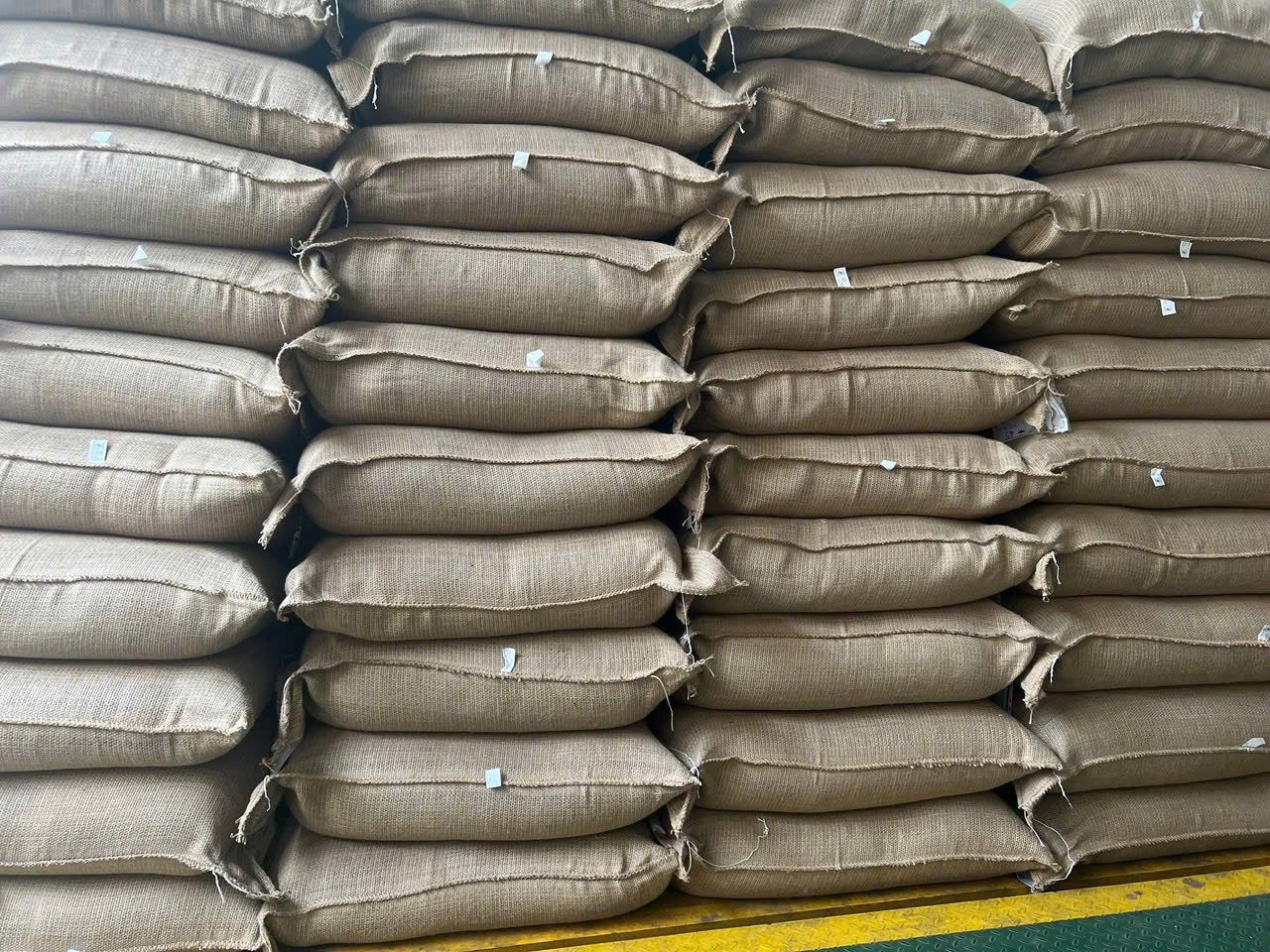
Yes.
Storage conditions can affect the relationship between coffee and its surrounding environment.
Green coffee can interact with humidity in the surrounding air.
If storage conditions are not well controlled, coffee may gain or lose moisture over time.
This can affect the physical characteristics of the beans and may influence their performance during roasting.
For this reason, good green coffee storage should consider more than simply keeping the beans in a dry-looking warehouse.
Temperature, relative humidity, packaging, ventilation, and storage duration can all matter.
What Happens When Green Coffee Gains Moisture?
If green coffee is exposed to a humid environment, it can absorb moisture from the surrounding air.
This can change the coffee's moisture condition and potentially affect its stability.
Over time, moisture changes may contribute to:
-
Changes in bean weight
-
Changes in physical properties
-
Inconsistent roasting behavior
-
Quality deterioration
-
Increased storage risk
This is why maintaining appropriate storage conditions is important from the moment coffee is dried until it reaches the roaster.
What Happens When Coffee Loses Moisture?
Coffee can also lose moisture when stored in an excessively dry environment.
This may change the physical characteristics of the green bean.
Large changes in moisture can make it more difficult for a roaster to maintain consistent behavior from batch to batch.
For professional coffee production, consistency is important.
The goal is not simply to make coffee as dry as possible.
The goal is to maintain stable and appropriate conditions for the coffee throughout storage.
Does Water Activity Affect Roasting?
Water activity can be relevant to roasting because water plays an important role in the way green coffee responds to heat.
Before major roasting reactions take place, the coffee bean is heated and moisture begins to move and evaporate.
Differences in moisture condition can influence how heat moves through the bean and how the coffee develops during roasting.
However, water activity should not be used alone to predict roast behavior.
Roasters should consider it together with:
-
Moisture content
-
Density
-
Screen size
-
Bean size
-
Variety
-
Processing method
-
Origin
-
Roast profile
This gives a more complete picture of how the coffee may behave in the roaster.
Is Higher Water Activity Better?
Not necessarily.
There is no simple rule that says higher water activity means better coffee.
Likewise, lower water activity does not automatically mean lower quality.
The useful question is whether the coffee has a stable and appropriate condition for its intended storage, transport, roasting, and use.
Water activity is a measurement.
It should be interpreted together with other quality information rather than treated as a standalone quality score.
Why Is Water Activity Important for Coffee Buyers?
For a green coffee buyer, a specification sheet can contain many numbers.
It may include:
-
Moisture
-
Screen size
-
Defects
-
Density
-
Water activity
-
Variety
-
Processing
-
Altitude
-
Crop year
Each measurement tells a different part of the story.
Water activity can be particularly useful when buyers want to understand how a coffee may behave during storage and transportation.
This can be valuable for international coffee shipments where the coffee may spend weeks or months moving between countries.
Water Activity and Coffee Export
International coffee supply chains involve multiple stages.
A typical journey may look like:
Farm → Processing → Drying → Storage → Export → Shipping → Importer → Roaster
At every stage, the coffee can encounter different temperature and humidity conditions.
Good handling helps reduce unnecessary changes to the green coffee.
For exporters and buyers, documenting the physical condition of the coffee before shipment can provide useful information for quality control.
Does Packaging Affect Water Activity?
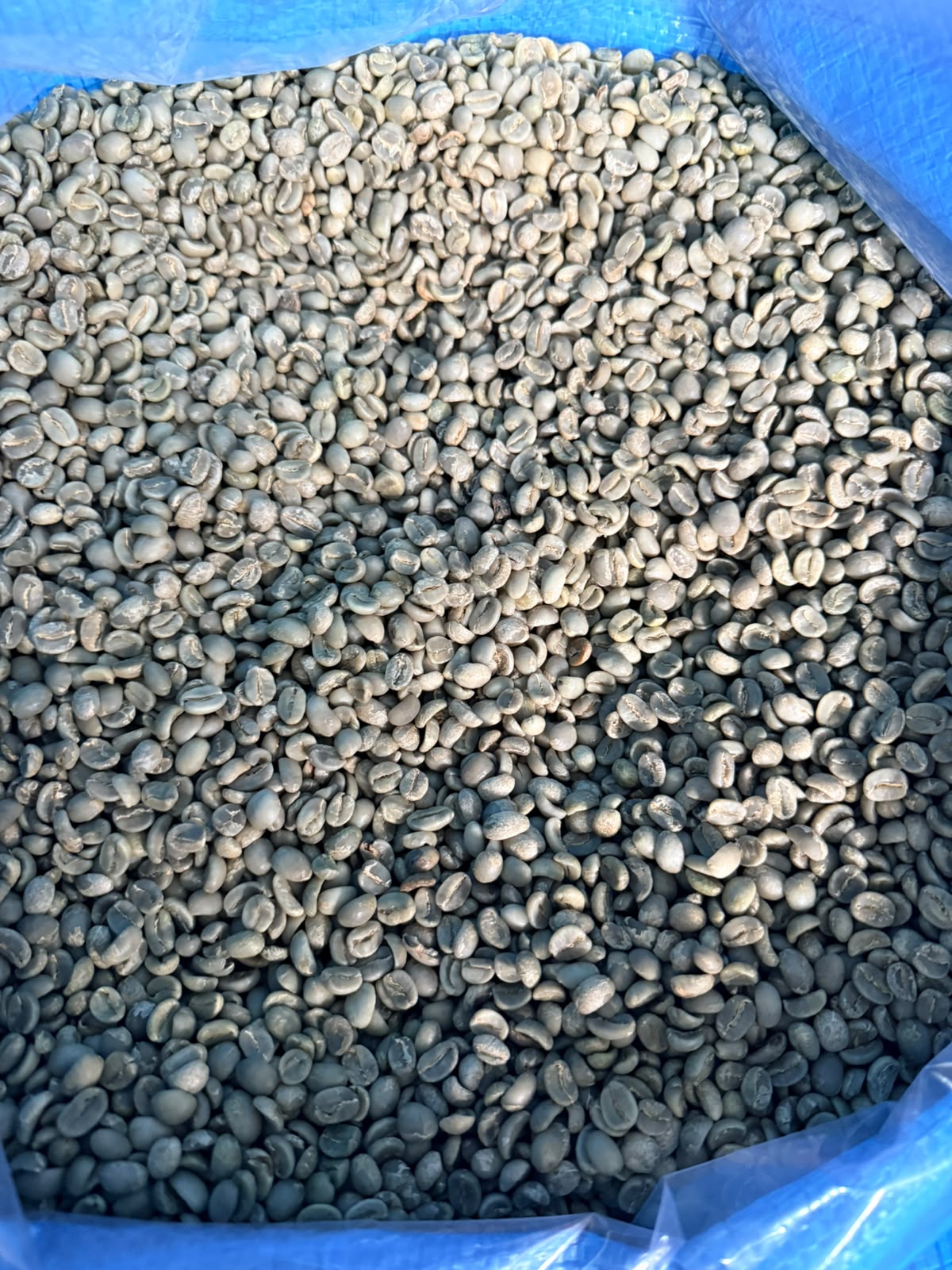
Packaging can influence how green coffee interacts with its surrounding environment.
Traditional jute bags allow some interaction between the coffee and surrounding humidity.
Modern specialty coffee packaging can provide greater protection from moisture and environmental changes.
The choice of packaging depends on:
-
Storage duration
-
Shipping conditions
-
Destination
-
Coffee value
-
Environmental conditions
-
Buyer requirements
For higher-value specialty coffees, packaging becomes an important part of protecting the characteristics of the green coffee during transportation.
Water Activity and Specialty Coffee
Specialty coffee buyers often pay close attention to consistency.
They may evaluate a coffee sample through:
-
Physical inspection
-
Moisture measurement
-
Density measurement
-
Defect evaluation
-
Sample roasting
-
Cupping
-
Comparison with the specification
Water activity can be another useful measurement within this process.
It does not replace cupping or physical evaluation.
Instead, it provides additional information that can help buyers and roasters understand the condition of the green coffee.
How Should Buyers Evaluate Water Activity?
A good evaluation should never rely on a single number.
Instead, buyers can look at the overall picture.
For example:
Origin + Variety + Processing + Moisture + Water Activity + Density + Defects + Cup Quality
This approach provides a much better understanding of the coffee than focusing on one specification alone.
A green coffee sample should also be evaluated under the conditions in which it will actually be used.
This is particularly important when purchasing larger quantities for commercial roasting.
Water Activity and Cau Dat Arabica
Cau Dat, in the highlands of Da Lat, is known for Arabica coffee grown in a cool, high-elevation environment.
Different Cau Dat coffee lots can vary by:
-
Variety
-
Processing method
-
Harvest timing
-
Moisture
-
Density
-
Screen size
-
Cup profile
For roasters working with Vietnamese Arabica, understanding the physical condition of each lot is important before developing a roasting profile.
Water activity can be one additional measurement that helps describe the condition of green coffee.
But as with any coffee specification, it should be considered alongside sample roasting and cupping.
Why Water Activity Is Different From Coffee Moisture
One of the most common misunderstandings is assuming that water activity and moisture content are interchangeable.
They are not.
Imagine two green coffee samples that both contain a similar percentage of water.
The water may not be held in exactly the same way inside the beans.
Therefore, the two coffees can potentially have different water activity measurements and behave differently under certain conditions.
This is why professional quality control sometimes uses both measurements.
Can Water Activity Predict Coffee Quality?
Not by itself.
Coffee quality is influenced by many factors.
A coffee with excellent water activity can still have defects.
A coffee with acceptable moisture can still produce an undesirable cup.
Ultimately, quality evaluation should combine objective measurements with sensory evaluation.
For green coffee buyers, the strongest approach is:
Measure → Roast → Cup → Compare
This helps connect the physical condition of the green bean with the actual sensory result.
Why Roasters Should Care About Green Coffee Before Roasting
The roasting process cannot completely correct poor green coffee handling.
The final cup begins with the condition of the green bean.
That is why professional roasters pay attention to the coffee before it enters the roaster.
Understanding moisture, density, water activity, defects, variety, and processing gives the roaster more information when designing a roast profile.
The better the starting information, the easier it becomes to work toward consistency.
Final Thoughts
Water activity may not be the first number a coffee buyer looks at, but it can provide useful information about the condition and stability of green coffee.
Unlike moisture content, which tells us how much water is present, water activity describes how available that water is within the coffee.
For green coffee buyers, exporters, and roasters, understanding the difference can help create a more complete approach to quality control.
However, no single measurement can define coffee quality.
The strongest evaluation combines physical analysis, storage conditions, sample roasting, and cupping.
At Cau Dat Bean, we believe that understanding coffee starts long before the first roast.
From the growing environment and processing method to moisture, physical characteristics, roasting, and cup quality, every stage contributes to the final coffee experience.
Frequently Asked Questions
What is coffee water activity?
Water activity is a measurement of how available water is within a product. It is different from total moisture content.
Is water activity the same as moisture content?
No. Moisture content measures how much water is present, while water activity describes how available that water is.
Why does water activity matter in green coffee?
It can provide useful information about storage stability, moisture behavior, and the condition of green coffee before roasting.
Can water activity affect roasting?
Water activity can be relevant to how green coffee behaves, but it should be considered together with moisture, density, bean size, processing, and other characteristics.
Is higher water activity better for coffee?
Not necessarily. Water activity should be interpreted in the context of storage, transportation, roasting, and overall coffee quality.
Should coffee buyers measure both moisture and water activity?
When available, using both measurements can provide a more complete picture of green coffee condition because they measure different properties.
Explore Vietnamese Green Coffee with Cau Dat Bean
Looking for Vietnamese green coffee for roasting, wholesale, or export?
Cau Dat Bean supplies selected Vietnamese coffee, including Arabica from the highlands of Da Lat.
Cau Dat Bean Showroom
📍 82B Trương Công Định, Phường Xuân Hương, Đà Lạt, Lâm Đồng, Vietnam
📞 +84 926 915 849
📧 caudatbean@gmail.com
Try before you buy.


 Group4, Cau Dat Village, Xuan Truong commune, Da Lat City, Lam Dong Province, Vietnam
 +84 783 472 234
 caudatbean@gmail.com
  www.caudatbean.com