
Coffee Grind Size Guide: How to Choose the Right Grind
If you want to make better coffee at home, one of the simplest things to understand is coffee grind size.
The size of your coffee grounds affects how quickly water extracts flavor from the beans. Even with high-quality coffee, using the wrong grind size can result in a cup that tastes sour, bitter, weak, or overly strong.
So, what is the right coffee grind size?
The answer depends on your brewing method.
What Is Coffee Grind Size?
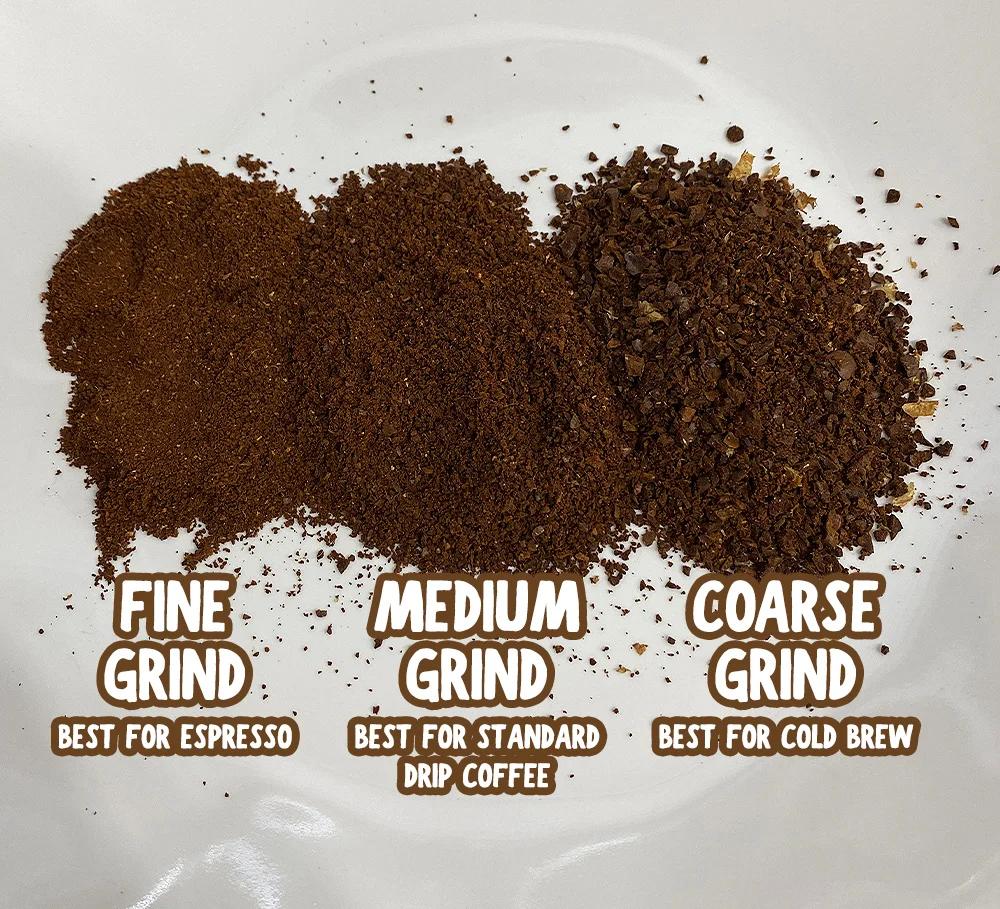
Coffee grind size refers to how finely or coarsely coffee beans are ground before brewing.
The three basic categories are:
-
Fine grind – small particles, similar to table salt or fine sand
-
Medium grind – a balanced texture, similar to regular sand
-
Coarse grind – larger particles, similar to coarse sea salt
There are also settings between these categories, which allow you to fine-tune extraction for different brewing methods.
Why Does Grind Size Matter?
When coffee is brewed, water needs to extract flavor compounds from the ground beans.
A finer grind has more surface area exposed to water, so extraction happens more quickly.
A coarser grind has less surface area, so water moves through the coffee more easily and extraction generally happens more slowly.
This means grind size has a direct relationship with coffee extraction and flavor.
If Your Grind Is Too Fine
The coffee may become over-extracted and taste:
-
Bitter
-
Dry
-
Harsh
-
Astringent
If Your Grind Is Too Coarse
The coffee may become under-extracted and taste:
-
Sour
-
Thin
-
Weak
-
Lacking sweetness
Finding the right grind helps create a more balanced cup.
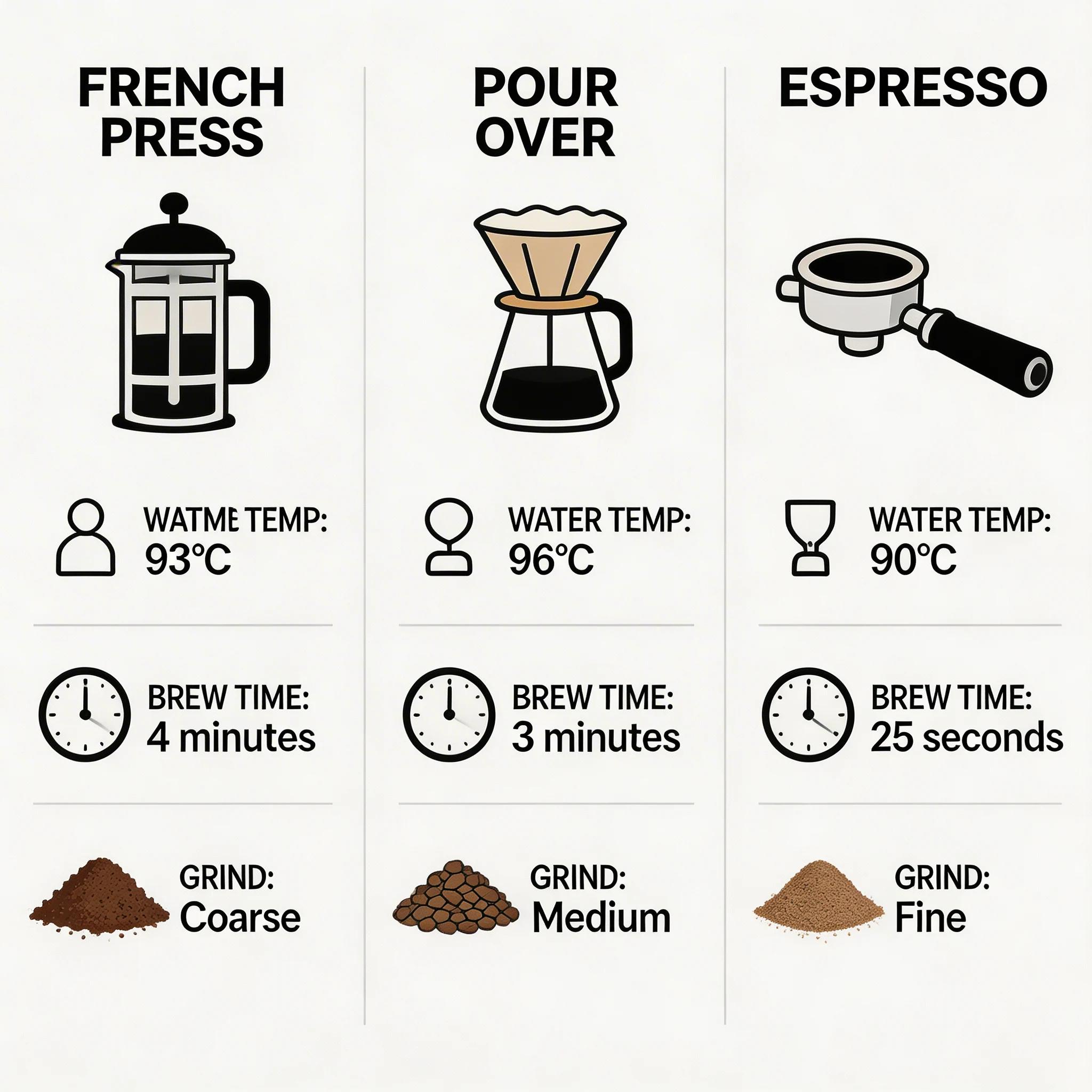
Coffee Grind Size Guide by Brewing Method
Different brewing methods require different grind sizes because water interacts with coffee for different lengths of time.
Espresso – Fine Grind
Espresso uses high pressure and a short brewing time.
A fine grind provides enough resistance for water to extract flavor properly.
If the grind is too coarse, water may flow through too quickly and produce a weak or sour espresso.
If it is too fine, the flow may become too slow and the coffee can taste bitter or over-extracted.
Pour Over – Medium to Medium-Fine
Pour-over methods such as V60 generally work well with a medium-fine grind, although the ideal setting depends on the recipe, filter, coffee, and pouring technique.
If the coffee tastes sour or finishes too quickly, try grinding slightly finer.
If it tastes bitter or takes too long to drain, try grinding slightly coarser.
French Press – Coarse Grind
French Press typically works best with a coarse grind.
Because the coffee grounds remain in contact with water for several minutes, a coarse grind helps prevent excessive extraction.
A grind that is too fine can also create a muddy cup and allow more fine particles to pass through the filter.
Moka Pot – Medium-Fine Grind
A Moka Pot generally works well with a medium-fine grind.
It should be finer than a typical pour-over grind but not as fine as espresso.
Using an espresso-fine grind in a Moka Pot can restrict water flow and contribute to over-extraction.
Cold Brew – Coarse Grind
Cold brew usually benefits from a coarse grind because the coffee is extracted over a much longer period.
A coarse grind helps create a smoother and cleaner result while making filtration easier.
Coffee Grind Size Chart
| Brewing Method | Recommended Grind |
|---|---|
| Espresso | Fine |
| Pour Over | Medium-Fine |
| Drip Coffee | Medium |
| Moka Pot | Medium-Fine |
| AeroPress | Fine to Medium |
| French Press | Coarse |
| Cold Brew | Coarse |
These are starting points rather than strict rules. Coffee origin, roast level, grinder quality, water, and brewing recipe can all affect the ideal grind.
How to Know If Your Coffee Grind Is Wrong
Your taste is one of the best indicators.
Coffee Tastes Sour
If your coffee tastes sharply sour, thin, or lacks sweetness, it may be under-extracted.
Try:
Grinding slightly finer.
Coffee Tastes Bitter
If your coffee tastes harsh, dry, or excessively bitter, it may be over-extracted.
Try:
Grinding slightly coarser.
Coffee Tastes Weak
Weak coffee can be caused by several factors, including grind size, coffee dose, water ratio, or brewing time.
Try changing one variable at a time rather than adjusting everything at once.
Why Freshly Ground Coffee Matters
Grind size is not the only reason to grind coffee immediately before brewing.
Once coffee beans are ground, their surface area increases dramatically. More of the coffee is exposed to oxygen, allowing aromatic compounds to escape more quickly.
This is why freshly ground coffee generally provides a stronger aroma and more expressive flavor than coffee that has been ground long before brewing.
For the best results, grind only the amount you need for each brew.
Does Roast Level Affect Grind Size?
Yes.
Light, medium, and dark roasts can behave differently during brewing.
Light-roasted coffee is often denser and may require adjustments to achieve the desired extraction.
Dark-roasted coffee is generally more porous and can extract more easily.
This means two coffees may require slightly different grind settings even when using the same brewing method.
Don't rely only on a fixed grind number. Use the flavor and brewing time as guides.
How to Adjust Your Grinder
When dialing in a new coffee, make small changes.
Start with a reasonable setting for your brewing method, then taste the result.
If the coffee tastes:
Too sour → grind finer
Too bitter → grind coarser
Too weak → check grind, dose, and water ratio
Too strong or harsh → check extraction and consider grinding slightly coarser
Change only one variable at a time whenever possible. This makes it much easier to understand how each adjustment affects the cup.
The Grinder Matters Too
Not all grinders produce the same quality of grounds.
A good grinder produces a more consistent particle distribution, helping water extract the coffee more evenly.
Low-quality grinders may create a mixture of very fine particles and large pieces. These different particles extract at different rates, making it more difficult to achieve a balanced cup.
For coffee lovers who brew regularly, investing in a good grinder can make a noticeable difference.
The Right Grind Depends on Your Coffee
There is no single grind size that is perfect for every coffee.
The ideal setting depends on:
-
Brewing method
-
Coffee origin
-
Variety
-
Processing method
-
Roast level
-
Grinder
-
Water
-
Brewing time
-
Personal taste
Think of grind size as a tool for controlling extraction rather than a fixed rule.
Once you understand how grind size affects flavor, it becomes much easier to adjust your recipe and consistently brew better coffee.
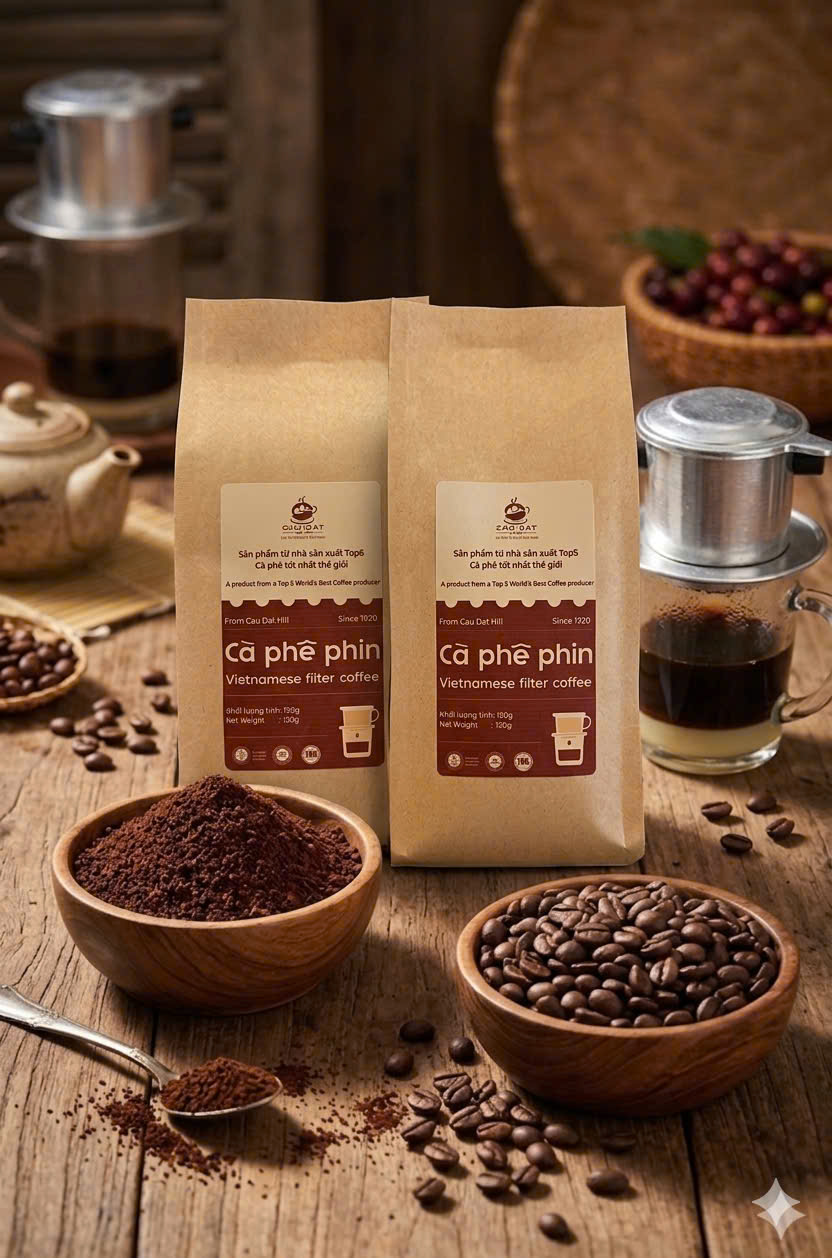
Discover Cau Dat Coffee
At Cau Dat Bean, we work with carefully selected coffee from the highlands of Da Lat, including Arabica from the Cau Dat growing region.
Different coffee varieties, origins, processing methods, and roast profiles respond differently during brewing. Understanding grind size can help you experience the unique characteristics of each coffee more clearly.
Visit our showroom in Da Lat to explore our coffee and find a roast profile that suits your preferred brewing method.
Cau Dat Bean Showroom
📍 82B Truong Cong Dinh Street, Da Lat, Lam Dong, Vietnam
📞 +84 926 915 849
Frequently Asked Questions
What is the best grind size for coffee?
There is no single best grind size. Espresso generally requires a fine grind, pour-over uses a medium-fine grind, while French Press and cold brew typically require a coarse grind.
What grind size is best for espresso?
Espresso generally requires a fine grind. The exact setting depends on the coffee, grinder, dose, and extraction time.
Why does my coffee taste sour?
Sour coffee can be a sign of under-extraction. Try grinding slightly finer or increasing extraction through adjustments to brewing time or water temperature.
Why does my coffee taste bitter?
Bitter coffee can be caused by over-extraction. Try grinding slightly coarser or reducing the brewing time.
Should I grind coffee before or after brewing?
Coffee should be ground immediately before brewing whenever possible. Freshly ground coffee retains more of its aroma and flavor.
Is coarse or fine grind better?
Neither is universally better. The correct grind depends on the brewing method and the desired extraction.


 Group4, Cau Dat Village, Xuan Truong commune, Da Lat City, Lam Dong Province, Vietnam
 +84 783 472 234
 caudatbean@gmail.com
  www.caudatbean.com