
Why Do Coffee Beans Crack During Roasting? Understanding First Crack & Second Crack
If you have ever stood next to a coffee roaster, you may have heard something that sounds surprisingly similar to popcorn popping.
Crack. Crack. Crack.
These sounds are not random.
They are important milestones in the roasting process and are commonly known as first crack and second crack.
But why do coffee beans crack?
What is happening inside the bean?
And why do roasters pay so much attention to these sounds?
Let's take a closer look.
Why Do Coffee Beans Crack?
Green coffee beans contain moisture and gases trapped inside their cellular structure.
When the beans are heated, their internal temperature rises and moisture begins to turn into steam.
At the same time, chemical reactions occur and gases are produced inside the bean.
As pressure builds, the structure of the coffee bean begins to expand.
Eventually, the internal pressure becomes strong enough to break the cell structure.
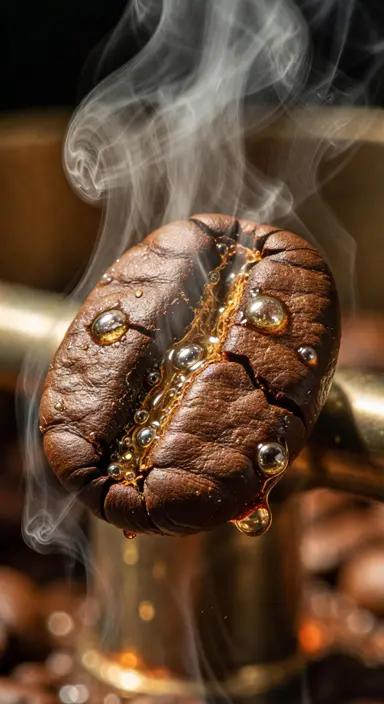
This produces the characteristic cracking sound.
The process is somewhat similar to popcorn popping, although the chemistry and physical structure are different.
Coffee roasting is therefore not simply about making the beans darker.
It is a process of heat, pressure, chemical reactions, expansion, and transformation.
What Is First Crack?
First crack is one of the most important stages of coffee roasting.
As the coffee approaches this stage, the beans have absorbed substantial heat and moisture has been driven out.
The internal pressure increases until the bean structure begins to fracture.
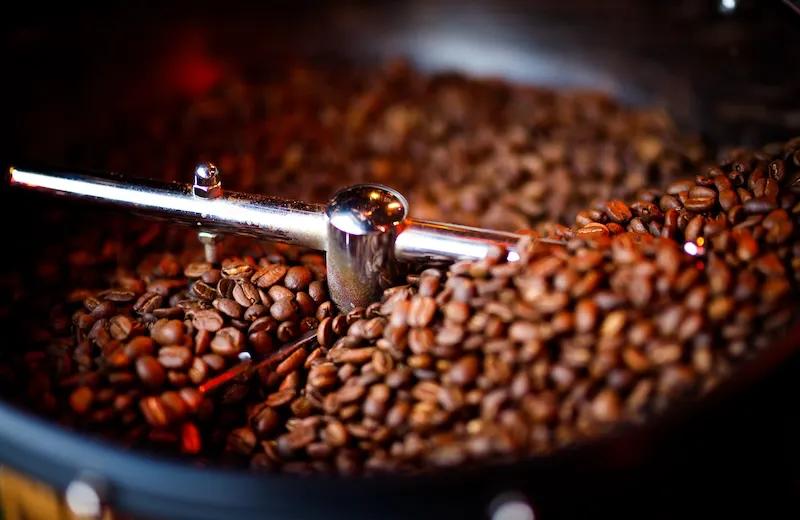
The roaster hears a series of audible cracks.
This is called first crack.
The exact temperature varies depending on the coffee, roasting equipment, probe position, batch size, and roasting conditions, so there is no single temperature that defines first crack for every coffee.
Instead, experienced roasters use the sound and timing of the crack together with temperature and other roasting data.
What Happens During First Crack?
Several important changes happen around first crack.
The beans:
-
Expand in size
-
Become more porous
-
Continue losing moisture
-
Release gases
-
Develop new aromas
-
Undergo significant chemical changes
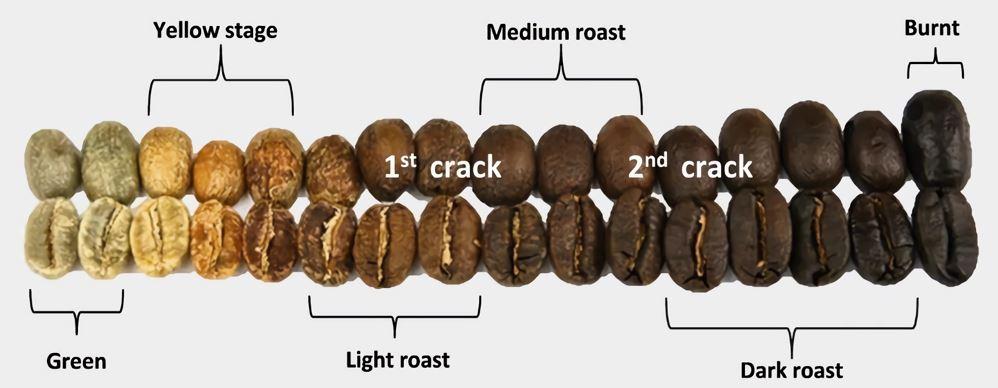
The color also changes rapidly as the coffee moves from green toward yellow, brown, and eventually darker shades.
First crack marks a major transition in the roast.
After this point, the roaster has to decide how much further to develop the coffee.
Why Is First Crack Important?
First crack gives the roaster an important reference point.
It helps the roaster understand where the coffee is in its development and how much additional heat and time should be applied.
For example, a light roast may finish relatively soon after first crack.
A medium roast may continue developing for longer.
A dark roast may continue much further, eventually approaching or reaching second crack.
The same green coffee can therefore produce very different results depending on how the roast develops after first crack.
What Is Second Crack?
Second crack occurs later in the roasting process.
The sound is generally faster, sharper, and more delicate than first crack.
At this stage, the coffee has undergone considerably more roasting development.
The internal structure becomes increasingly brittle and the beans continue to lose mass and moisture.
Second crack is associated with darker roasting.
However, reaching second crack does not automatically mean the coffee is “better” or “worse.”
It simply indicates a more advanced stage of roasting.
First Crack vs. Second Crack
A simple comparison:
| First Crack | Second Crack |
|---|---|
| Earlier in the roast | Later in the roast |
| Beans expand significantly | Beans become increasingly brittle |
| Louder, more distinct cracks | Faster, sharper cracks |
| Important transition point | Associated with darker roast development |
| Common reference for light–medium roasting | Often associated with darker roasting |
The exact timing varies from coffee to coffee.
This is why professional roasting should not rely on sound alone.
Does Every Coffee Have a Second Crack?
Not necessarily in a clearly audible way.
The intensity and timing of cracking can vary depending on:
-
Coffee variety
-
Moisture content
-
Density
-
Processing method
-
Bean size
-
Roast profile
-
Roasting equipment
Some coffees may produce a very noticeable second crack, while others may make it more difficult to identify.
This is another reason roasters need to combine sensory observation with roasting data.
What Happens After First Crack?
The period after first crack is often called the development phase.
This is an important stage because the roaster is deciding how much additional development the coffee needs.
Too little development can result in a cup that feels:
-
Sharp
-
Underdeveloped
-
Sour
-
Thin
Too much development can reduce some of the coffee's brighter characteristics and increase:
-
Roast flavors
-
Bitterness
-
Heavier body
-
Smoky or burnt notes
The goal is not simply to roast for a certain number of seconds after first crack.
The goal is to find a development level that suits the coffee.
How First Crack Affects Flavor
A roast that is stopped relatively soon after first crack can often preserve more of the coffee's:
-
Acidity
-
Floral character
-
Fruit notes
-
Origin characteristics
With additional development, the coffee can develop more:
-
Sweetness
-
Body
-
Caramelized flavors
-
Roast character
However, flavor is never determined by first crack alone.
Green coffee variety, origin, processing, roast profile, and brewing all contribute to the final cup.
Why Light Roasts Usually Stop Before Second Crack
Light roasting aims to preserve more of the characteristics already present in the green coffee.
For high-quality Arabica, this can help highlight:
-
Floral aromas
-
Fruit
-
Acidity
-
Delicate sweetness
-
Origin character
Roasters therefore commonly finish light-roasted coffees well before a strong second crack develops.
This allows the green coffee's characteristics to remain more noticeable.
Why Dark Roasts May Reach Second Crack
Dark roasting continues the transformation further.
The beans become darker, more brittle, and more porous.
Roasted flavors become increasingly prominent.
Depending on the roast profile, you may notice:
-
Dark chocolate
-
Toasted flavors
-
Roasted nuts
-
Bitterness
-
Heavier body
At very advanced stages, smoky or burnt characteristics can dominate.
This is why controlling the roast is important.
There is a difference between intentionally developing a dark roast and simply burning the coffee.
Does First Crack Mean the Coffee Is Finished?
No.
First crack is a milestone, not necessarily the end of roasting.
The roaster still has to decide when to stop the roast.
For example:
Light roast → stop relatively soon after first crack
Medium roast → continue development further
Dark roast → continue much further, potentially toward second crack
The correct endpoint depends on the intended flavor profile.
What About Roast Temperature?
You may see roasting guides that mention temperatures for first crack or second crack.
These numbers can be useful references, but they should not be treated as universal rules.
Different roasting machines can display different temperatures.
Probe location, airflow, batch size, environmental conditions, and coffee characteristics can all influence the reading.
For this reason, professional roasters pay attention to a combination of:
-
Bean temperature
-
Time
-
Rate of Rise
-
Crack sounds
-
Bean color
-
Aroma
-
Roast development
The goal is to understand the coffee rather than follow a single number.
How Green Coffee Characteristics Affect Cracking
The green coffee itself influences roasting behavior.
This connects directly with factors such as density and moisture.
A dense green coffee may respond differently to heat compared with a less dense coffee.
Moisture content can also influence how the bean behaves as it heats.
Processing method, variety, screen size, and structure can also affect the roast.
This is why understanding the green coffee before roasting is so important.
The roaster is not starting with an identical raw material every time.
First Crack and Cau Dat Arabica
Cau Dat Arabica is grown in the highlands of Da Lat, where elevation and climate create distinctive growing conditions.
When roasting a highland Arabica such as Cau Dat coffee, the goal is not simply to reach first crack as quickly as possible.
The roaster needs to understand how the specific coffee responds to heat.
Factors such as:
-
Variety
-
Density
-
Moisture
-
Processing
-
Bean size
can influence the roast.
A carefully developed profile can help express the coffee's sweetness, acidity, aroma, and body while preserving the characteristics that make the green coffee unique.
Why Sample Roasting Matters
Before producing a large batch, roasters often use sample roasting to evaluate how a coffee behaves.
A sample roast can help answer questions such as:
-
When does first crack begin?
-
How intense is the crack?
-
How quickly does the coffee develop afterward?
-
What roast level suits the coffee?
-
Which flavors appear in the cup?
After roasting, the coffee can be cupped and compared with other profiles.
This process helps roasters decide how to approach larger production batches.
First Crack Is a Guide, Not a Recipe
One of the biggest misconceptions about coffee roasting is that there is a single perfect temperature or time for every coffee.
There isn't.
A good roast profile depends on the coffee and the desired result.
A high-altitude Arabica may need a different approach from a Robusta.
A washed coffee may behave differently from a natural coffee.
A dense bean may respond differently from a lower-density bean.
This is why roasting is both a technical process and a sensory skill.
From Green Bean to Roasted Coffee
The transformation can be simplified into several stages:
Green Coffee
↓
Heating
↓
Drying
↓
Maillard Reactions & Browning
↓
First Crack
↓
Development
↓
Second Crack (for darker roasts)
↓
Roasted Coffee
Each stage contributes to the final characteristics of the coffee.
The roaster's job is to control this transformation and stop it at the right point.
Final Thoughts
The next time you hear coffee beans cracking inside a roaster, remember that you are hearing the physical transformation of the bean.
First crack marks a major stage in the roasting process.
Second crack indicates further structural and chemical development associated with darker roasting.
Neither crack is automatically a sign of better coffee.
What matters is how the roaster uses these stages to develop the characteristics of the green coffee.
For specialty coffee, the best roast is not necessarily the lightest or darkest.
It is the roast that allows the coffee to express its best qualities.
And that begins with understanding the bean before it ever enters the roaster.
Frequently Asked Questions
What causes coffee beans to crack during roasting?
Heat causes moisture to turn into steam and increases pressure inside the coffee bean. As the bean expands and its cellular structure changes, the pressure eventually causes the bean to fracture and produce a cracking sound.
What is first crack in coffee roasting?
First crack is the stage when coffee beans begin to audibly fracture as internal pressure and structural changes increase during roasting.
What is second crack?
Second crack occurs later in the roast and is generally associated with darker roasting. The cracks are usually faster and sharper than first crack.
Is first crack the end of roasting?
No. First crack is an important milestone, but the roaster can continue developing the coffee afterward depending on the desired roast level.
Does second crack mean the coffee is burnt?
Not necessarily. Reaching second crack indicates a more advanced stage of roasting, but coffee can become burnt if roasting continues excessively or is poorly controlled.
Why do different coffees crack differently?
Differences in variety, density, moisture, processing, bean size, roast profile, and equipment can all influence how and when cracking occurs.
Cau Dat Bean
📍 Showrooms 82B Trương Công Định, Phường Xuân Hương - Đà Lạt, Tỉnh Lâm Đồng
📞 +84 926 915 849
✉️ caudatbean@gmail.com
🌐 www.caudatbean.com


 Group4, Cau Dat Village, Xuan Truong commune, Da Lat City, Lam Dong Province, Vietnam
 +84 783 472 234
 caudatbean@gmail.com
  www.caudatbean.com