
What Is Coffee TDS? Understanding Coffee Strength and Extraction
When talking about coffee, people often describe a cup as strong, weak, rich, light, or intense.
But how can we actually measure the strength of brewed coffee?
One useful measurement is TDS, or Total Dissolved Solids.
TDS is commonly used by coffee professionals, roasters, baristas, and quality-control teams to understand how much coffee material has dissolved into the brewing water.
But TDS is not the same as coffee quality.
Understanding what TDS means can help us better understand the relationship between coffee beans, water, brewing, and extraction.
What Does Coffee TDS Mean?
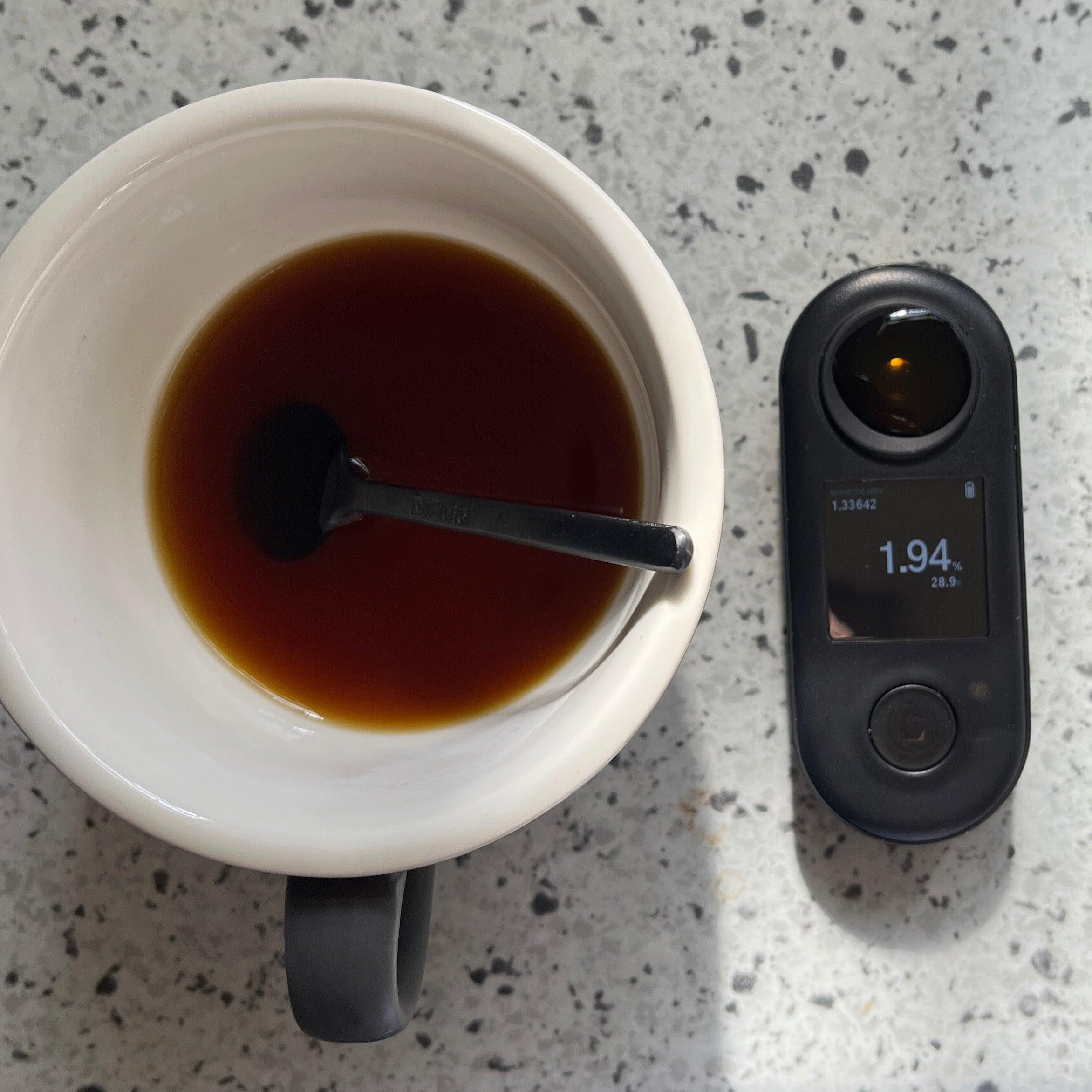
TDS stands for Total Dissolved Solids.
In simple terms, it represents the percentage of dissolved material in a brewed coffee.
For example, if a coffee has a TDS of 1.30%, it means that approximately 1.30% of the brewed beverage consists of dissolved coffee material, while the rest is mostly water.
A typical brewed coffee may have a TDS somewhere around 1–2%, depending on the brewing method, recipe, coffee, and extraction.
The exact number can vary considerably.
TDS therefore gives us a way to describe how concentrated a brewed coffee is.
Is TDS the Same as Coffee Strength?
TDS is closely related to what people commonly call coffee strength.
A higher TDS generally means the beverage contains more dissolved coffee material and may taste more concentrated.
A lower TDS generally means the coffee contains less dissolved material and may taste lighter or more diluted.
For example:
-
Low TDS → lighter concentration
-
Moderate TDS → balanced concentration
-
High TDS → more concentrated beverage
However, taste perception is more complicated than one number.
Two coffees with similar TDS can taste completely different because they may contain different compounds and have different origins, varieties, processing methods, roast profiles, and extraction characteristics.
TDS and Extraction Are Not the Same Thing
This is one of the most important points to understand.
TDS measures concentration in the brewed beverage.
Extraction yield measures how much soluble material was removed from the coffee grounds.
They are related, but they are not interchangeable.
Imagine two cups of coffee:
Cup A
A large amount of water is used with a relatively small amount of dissolved coffee material.
The TDS may be relatively low.
Cup B
Less water is used while more coffee material is dissolved into the beverage.
The TDS may be higher.
This does not automatically mean Cup B was extracted better.
A concentrated coffee can still be under-extracted.
Likewise, a lighter-concentration coffee can still be well extracted.
This distinction is important for professional brewing.
What Factors Affect Coffee TDS?
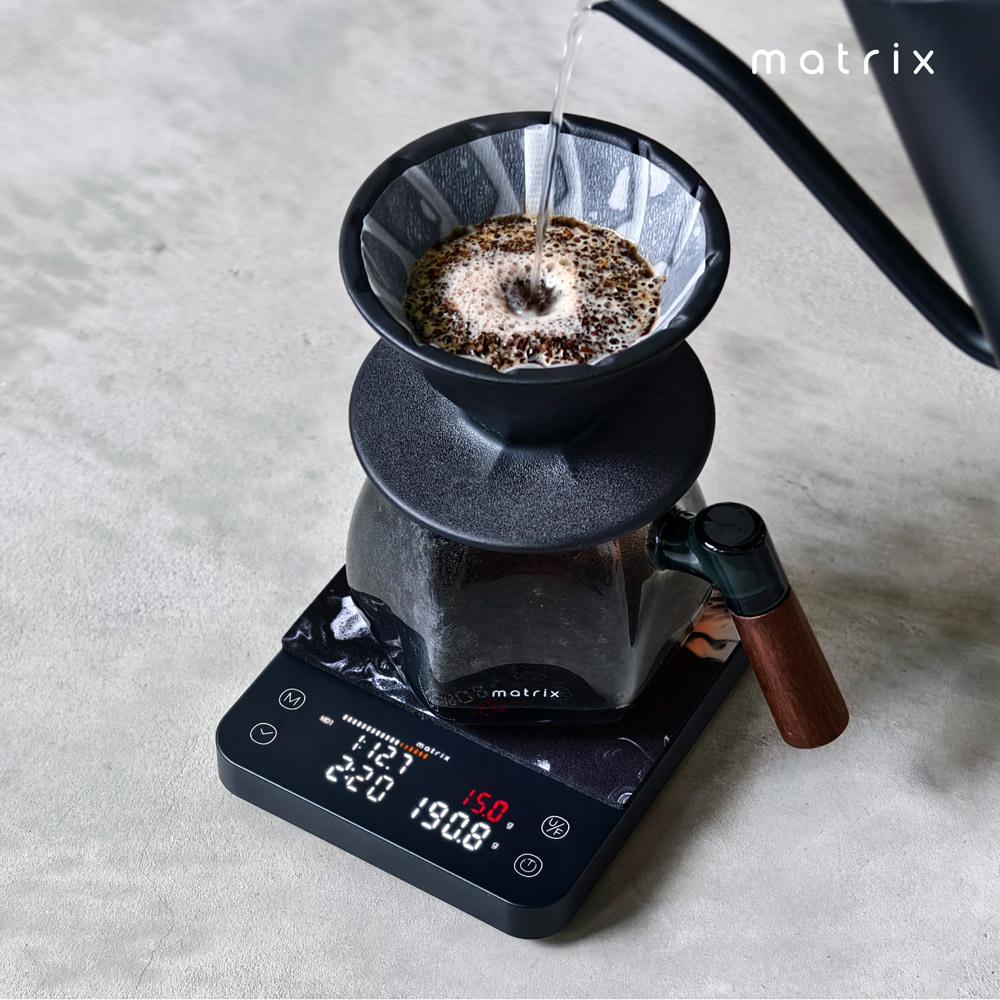
Several factors can influence the TDS of a brewed coffee.
1. Coffee-to-Water Ratio
The amount of coffee used compared with the amount of water has a major effect on beverage concentration.
Using more coffee with the same amount of water will generally produce a more concentrated beverage.
Using more water with the same amount of coffee will generally produce a more diluted beverage.
2. Grind Size
Grind size affects how easily water can interact with the coffee particles.
A finer grind generally provides more surface area for water to contact.
A coarser grind provides less surface area.
However, grind size should not be considered separately from brewing time, water temperature, and other variables.
3. Brewing Time
Longer contact between water and coffee can allow more soluble material to dissolve.
Shorter brewing times may result in less extraction.
However, simply increasing brewing time is not always the solution.
The goal is to create a balanced extraction rather than simply extracting as much as possible.
4. Water Temperature
Water temperature affects the rate at which compounds dissolve from coffee.
Hotter water generally extracts coffee more quickly, while cooler water tends to extract more slowly.
The appropriate temperature depends on the coffee and brewing method.
5. Brewing Method
Different brewing methods naturally produce different TDS levels.
For example:
-
Pour-over
-
French press
-
AeroPress
-
Espresso
-
Cold brew
Each method uses different combinations of coffee, water, pressure, temperature, grind size, and brewing time.
As a result, their typical beverage concentrations can be very different.
How Is Coffee TDS Measured?
Coffee professionals often use a coffee refractometer to measure TDS.
A small sample of brewed coffee is placed on the instrument.
The refractometer measures the optical properties of the liquid and provides an estimate of dissolved solids.
This makes it possible to compare brewing results more objectively.
Instead of saying:
“This coffee tastes stronger.”
A barista or roaster can also record:
“TDS: 1.35%.”
This does not replace sensory evaluation, but it provides useful additional information.
Why Do Coffee Professionals Measure TDS?
TDS can be useful for improving brewing consistency.
For cafés and coffee professionals, measurement can help identify changes between brews.
For example, if the same brewing recipe normally produces a similar TDS but suddenly gives a much lower result, the brewer may want to check:
-
Grind size
-
Coffee dose
-
Water volume
-
Brewing time
-
Water temperature
-
Filter condition
-
Brewing technique
TDS can therefore become a useful quality-control tool.
Can TDS Tell You If Coffee Is Good?
No.
A TDS reading alone cannot determine whether a coffee tastes good.
Taste is influenced by many factors, including:
-
Coffee variety
-
Origin
-
Processing
-
Roast profile
-
Freshness
-
Grind size
-
Water quality
-
Brewing method
-
Extraction
-
Personal preference
A coffee can have a TDS value within a commonly used range and still taste unpleasant.
Likewise, a coffee outside a commonly referenced range can still be enjoyable depending on the brewing style and drinker's preference.
TDS should therefore be treated as one measurement, not a final quality score.
TDS and Espresso
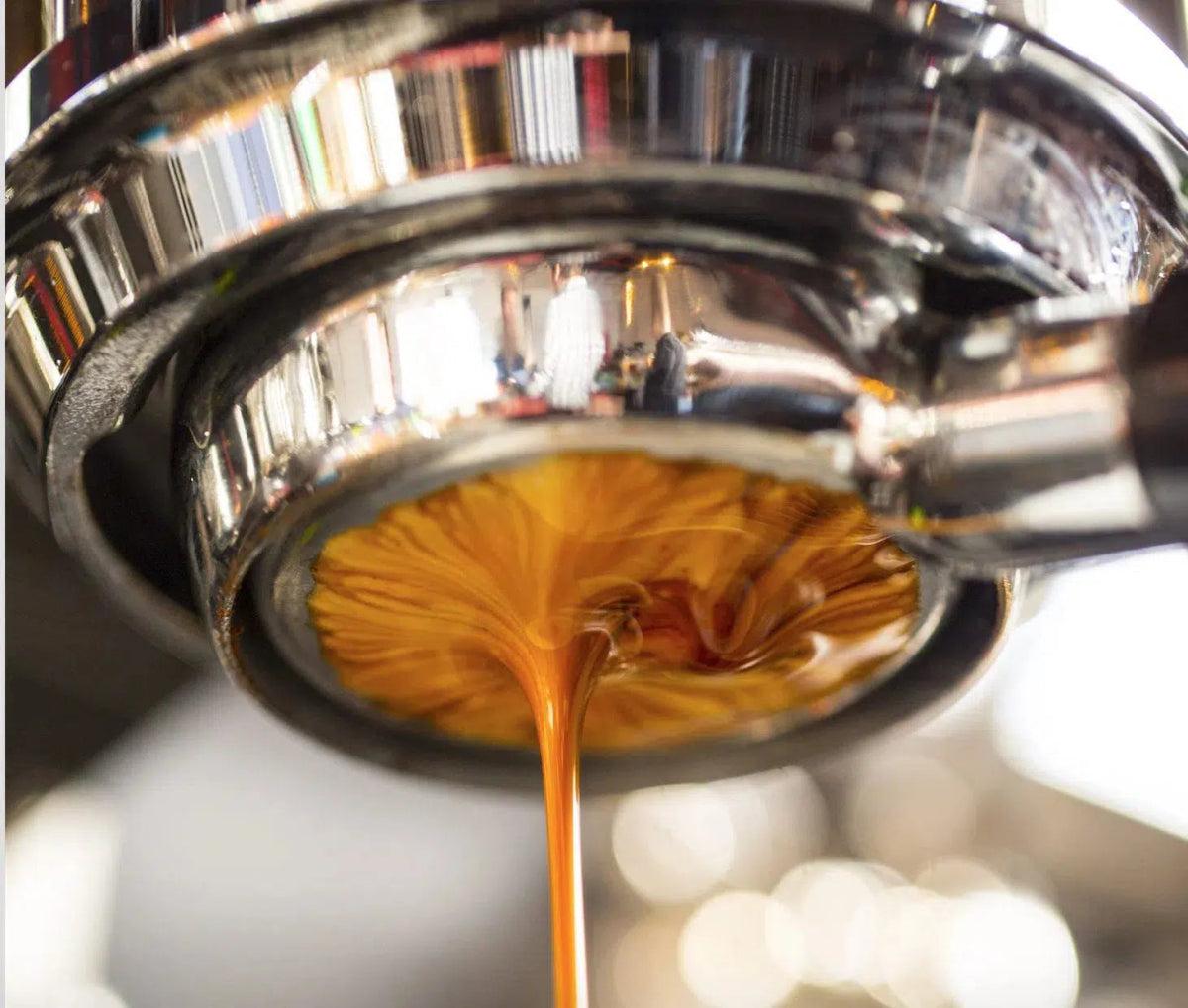
Espresso is usually much more concentrated than filter coffee.
Because espresso uses a relatively small amount of water in relation to the coffee dose, its TDS is typically much higher.
This is one reason espresso tastes intense and concentrated.
However, espresso quality cannot be judged by TDS alone.
Baristas also consider:
-
Dose
-
Yield
-
Brew time
-
Grind size
-
Water temperature
-
Pressure
-
Flow
-
Taste
The goal is to create a balanced espresso rather than simply maximize TDS.
TDS and Pour-Over Coffee
Pour-over brewing usually produces a lower TDS beverage than espresso because significantly more water passes through the coffee.
However, the final TDS can still vary depending on the recipe.
Changing the:
-
Coffee dose
-
Water volume
-
Grind size
-
Pouring pattern
-
Water temperature
-
Brewing time
can change the final concentration.
This is why the same coffee can taste noticeably different even when the same brewing equipment is used.
TDS and Cau Dat Arabica
Cau Dat Arabica from the highlands of Da Lat can be prepared using different brewing methods depending on the desired experience.
A washed Arabica may show floral, fruity, sweet, or clean characteristics, while different varieties and processing methods can create different sensory profiles.
When brewing specialty Arabica, TDS can provide useful information about concentration.
However, the number should always be considered together with sensory characteristics.
A well-brewed coffee should not simply have a specific TDS.
It should also express the characteristics of the coffee itself.
A Simple Way to Think About TDS
You can think of coffee brewing in three simple steps:
Coffee grounds → Extraction → Brewed coffee
During brewing, water removes soluble compounds from the coffee grounds.
Some of these compounds dissolve into the water.
TDS tells us approximately how concentrated the resulting beverage is.
But the final taste depends on what was extracted, not only how much was extracted.
That is why two cups with similar TDS can still taste very different.
TDS Is a Tool, Not the Whole Story
Coffee measurement has become increasingly important in specialty coffee.
Tools such as refractometers, scales, moisture meters, and color meters can help coffee professionals better understand what is happening during production and brewing.
But numbers should always support sensory evaluation rather than replace it.
Coffee is ultimately a sensory product.
A good brewing process combines measurement with tasting.
For coffee professionals, this means:
Measure → Brew → Taste → Adjust
This simple cycle can help create greater consistency while still allowing room for the character of the coffee to shine.
Final Thoughts
Coffee TDS is a useful way to understand the concentration of a brewed coffee.
It tells us how much dissolved material is present in the beverage and can help coffee professionals monitor brewing consistency.
However, TDS should not be confused with extraction yield, and it should never be used alone to define coffee quality.
The most useful approach is to combine measurement with sensory evaluation.
From the green bean and roasting process to brewing and tasting, every stage contributes to the final cup.
At Cau Dat Bean, we believe that understanding coffee means looking beyond a single number and appreciating the complete journey from bean to cup.
If you are looking for Vietnamese Arabica and green coffee for roasting, wholesale, or export, contact Cau Dat Bean to discuss available coffee lots and samples.
Cau Dat Bean Showroom
📍 82B Trương Công Định, Phường Xuân Hương, Đà Lạt, Lâm Đồng, Vietnam
📞 +84 926 915 849
📧 caudatbean@gmail.com
Frequently Asked Questions
What does TDS mean in coffee?
TDS stands for Total Dissolved Solids. It represents the concentration of dissolved material in brewed coffee.
Is higher coffee TDS better?
Not necessarily. A higher TDS means a more concentrated beverage, but it does not automatically mean better coffee.
What is the difference between TDS and extraction?
TDS describes the concentration of the brewed beverage, while extraction describes how much soluble material has been removed from the coffee grounds.
How is coffee TDS measured?
Coffee TDS is commonly measured using a coffee refractometer.
Does grind size affect TDS?
Yes. Grind size affects the interaction between water and coffee and can therefore influence extraction and beverage concentration.
Can two coffees with the same TDS taste different?
Yes. TDS only describes concentration. Different coffees can have different flavor compounds, acidity, sweetness, body, and aroma even at similar TDS levels.


 Group4, Cau Dat Village, Xuan Truong commune, Da Lat City, Lam Dong Province, Vietnam
 +84 783 472 234
 caudatbean@gmail.com
  www.caudatbean.com