
What Is Coffee Extraction Yield? A Practical Guide to Better Brewing
Have you ever brewed two cups of coffee using the same beans, only to find that one tastes balanced and sweet while the other tastes sharp, bitter, or surprisingly weak?
The difference may not come down to the coffee itself. It could be related to coffee extraction yield — a measurement that helps explain how much of the soluble material in ground coffee ends up in your cup.
For home brewers, baristas, and coffee professionals, understanding extraction yield provides a more systematic way to improve brewing consistency. It connects variables such as grind size, water temperature, brewing time, and coffee-to-water ratio with the final result.
But what exactly does extraction yield measure, and how can you use it to make better coffee?
What Is Coffee Extraction Yield?
Coffee extraction yield is the percentage of the original dry coffee dose that dissolves into the brewed beverage during extraction.
When hot water meets ground coffee, it dissolves a range of compounds that contribute to aroma, flavor, acidity, sweetness, bitterness, and mouthfeel. These compounds do not all dissolve at the same rate, and not every part of the coffee is extracted equally.
For example, if you start with 20 grams of ground coffee and approximately 4 grams of soluble material end up in the beverage, the extraction yield is 20%.
This measurement helps coffee professionals understand how efficiently a brew has extracted soluble compounds from the grounds.
However, a higher extraction yield does not automatically mean better coffee. The quality of the result still depends on the coffee itself, the brewing method, the distribution of water through the grounds, and personal taste preferences.
Coffee Extraction Yield vs. TDS: What Is the Difference?
Extraction yield is closely related to Total Dissolved Solids, commonly known as TDS. Although the two measurements are connected, they describe different things.
TDS measures concentration. It estimates the proportion of dissolved material in the brewed coffee. A higher TDS generally indicates a more concentrated beverage.
Extraction yield measures how much coffee has dissolved. It compares the mass of dissolved coffee material with the mass of the original dry coffee dose.
Imagine brewing two cups with the same amount of coffee. One cup contains more water, making it less concentrated. The other contains less water and tastes stronger.
The stronger cup may have a higher TDS, but that does not necessarily mean it has a higher extraction yield. To understand extraction yield, you also need to know the weight of the finished beverage and the original coffee dose.
This distinction is useful when adjusting recipes. If coffee tastes weak, you may need to increase its concentration rather than extract more compounds from the grounds. If it tastes sharp and underdeveloped, changing the extraction conditions may be more appropriate.
How to Calculate Coffee Extraction Yield
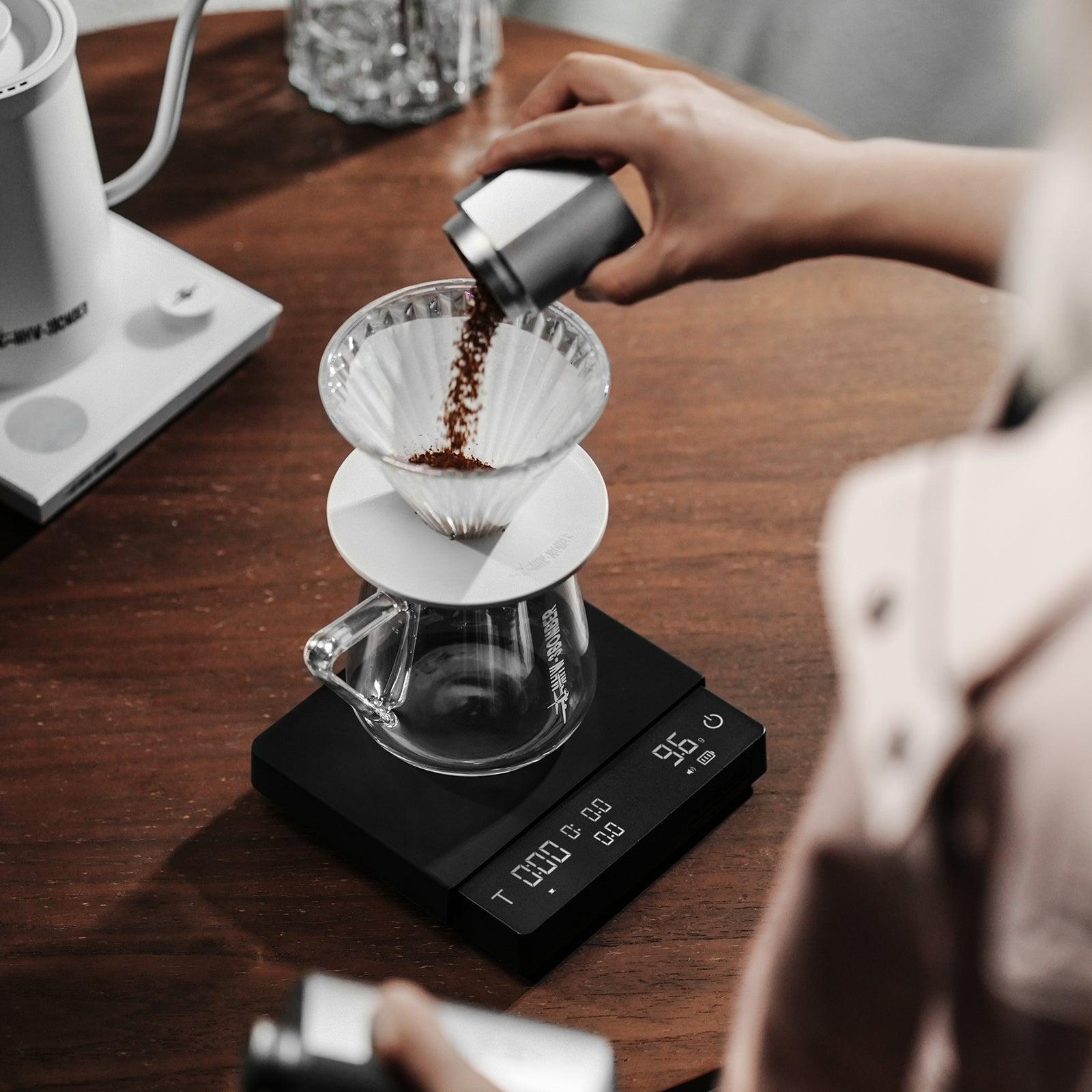
You can estimate extraction yield using three measurements:
-
The dry coffee dose, measured in grams.
-
The weight of the finished brewed coffee, measured in grams.
-
The TDS reading, expressed as a percentage.
The formula is:
Extraction Yield (%) = (Beverage Weight × TDS %) ÷ Coffee Dose
For example, imagine you brew 15 grams of coffee and collect 240 grams of finished beverage. A coffee refractometer measures the beverage at 1.30% TDS.
The calculation is:
Extraction yield = (240 × 1.30) ÷ 15
Extraction yield = 20.8%
This means approximately 20.8% of the original dry coffee dose has been extracted into the beverage, based on the measurement and formula.
One important detail: use the weight of the coffee that actually reaches the cup, not the amount of water poured into the brewer. Some water remains in the grounds and filter, so the two weights are different.
You do not need a refractometer to make good coffee. Taste, aroma, and repeatable brewing techniques remain valuable tools. However, a refractometer can help professionals compare recipes and investigate changes more objectively.
What Is a Good Coffee Extraction Yield?
A commonly used reference range for many brewed coffees is approximately 18–22% extraction yield. This range is a useful starting point for experimentation, not a universal rule for every coffee or brewing method.
Different coffees respond differently to roasting and brewing. A light-roasted coffee may require a different approach from a darker roast. Espresso and filter coffee also behave differently because their brewing conditions and beverage concentrations are not the same.
Rather than chasing a specific number, use extraction yield alongside sensory evaluation.
Ask yourself:
-
Does the coffee taste balanced?
-
Can you identify its pleasant sweetness and acidity?
-
Is the finish clean, or does it feel harsh and drying?
-
Does the cup taste consistent from one brew to the next?
A number can help explain what happened during brewing, but it cannot tell you everything about the quality of the cup.
What Affects Coffee Extraction Yield?
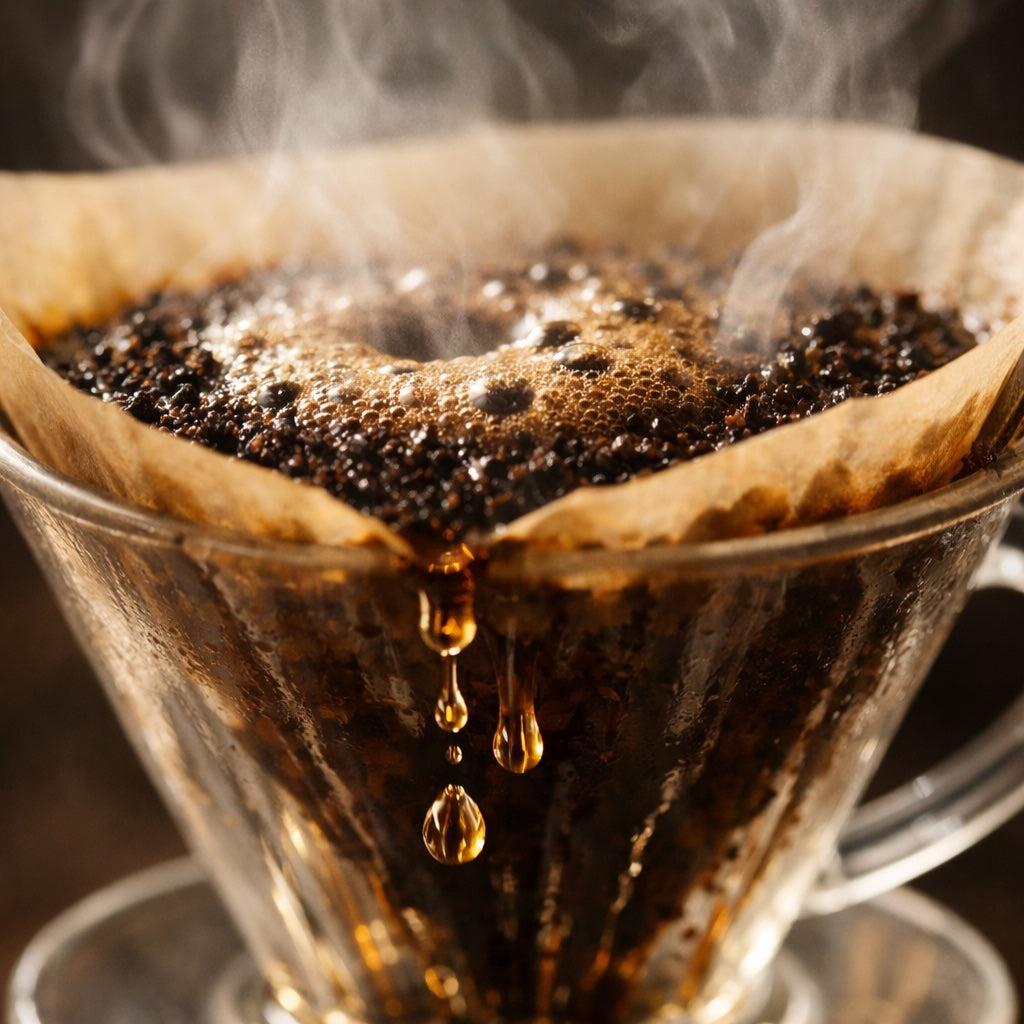
Several brewing variables influence how much soluble material moves from the grounds into the beverage.
1. Grind Size
Grind size affects the surface area available for water to interact with the coffee.
Finer grounds generally expose more surface area and can increase extraction under comparable conditions. Coarser grounds often extract more slowly.
However, grinding too fine can cause uneven water flow, excessive resistance, or undesirable flavors. The ideal grind depends on the brewing method, coffee, and recipe.
2. Water Temperature
Hot water generally helps dissolve soluble compounds more quickly. Increasing temperature can be useful when brewing certain light-roasted coffees, which may be more difficult to extract.
However, higher temperatures are not always better. If the coffee already extracts readily, increasing the temperature may not improve the flavor.
Start with a suitable temperature for your brewing method, then make small adjustments while tasting the results.
3. Brewing Time
Longer contact between water and coffee can increase extraction, provided the water continues to interact effectively with the grounds.
But brewing longer does not guarantee a better cup. Excessive contact time, especially when combined with unsuitable grind size or uneven water flow, may produce an unpleasant flavor profile.
Instead of extending brewing time automatically, look at the complete recipe and identify which variable is most likely responsible for the problem.
4. Coffee-to-Water Ratio
The coffee-to-water ratio influences beverage concentration and can also affect extraction conditions.
For example, changing the amount of water while keeping the coffee dose constant may produce a different beverage strength. It can also change how much material is extracted, depending on the brewing method and other variables.
This is why ratio should be considered together with grind size, temperature, and brewing time rather than treated as the only measure of brewing quality.
5. Water Flow and Agitation
During pour-over brewing, the way water moves through the coffee bed can affect extraction uniformity.
A controlled pour helps distribute water across the grounds. Excessive or uneven agitation, on the other hand, may disturb the coffee bed and change how water flows through it.
The goal is not simply to extract as much as possible. It is to encourage consistent extraction while preserving the flavors you want in the cup.
How to Recognize Under-Extraction and Over-Extraction
Extraction yield can help explain common flavor problems, but taste alone cannot determine an exact extraction percentage.
Under-extraction may be associated with sharp acidity, sourness, a thin body, or flavors that seem undeveloped. Possible adjustments include grinding slightly finer, increasing water temperature where appropriate, or improving water distribution.
Over-extraction or an unsuitable extraction profile may be associated with harsh bitterness, a drying finish, or an unbalanced flavor. Possible adjustments include grinding slightly coarser, reducing contact time, or improving water flow.
These are troubleshooting clues rather than strict rules. Bitterness can also come from the roast profile or the coffee itself, while sourness may be a natural and pleasant characteristic of some coffees.
Change one variable at a time, brew again, and compare the results. This makes it easier to understand which adjustment actually improves the cup.
A Simple Way to Improve Your Brewing Consistency
You can learn a great deal about extraction without purchasing specialized equipment.
Start by weighing your coffee dose and keeping the water amount consistent. Use the same grinder setting and brewing method for each test. Record the brewing time and take notes on sweetness, acidity, bitterness, body, and aftertaste.
Then adjust one variable at a time.
If you have access to a refractometer, record TDS and calculate extraction yield as an additional reference. If you do not, rely on careful tasting and consistent preparation.
For coffee roasters and wholesale buyers, these experiments can also help evaluate how a particular coffee responds to different brewing methods. A coffee's origin, variety, processing method, and roast profile all influence how it performs in the cup.
At Cầu Đất Bean, we believe understanding coffee from its origin to its final preparation helps people make more informed choices. Whether you prefer a clean, expressive Arabica or a fuller-bodied coffee for everyday brewing, the best approach is to combine technical knowledge with the experience of tasting.
Frequently Asked Questions
Is a higher extraction yield always better?
No. A higher number does not automatically mean better flavor. The goal is to achieve a balanced cup that suits the coffee and your preferences.
Do I need a refractometer to calculate extraction yield?
A refractometer is the usual tool for measuring TDS accurately enough for this calculation. Without one, you can still improve brewing through tasting, weighing, and controlled experimentation, but you cannot calculate a reliable extraction yield from taste alone.
Can coffee have high TDS but low extraction yield?
Yes. TDS describes beverage concentration, while extraction yield also depends on beverage weight and the original coffee dose. A concentrated beverage is not necessarily highly extracted.
Does extraction yield apply to espresso and filter coffee?
Yes. The same general principle applies to both, although their recipes, beverage concentrations, and brewing conditions differ. Interpret measurements in the context of the brewing method.
Explore Vietnamese Coffee with Cầu Đất Bean
Great coffee begins with understanding the beans and continues with careful preparation. Explore Vietnamese coffee from the highlands of Đà Lạt and discover how origin, processing, roasting, and brewing work together to shape each cup.
CAU DAT BEAN
-
Showroom: 82B Trương Công Định, Phường Xuân Hương, Đà Lạt, Lâm Đồng, Vietnam
-
Phone / WhatsApp: +84 926 915 849
-
Email: caudatbean@gmail.com
-
Website: https://caudatcoffee.com.vn
Try before you buy.


 Group4, Cau Dat Village, Xuan Truong commune, Da Lat City, Lam Dong Province, Vietnam
 +84 783 472 234
 caudatbean@gmail.com
  www.caudatbean.com