
What Is Coffee Crema? Understanding the Golden Layer on Espresso
If you have ever looked closely at a freshly prepared espresso, you may have noticed a thin golden-brown layer sitting on top of the coffee.
This layer is called crema.
Crema is one of the most recognizable visual characteristics of espresso. It can look smooth and creamy, with tiny bubbles and shades ranging from golden to hazelnut brown.
But what exactly is coffee crema?
How does it form?
And does a thick layer of crema mean the espresso is better?
Let's take a closer look at the science behind this familiar part of espresso.
What Is Coffee Crema?
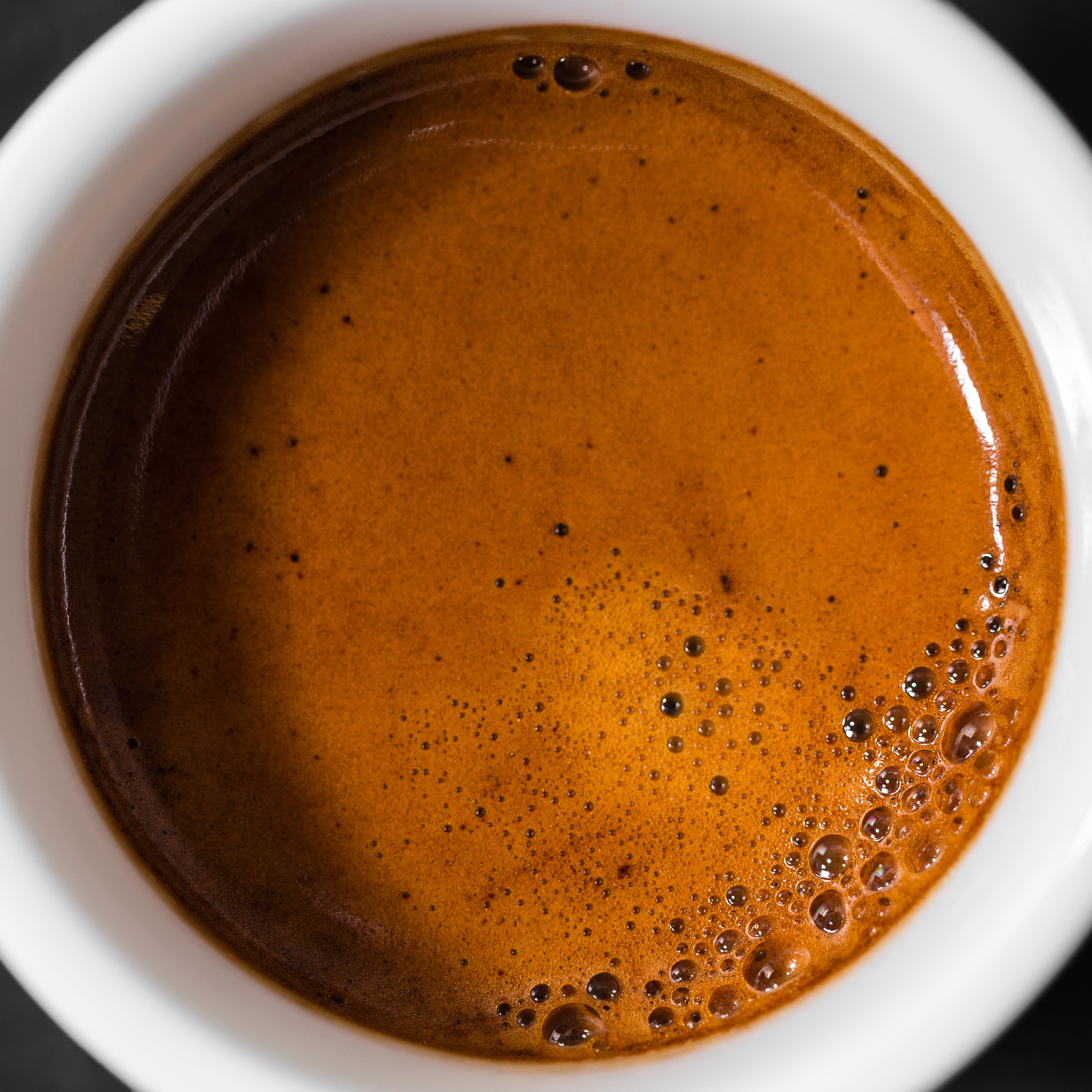
Coffee crema is the foam-like layer that forms on the surface of a freshly extracted espresso.
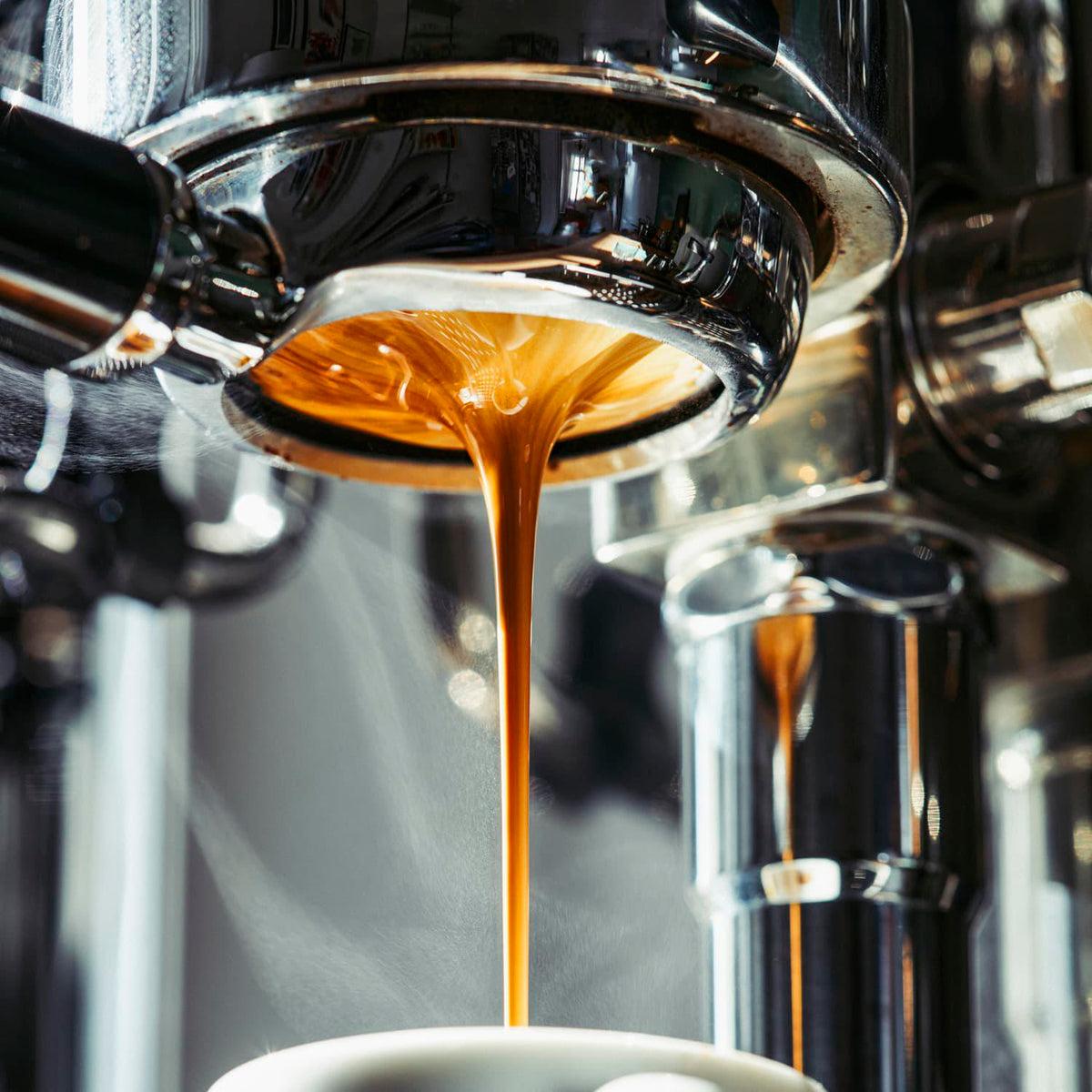
It is created during espresso extraction when hot water passes through finely ground coffee under pressure.
The process causes gases and coffee compounds to become incorporated into the liquid. As the espresso reaches the cup, some of the dissolved gases come out of solution and form tiny bubbles.
These bubbles become suspended in the coffee's oils and other compounds, creating the characteristic crema layer.
Fresh crema can appear thick, golden, reddish-brown, or hazelnut-colored depending on the coffee and extraction.
It may gradually become thinner as the espresso sits.
Why Does Espresso Have Crema?
The key is pressure and the structure of roasted coffee.
During roasting, coffee beans undergo significant chemical and physical changes. Among other things, gases such as carbon dioxide are produced and retained inside the porous structure of the roasted bean.
After roasting, some of this gas remains inside the coffee.
When the beans are ground and used to prepare espresso, hot water is pushed through the coffee at pressure.
This process helps release and disperse some of the trapped gases into the brewed coffee.
When the espresso reaches the cup, the gases begin to escape.
The result is the layer we see as crema.
In simple terms:
Roasting → gas remains in the coffee → grinding → pressurized extraction → gas release → crema
What Does Crema Look Like?
Fresh espresso crema can vary considerably.
You may see:
-
Golden brown crema
-
Darker brown crema
-
Fine, tight bubbles
-
Larger bubbles
-
A smooth surface
-
A marbled or mottled appearance
The appearance depends on many factors, including the coffee variety, roast level, freshness, grind size, dose, extraction, and brewing equipment.
This is why there is no single "perfect" crema appearance for every espresso.
Different coffees can naturally produce different types of crema.
Does Fresh Coffee Produce More Crema?
Freshness can influence crema because recently roasted coffee generally contains more carbon dioxide.
As coffee rests after roasting, some of this gas naturally escapes through a process known as degassing.
This means a very fresh coffee may produce a more noticeable crema during espresso extraction.
However, extremely fresh coffee is not necessarily ideal for espresso.
If too much carbon dioxide remains in the coffee, it can make extraction more difficult and less predictable.
The coffee may need some time to rest after roasting before it reaches a more stable brewing stage.
So, freshness and readiness are not exactly the same thing.
Does Roast Level Affect Crema?
Yes.
Roast level can influence the way coffee behaves during espresso extraction.
Darker roasted coffees often have a more developed and porous internal structure and may produce noticeable crema.
Lighter roasted coffees can behave differently because their physical structure and gas retention can differ.
However, roast level is only one factor.
Two coffees with a similar roast color can still produce different crema because of differences in:
-
Variety
-
Origin
-
Density
-
Processing
-
Freshness
-
Roast profile
-
Grind size
-
Brewing conditions
This is why crema should be viewed as one part of espresso rather than a simple indicator of roast quality.
Does Robusta Produce More Crema Than Arabica?
Robusta is often associated with strong crema production, especially in espresso blends.
This is one reason Robusta has traditionally been used in some espresso blends where additional body and crema are desired.
Arabica can also produce beautiful crema.
The amount and appearance depend on the specific coffee, roast, freshness, and extraction.
For example, a carefully roasted Arabica can produce a rich and attractive crema while also offering floral, fruity, sweet, or chocolate-like characteristics.
So crema is not exclusive to Robusta.
Does More Crema Mean Better Espresso?
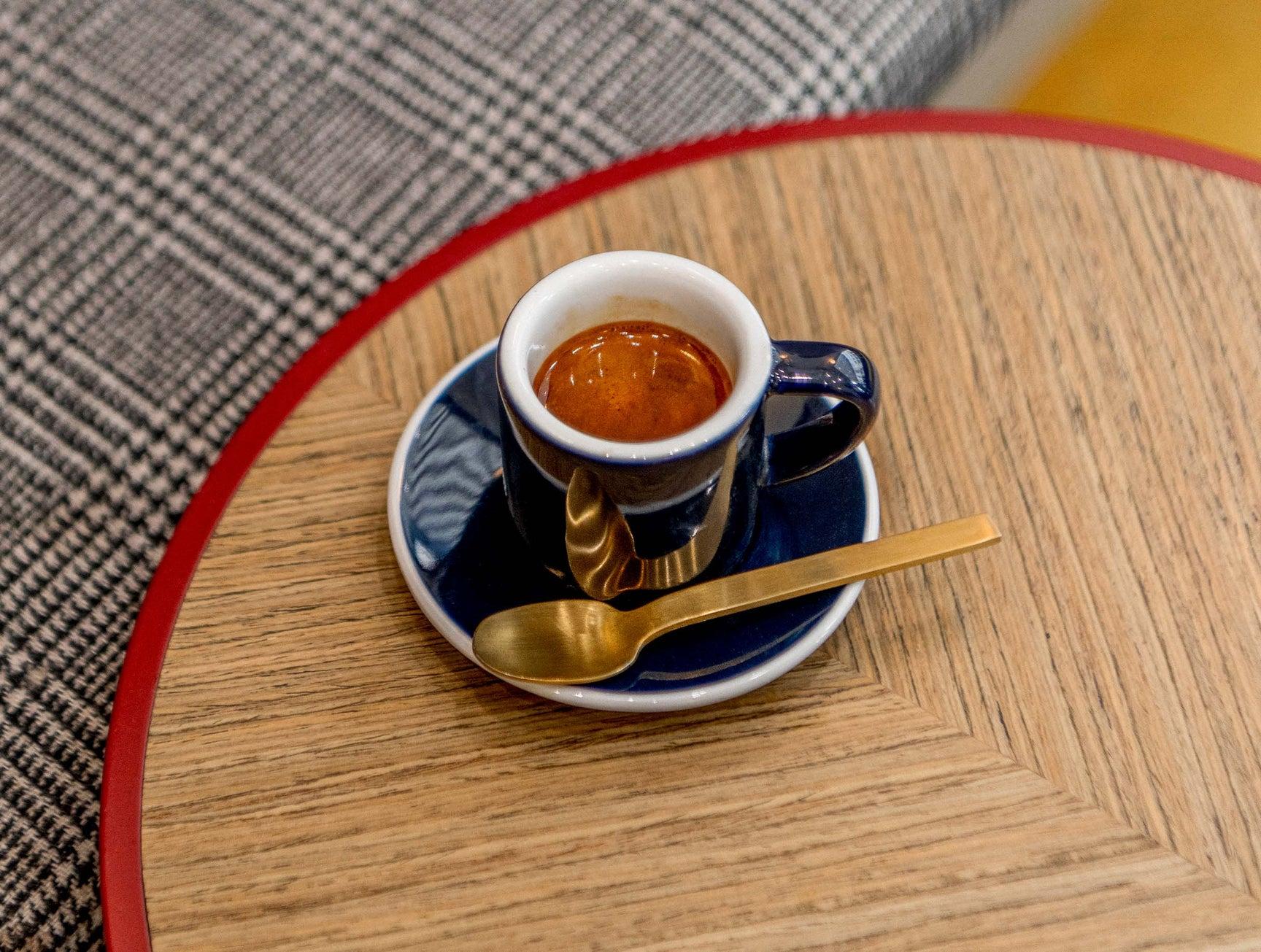
Not necessarily.
This is one of the biggest misconceptions about espresso.
A thick layer of crema can look impressive, but crema alone cannot tell you whether the espresso tastes good.
A good espresso should be evaluated through multiple characteristics, including:
-
Aroma
-
Sweetness
-
Acidity
-
Bitterness
-
Body
-
Balance
-
Aftertaste
-
Overall flavor
An espresso can have a large amount of crema and still taste harsh, bitter, or unbalanced.
Another espresso may have less crema but offer a cleaner and more enjoyable flavor.
The cup should always be judged by the complete sensory experience.
What Can Crema Tell You?
Although crema does not determine coffee quality by itself, it can provide useful visual information.
For example, changes in crema may encourage a barista to look at:
-
Coffee freshness
-
Grind size
-
Dose
-
Brew time
-
Extraction
-
Roast profile
-
Coffee variety
Crema can therefore be a useful observation during espresso preparation.
But it should be combined with taste and brewing measurements.
Why Does Crema Disappear?
Crema is not permanent.
After espresso is extracted, the gases trapped in the crema gradually escape.
The bubbles become less stable and the crema begins to thin.
You may notice that the espresso looks very different after several minutes compared with the moment it was first extracted.
This is completely normal.
The crema is a dynamic part of the freshly brewed espresso.
Its appearance changes as the coffee cools and the gases continue to escape.
Can You Taste Crema?
Crema contributes to the overall texture and aroma experience of espresso, but it should not be considered a separate flavor layer.
The oils, gases, and fine particles associated with crema can influence the mouthfeel of the espresso.
Some people perceive crema as contributing to a fuller or richer sensory experience.
However, stirring the espresso can also change how the crema is distributed throughout the drink.
This is one reason baristas may taste espresso both with and without stirring during evaluation.
How Grind Size Affects Crema
Grind size is an important part of espresso preparation.
Espresso generally requires a fine grind because water needs to pass through a compact coffee bed under pressure.
If the grind is too coarse, water may pass through too quickly, potentially resulting in a weak or under-extracted espresso.
If the grind is too fine, water may move too slowly, potentially leading to excessive extraction or a very slow shot.
These changes can also affect the appearance and stability of crema.
The goal is not simply to produce more crema.
The goal is to achieve a balanced extraction.
How Brewing Time Affects Crema
Extraction time also influences the final espresso.
A shot that runs very quickly may produce a different crema structure from a shot extracted more slowly.
Changes in flow can affect how compounds and gases move through the coffee bed.
This is why baristas usually consider several variables together rather than adjusting only one.
If an espresso does not look or taste right, the solution may involve changing the grind, dose, yield, temperature, or extraction time.
Crema and Espresso Blends
Espresso blends are often designed to balance several characteristics.
A blend may combine different coffees to create a desired combination of:
-
Body
-
Sweetness
-
Aroma
-
Crema
-
Acidity
-
Finish
Robusta can sometimes contribute additional body and crema, while Arabica can contribute aromatic complexity and sweetness.
The exact result depends on the coffees selected and how they are roasted.
This is one reason espresso blending is both a technical and sensory process.
Crema and Vietnamese Coffee
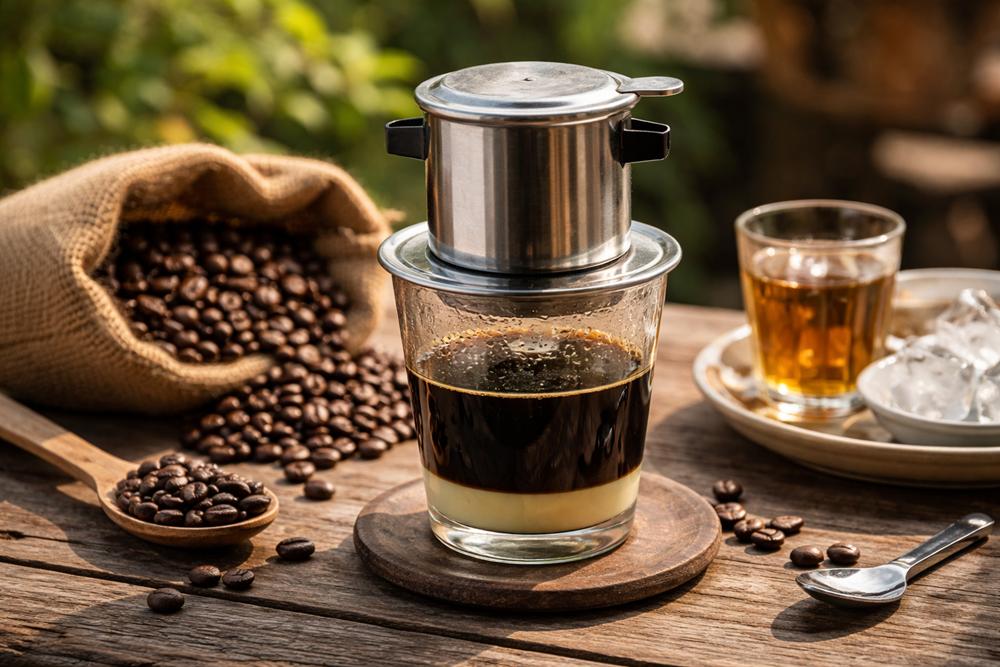
Vietnam is strongly associated with Robusta production, and Vietnamese coffee can also be used in espresso applications.
Vietnamese Robusta can contribute body and intensity to espresso blends, while Vietnamese Arabica from highland regions such as Cầu Đất offers another expression of the country's coffee landscape.
For roasters, experimenting with different combinations of Vietnamese Arabica and Robusta can create different espresso profiles.
The goal is not simply to maximize crema.
It is to create a balanced espresso that expresses the characteristics of the coffee.
Cau Dat Arabica in Espresso
Cầu Đất is well known as a highland Arabica-growing area near Đà Lạt.
Depending on variety, processing, roast profile, and lot, Cầu Đất Arabica can show characteristics such as sweetness, floral aromas, fruit notes, clean acidity, or a balanced body.
When used for espresso, the coffee can behave differently from when it is prepared as a filter coffee.
A roaster may adjust the roast and espresso recipe to bring forward different characteristics.
This is another example of how the same coffee can provide different experiences depending on how it is prepared.
How Should You Judge an Espresso?
Instead of asking:
"How much crema does this espresso have?"
Try asking:
"How does this espresso taste?"
Look at the complete cup.
Aroma
Does the espresso smell sweet, floral, fruity, nutty, chocolatey, or roasted?
Flavor
What characteristics do you notice after the first sip?
Body
Does the coffee feel light, creamy, heavy, or syrupy?
Balance
Are sweetness, acidity, bitterness, and body working well together?
Finish
What remains after you swallow?
These characteristics provide much more information than crema alone.
Crema Is Only One Part of the Espresso Experience
Crema is fascinating because it connects several stages of coffee production.
It is influenced by:
Coffee variety → roasting → freshness → grinding → extraction → espresso
A small layer of foam on top of the cup is actually the result of many things that happened before the coffee reached you.
That is what makes espresso so interesting.
The crema is visible.
But behind it is a much larger story.
Final Thoughts
Coffee crema is the golden-brown layer that forms on freshly extracted espresso.
It develops through the interaction of pressure, dissolved gases, coffee oils, and the physical structure of roasted coffee.
Crema can tell us something about the coffee and the extraction, but it should never be treated as a simple measure of coffee quality.
A beautiful crema is nice to see.
A balanced and flavorful espresso is what matters most.
At Cau Dat Bean, we believe that every cup of coffee has a story — from the growing conditions and variety to roasting, brewing, and finally the moment you taste it.
Sometimes, even a small layer of crema can remind us how much happens before the first sip.
Discover Cau Dat Bean
Looking for Vietnamese Arabica and Robusta coffee for roasting, wholesale, or export?
Cau Dat Bean Showroom
82B Trương Công Định, Phường Xuân Hương, Đà Lạt, Lâm Đồng, Vietnam
Phone / WhatsApp: +84 926 915 849
Email: caudatbean@gmail.com
Try before you buy. Discover the character of Vietnamese coffee.
Frequently Asked Questions
What is coffee crema?
Coffee crema is the golden-brown foam layer that forms on the surface of freshly extracted espresso.
Why does espresso have crema?
Crema forms as gases, coffee oils, and other compounds interact during pressurized espresso extraction.
Does more crema mean better coffee?
No. Crema can provide useful visual information, but it does not determine espresso quality. Flavor, aroma, body, balance, and finish are also important.
Does Robusta produce more crema than Arabica?
Robusta is often associated with strong crema production, but both Robusta and Arabica can produce crema. The result depends on the coffee and brewing conditions.
Does fresh coffee produce more crema?
Freshly roasted coffee generally contains more trapped CO₂, which can contribute to more noticeable crema. However, coffee that is too fresh may be difficult to extract consistently.
Why does espresso crema disappear?
The gases trapped in the crema gradually escape after extraction, causing the bubbles to collapse and the crema to become thinner.
Can crema tell you if espresso is well extracted?
Crema can provide some visual clues, but it cannot determine extraction quality by itself. Tasting the espresso is essential.


 Group4, Cau Dat Village, Xuan Truong commune, Da Lat City, Lam Dong Province, Vietnam
 +84 783 472 234
 caudatbean@gmail.com
  www.caudatbean.com