
What Are Coffee Oils? Why They Matter to Flavor and Mouthfeel
Have you ever noticed that some coffees feel rich, smooth, and almost silky in your mouth, while others feel lighter and cleaner?
Part of that difference can come from something you may not think about when drinking coffee:
Coffee oils.
Coffee beans naturally contain lipids, and these compounds play a role in the aroma, texture, and overall sensory experience of brewed coffee. Their presence in the cup also depends on how the coffee is brewed and filtered.
So, what exactly are coffee oils?
And why can the same beans taste different when brewed through a paper filter, a metal filter, or an espresso machine?
Let's take a closer look.
What Are Coffee Oils?
Coffee oils are the naturally occurring lipid components found inside coffee beans.
They are present in both green and roasted coffee, although roasting changes the physical and chemical environment of the bean.
Coffee contains a complex mixture of lipids, including:
-
Triglycerides
-
Fatty acids
-
Phospholipids
-
Sterols
-
Diterpene compounds
-
Other minor lipid components
Coffee beans contain a relatively significant lipid fraction, with the exact amount varying by species and other factors. Reviews report that coffee's lipid fraction can account for a substantial portion of the bean, with Arabica generally containing more total lipids than Robusta.
These oils are not something added to the coffee.
They are naturally part of the bean.
Where Are Coffee Oils Found?
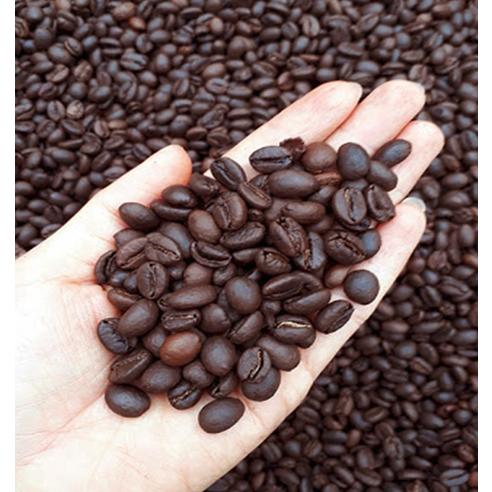
Coffee oils are naturally present within the structure of the coffee bean.
Before roasting, much of the lipid fraction remains inside the bean's cellular structure.
During roasting, the bean changes dramatically.
It expands, loses moisture, becomes more porous, and develops hundreds of aroma compounds.
Roasting can also make some of the oil more accessible within the roasted bean. Research reviews note that changes in the bean structure during roasting can facilitate the release of coffee oil and help retain aroma compounds.
This is one reason freshly roasted coffee can have such a strong aroma.
Do Coffee Oils Make Coffee Taste Oily?
Not exactly.
When we say that coffee has “oils,” it does not mean that the finished drink should literally taste like cooking oil.
Instead, coffee oils can contribute to the mouthfeel and texture of the beverage.
A coffee with more lipids in the brew may feel:
-
Fuller
-
Smoother
-
Richer
-
More coating
-
Less “thin”
However, mouthfeel is influenced by many other compounds and factors too.
So coffee oils are one part of the sensory picture, not the only explanation for body.
Recent coffee research describes lipids as contributors to aroma release and perceived mouthfeel, while also noting that the relationship between specific lipid compounds and individual sensory characteristics is still an active area of research.
Why Does Paper Filtering Make a Difference?
This is where things become especially interesting.
Imagine brewing the same coffee in two ways:
Method A: Paper filter
Method B: Metal filter
The coffee beans are the same.
The roast can be the same.
The water can be the same.
But the cups may feel noticeably different.
Why?
Because the filter changes which particles and compounds remain in the brewed coffee.
Research comparing different brewing methods has found that paper-filtered coffee contains substantially less lipid than coffee prepared using methods with less filtration, while metal-filtered coffee retains more lipids in the brew.
This can help explain why different brewing methods can produce different sensations of body and texture.
Paper Filter: Cleaner and Lighter
Paper filters are very effective at retaining fine particles and much of the coffee's lipid material.
This can produce a cup that feels:
-
Cleaner
-
Lighter
-
More transparent
-
More delicate
For specialty coffee, this can be desirable because it allows certain acidity and aromatic characteristics to stand out clearly.
A washed Arabica with floral or fruity characteristics, for example, can feel particularly clean when brewed through paper.
The coffee is not necessarily “better.”
It is simply being presented differently.
Metal Filter: More Body
Metal filters allow more of the coffee's oils and very fine particles to pass into the cup.
The result can be a drink with a more noticeable body.
You may experience it as:
-
Richer
-
Heavier
-
Fuller
-
More textured
This is one reason metal-filter brewing can feel very different from paper-filter brewing.
The difference is not only about extraction.
Filtration also matters.
What About the Vietnamese Phin?
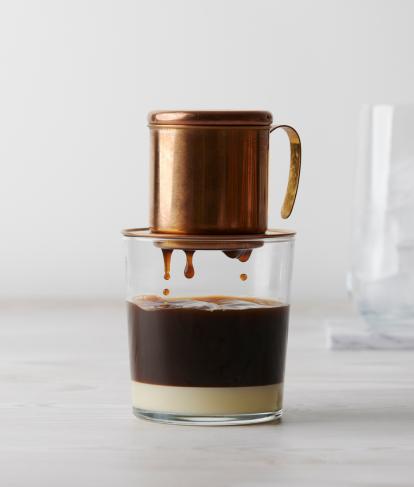
This is where coffee oils become particularly relevant to Vietnamese coffee culture.
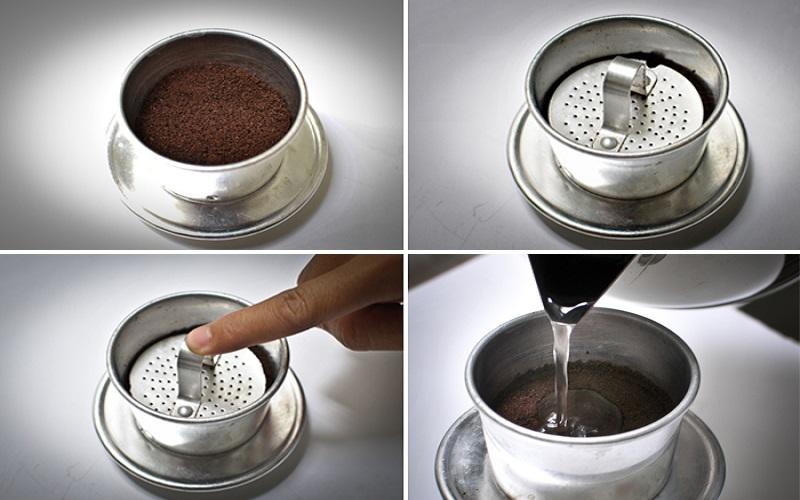
The traditional Vietnamese phin uses a metal filter rather than a paper filter.
As coffee slowly drips through the metal filter, more of the coffee's natural oils and fine particles can remain in the beverage compared with a typical paper-filtered brew.
This contributes to the characteristic body of many Vietnamese-style coffees.
When combined with a darker roast or condensed milk, the result can be especially rich and intense.
This is one reason a Vietnamese phin coffee can feel so different from a light pour-over brewed with the same origin.
What About Espresso?
Espresso is another interesting example.
Espresso is brewed under pressure and typically has a concentrated texture.
The beverage also contains coffee oils and very fine suspended material.
These components contribute to the characteristic body of espresso.
They also interact with the surface of the beverage and contribute to the stability and texture of crema.
So when you see a rich espresso with a persistent crema layer, you are seeing the result of several physical and chemical processes working together.
Coffee oils are one part of that story.
Why Does Espresso Feel So Different From Filter Coffee?
Consider these two cups:
Filter Coffee
Usually:
-
Larger volume
-
Lower concentration
-
Paper filtration in many brewing methods
-
Cleaner mouthfeel
-
More separation between flavors
Espresso
Usually:
-
Small volume
-
High concentration
-
Pressure brewing
-
More suspended material
-
More intense body
The beans can be exactly the same.
Yet the experience can be completely different.
This is a good reminder that coffee flavor is not determined by the bean alone.
The brewing method shapes what reaches your cup.
Coffee Oils and Aroma
Coffee oils are also connected to aroma.
Roasting creates a large range of volatile compounds that give coffee its characteristic smell.
Coffee's lipid fraction can interact with and help retain or transport some aroma-related compounds.
Recent research describes coffee lipids as involved in aroma release and the formation and preservation of coffee quality, although the exact relationships between individual lipid molecules and sensory characteristics are still being studied.
This helps explain why the aroma of freshly roasted coffee can feel so intense.
When you grind the beans, you dramatically increase the surface area exposed to air.
The coffee's aromatic compounds can then escape more easily.
Why Do Freshly Roasted Beans Sometimes Look Shiny?
Have you ever seen very dark roasted coffee beans that look almost glossy?
That shine can come partly from coffee oils appearing closer to the surface of the roasted bean.
Roast level, time, temperature, bean structure, and storage all influence how and when this happens.
A shiny surface does not automatically mean better coffee.
It is simply one physical characteristic you may notice in roasted beans.
Lighter roasted coffees often appear much less oily on the surface, while darker roasts can become visibly glossy.
Does More Oil Mean Better Coffee?
No.
This is an important point.
More visible oil does not automatically mean higher quality.
A coffee can be:
-
Light and clean
-
Rich and heavy
-
Bright and delicate
-
Deep and intense
without one style being universally better.
The desired amount of body and texture depends on the coffee, roast profile, brewing method, and personal preference.
For example, someone drinking a delicate high-altitude Arabica may prefer a clean and transparent cup.
Another person may prefer the rich texture of a Vietnamese phin coffee.
Both experiences can be enjoyable.
Arabica and Robusta Can Feel Different
Coffee species can also differ in their chemical composition.
Arabica generally contains a higher total lipid content than Robusta, although actual composition varies among coffees.
But you should not use lipid content alone to predict how a coffee will taste.
Species, variety, origin, processing, roasting, grinding, brewing, and serving all interact.
That is why a simple statement such as “more oil equals more body” would be an oversimplification.
Coffee is much more complicated than that.
What Happens When You Change the Filter?
Try a simple experiment.
Use the same roasted coffee and brew it three ways:
1. Paper Filter
Expect a cleaner and lighter cup.
2. Metal Filter
Expect more texture and potentially more body.
3. Vietnamese Phin
Expect a slower brew with a distinctive Vietnamese-style experience and more presence in the cup.
The differences may surprise you.
The beans did not change.
The filtration did.
Coffee Oils Are One Small Part of a Much Bigger Story
Coffee flavor comes from many interacting components.
Think about the journey:
Coffee cherry → Processing → Drying → Roasting → Grinding → Brewing → Filtration → Cup
Coffee oils are only one part of this journey.
But they help explain why two brewing methods can produce such different sensations from the same coffee.
They are a reminder that coffee is not simply about “what bean you buy.”
It is also about how that bean is transformed and brewed.
Vietnamese Coffee: Richness Has a Reason
Vietnamese coffee culture offers a great example.
The combination of roasted coffee, metal filtration, slow brewing, and traditional serving styles creates a very recognizable drinking experience.
A phin coffee can feel rich, strong, aromatic, and full-bodied.
A paper-filtered pour-over made from the same Vietnamese Arabica can feel much cleaner and more delicate.
Neither cup changes the identity of the coffee.
They simply reveal different sides of it.
.jpg)
Final Thoughts
Coffee oils may not be the first thing you think about when you take a sip.
But they are an important part of what happens between the roasted bean and the finished cup.
They can contribute to:
-
Mouthfeel
-
Body
-
Aroma behavior
-
Crema
-
The overall texture of the coffee
And perhaps most interestingly, your brewing method determines how much of this natural coffee material ends up in the cup. Studies comparing brewing methods consistently show substantial differences in lipid levels depending on filtration.
So next time you drink a coffee through a paper filter, a metal filter, or a Vietnamese phin, pay attention to the texture.
Is it clean?
Is it silky?
Is it heavy?
Is it rich?
Sometimes, the difference is not just in the beans.
It is in what the filter allows into your cup.
Discover Vietnamese Coffee with Cau Dat Bean
At Cau Dat Bean, we work with Vietnamese coffee from the highlands of Đà Lạt, including Arabica from the Cầu Đất region.
If you are looking for Vietnamese green coffee, roasted coffee, or coffee for your café or roasting business, contact us to learn more about our available selections.
📍 82B Trương Công Định, Phường Xuân Hương, Đà Lạt, Lâm Đồng, Vietnam
📞 +84 926 915 849
📧 caudatbean@gmail.com
Try before you buy.


 Group4, Cau Dat Village, Xuan Truong commune, Da Lat City, Lam Dong Province, Vietnam
 +84 783 472 234
 caudatbean@gmail.com
  www.caudatbean.com