
Selective Picking vs. Strip Picking: How Coffee Harvesting Affects Bean Quality
Coffee quality begins long before the beans reach a processing station or roasting machine. One of the earliest and most important decisions happens during harvesting: deciding which coffee cherries to pick and when to pick them.
Not all coffee cherries on the same branch ripen at the same time. Some may be bright red and fully mature, while others are still green or only partially ripe. The harvesting method therefore plays an important role in determining the quality and consistency of the coffee crop.
Two common harvesting methods are selective picking and strip picking. Each has different advantages, limitations, and applications depending on the farm, labor availability, and production goals.
In this guide, Cầu Đất Bean explores how these methods work and why harvesting practices matter to coffee producers, roasters, and buyers.
1. What Is Selective Coffee Picking?
Selective picking is a harvesting method in which workers handpick individual coffee cherries based on their ripeness.
Instead of collecting every cherry from a branch, pickers focus primarily on mature cherries that have reached the appropriate stage of development.
For many Arabica coffee farms, this approach is particularly valuable because cherries on the same tree can mature at different times.
Key Characteristics of Selective Picking
-
Only ripe or suitably mature cherries are selected.
-
Harvesting may require several visits to the same coffee tree.
-
Workers need experience identifying the appropriate ripeness.
-
Unripe and overripe cherries can be left for later collection or removed separately.
Advantages of Selective Picking
Better ripeness control
Selecting cherries at the appropriate stage helps reduce the number of immature or overripe fruits entering the processing stage.
More consistent raw material
A more uniform level of cherry maturity can make subsequent processing easier to manage.
Greater quality potential
Ripe cherries provide suitable raw material for producing coffee with desirable sweetness, aroma, and flavor characteristics, although the final result also depends on processing, drying, storage, and roasting.
Limitations
Selective picking is labor-intensive. Workers must carefully inspect the trees and return multiple times during the harvest period.
This can increase harvesting costs and make the method more challenging when labor is limited.
2. What Is Strip Picking?
Strip picking is a harvesting method in which coffee cherries are removed from a branch in one pass, often by hand.
Rather than selecting individual ripe cherries, workers strip most or all cherries from the branch, regardless of whether they have reached exactly the same level of maturity.
This method is generally faster than selective picking and can be suitable for farms where harvesting efficiency is a major consideration.
Key Characteristics of Strip Picking
-
Cherries are collected together from the branch.
-
Ripe, partially ripe, and unripe cherries may be harvested at the same time.
-
Harvesting can be completed more quickly.
-
Additional sorting may be needed after collection.
Advantages of Strip Picking
Faster harvesting
Workers can collect a larger quantity of cherries in less time.
Lower labor requirements
Compared with repeated selective picking, strip picking can reduce the number of harvesting passes.
Practical for larger operations
It can be useful when managing large production volumes or farms with limited access to seasonal workers.
Limitations
Because cherries at different maturity stages may be collected together, the harvested crop can be less uniform.
If immature or damaged cherries are not properly separated, they may affect the consistency of the processing batch and the final coffee quality.
3. Selective Picking vs. Strip Picking: Key Differences
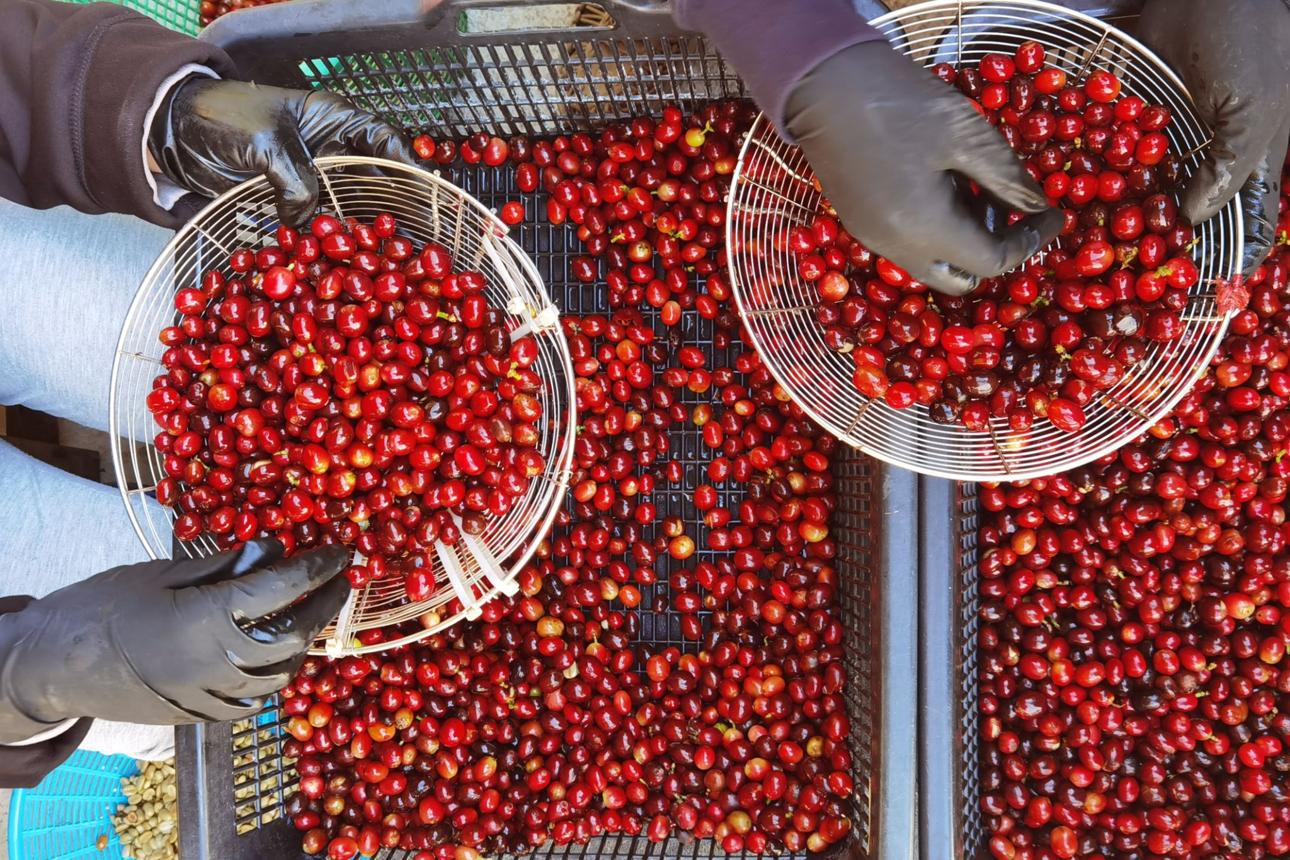
Although both methods aim to collect coffee cherries efficiently, they differ in how maturity, labor, and harvesting speed are managed.
| Factor | Selective Picking | Strip Picking |
|---|---|---|
| Harvesting approach | Individual cherry selection | Cherries collected together |
| Ripeness control | More precise | Less selective |
| Labor requirements | Higher | Generally lower |
| Harvesting speed | Slower | Faster |
| Crop uniformity | Potentially higher | Depends on sorting |
| Additional sorting | May still be required | Often more important |
| Typical application | Quality-focused harvesting | Efficiency-focused harvesting |
Neither method automatically guarantees better coffee. The result depends on how carefully harvesting, sorting, and post-harvest processing are managed.
4. Why Coffee Cherry Ripeness Matters
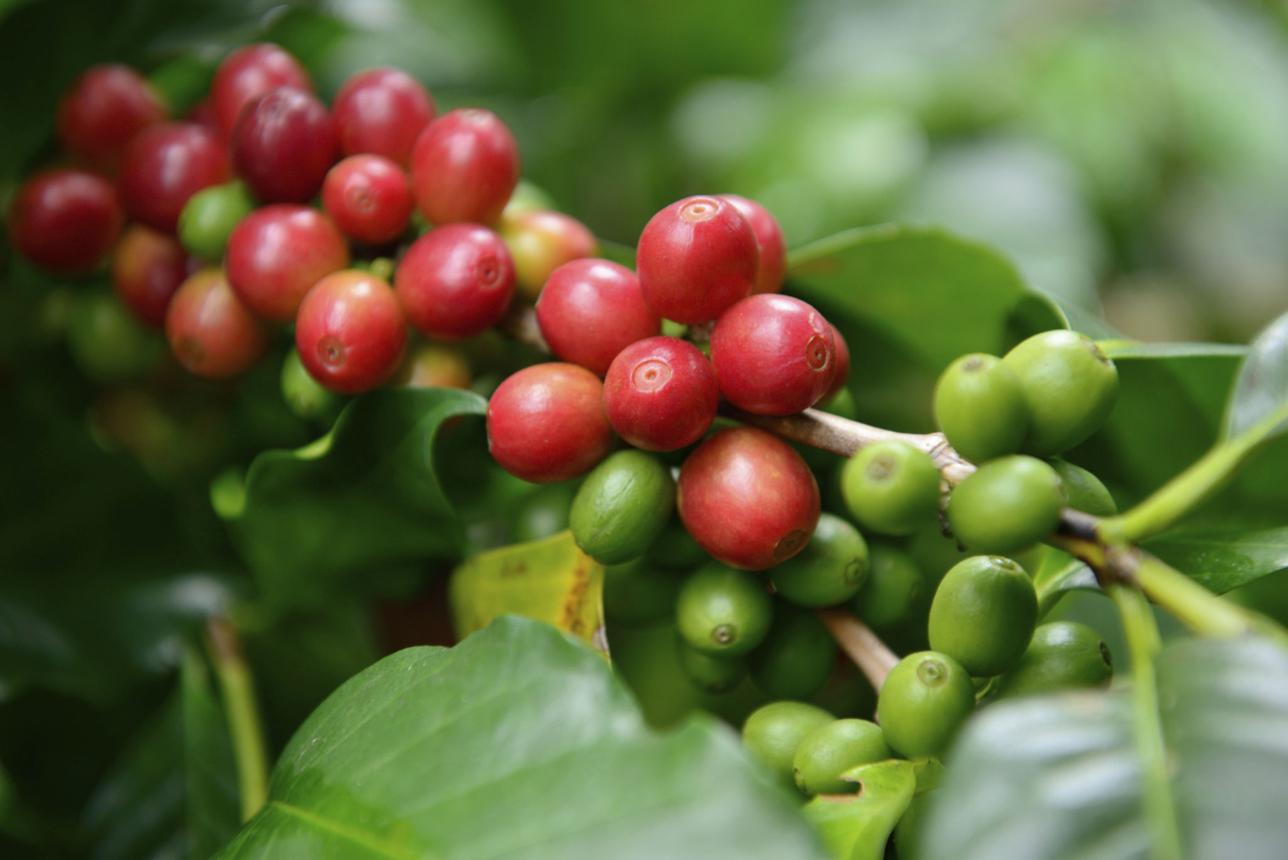
Coffee cherries change as they develop. Their physical characteristics and internal composition evolve throughout the ripening process.
Immature cherries may not have developed the same balance of sugars and other compounds as fully ripe cherries. Overripe or damaged cherries can also introduce unwanted characteristics if they are not handled properly.
When cherries with significantly different maturity levels are processed together, the resulting batch may become less predictable.
This is why harvesting practices are closely connected to post-harvest quality control.
For coffee producers, understanding cherry maturity helps determine when to harvest and how to organize the next processing steps.
5. What Happens After Coffee Cherries Are Harvested?
Harvesting is only the beginning. After collection, coffee cherries need to be handled carefully to protect their quality.
A typical post-harvest workflow includes several stages:
Step 1: Sorting
Cherries are inspected to remove immature, damaged, or undesirable fruits.
Sorting helps improve the uniformity of the material entering processing.
Step 2: Processing
Depending on the intended product, coffee may be processed using different methods:
-
Washed: The outer fruit is removed, and mucilage is removed through fermentation and washing.
-
Natural: Whole coffee cherries are dried with the fruit surrounding the beans.
-
Honey: The skin and pulp are removed while some mucilage remains during drying.
Each method influences how the coffee develops its final sensory characteristics.
Step 3: Drying
Coffee must be dried under controlled conditions to reach a suitable moisture level for storage and further preparation.
Uneven drying or excessive moisture can create quality and storage problems.
Step 4: Hulling and Grading
Once dried, the coffee is prepared as green coffee. It may then undergo hulling, cleaning, sorting, and grading according to the required specifications.
These stages help prepare the coffee for storage, roasting, or export.
6. Which Harvesting Method Is Better for Arabica Coffee?
Selective picking is often preferred for quality-focused Arabica production, especially when cherries mature unevenly and producers want greater control over ripeness.
This is relevant to highland coffee-growing areas such as Cầu Đất, Đà Lạt, where producers may prioritize careful cherry selection to preserve the characteristics of their coffee.
However, strip picking can also be practical when supported by effective sorting and processing systems.
The most suitable method depends on several factors:
-
Coffee variety and maturation pattern
-
Farm size and terrain
-
Labor availability
-
Harvesting costs
-
Processing capacity
-
Target quality and market requirements
A well-managed harvest is not determined by the picking method alone. It requires coordination between harvesting, sorting, processing, and drying.
7. What Should Coffee Buyers Know About Harvesting Methods?
For importers, roasters, and wholesale coffee buyers, harvesting practices provide useful information about how a coffee lot was produced.
When discussing a new coffee origin or supplier, buyers can ask:
-
Are cherries selectively picked or harvested using another method?
-
How is cherry ripeness assessed?
-
Is sorting performed before processing?
-
Which processing method is used?
-
How are drying conditions monitored?
-
Are samples available for quality evaluation?
These questions help buyers understand the production process beyond basic specifications such as origin, screen size, and moisture content.
Ultimately, the best way to evaluate a coffee is to combine production information with physical inspection and sensory testing.
Conclusion: Better Coffee Begins with Careful Harvesting
Selective picking and strip picking represent two different approaches to coffee harvesting. Selective picking offers greater control over cherry maturity, while strip picking can improve harvesting efficiency.
Both methods have a place in coffee production, but careful sorting and post-harvest management remain essential for maintaining quality.
From the coffee farm to the final cup, every stage contributes to the character of the coffee.
At Cầu Đất Bean, we believe that understanding the origin and production process is an important part of appreciating Vietnamese coffee.
Discover Vietnamese Coffee with Cầu Đất Bean
Explore coffee from the highlands of Cầu Đất, Đà Lạt, Vietnam.
Cầu Đất Bean supplies Vietnamese Arabica and Robusta coffee for roasters, cafés, distributors, and international buyers. Contact our team to discuss available products, processing methods, specifications, and sample requests.
CẦU ĐẤT BEAN
Showroom: 82B Trương Công Định, Đà Lạt, Lâm Đồng, Vietnam
Email: caudatbean@gmail.com
Phone / WhatsApp: +84 926 915 849
Website: https://caudatcoffee.com.vn
Try before you buy.


 Group4, Cau Dat Village, Xuan Truong commune, Da Lat City, Lam Dong Province, Vietnam
 +84 783 472 234
 caudatbean@gmail.com
 www.caudatbean.com