
Private Label Coffee: How to Build Your Own Coffee Brand
Primary Keyword: private label coffee
Secondary Keywords: private label coffee manufacturer, custom coffee branding, coffee roasting partner, private label roasted coffee, coffee packaging solutions, wholesale coffee supplier
What Is Private Label Coffee?
Private label coffee allows a business to sell coffee under its own brand without having to operate its own coffee farm, roasting facility, or packaging line.
Instead, the business works with an experienced coffee producer or roasting partner to develop a product that reflects its target customers, brand identity, and business goals.
For example, a café can launch a retail coffee range under its own name. A hotel can offer branded coffee to guests. A distributor can develop a product line for its local market. An online business can sell specialty coffee without investing in roasting equipment.
The brand owner focuses on marketing, sales, and customer relationships, while the manufacturing partner supports coffee sourcing, roasting, and packaging.
For businesses looking to enter the coffee market, private label production can offer a practical way to develop a distinctive product while managing investment and operational complexity.
Why Are More Businesses Considering Private Label Coffee?
1. Build a Brand That Customers Remember
Selling coffee under your own brand helps create a consistent identity across your products, packaging, website, and retail channels.
Rather than competing only on price, your business can communicate a specific story, flavor profile, origin, or customer experience.
A café might develop a signature espresso blend. A specialty retailer might focus on high-altitude Arabica. A hospitality business might create a balanced coffee designed for everyday service.
The key is to give customers a clear reason to choose your product.
2. Reduce the Need for Manufacturing Investment
Establishing a roasting and packing facility requires equipment, trained staff, quality-control procedures, workspace, and ongoing operating costs.
Working with a production partner can reduce the need for this initial investment.
Instead of managing every stage of production internally, a business can concentrate on market research, branding, distribution, and customer service.
The actual savings depend on order volume, packaging requirements, product specifications, and the services included by the supplier.
3. Develop Products for Different Markets
Not every customer wants the same coffee.
Some prefer a smooth, chocolate-forward espresso, while others look for floral aromas, bright acidity, or the distinctive character of Vietnamese Robusta.
Private label production can support different products for different audiences, such as:
-
Espresso blends for cafés and restaurants.
-
Single-origin Arabica for specialty retailers.
-
Vietnamese Robusta for traditional coffee styles.
-
Whole-bean coffee for home brewers.
-
Ground coffee for convenient daily preparation.
-
Retail coffee bags for online sales and gift collections.
The best product range is not necessarily the largest. A focused selection with clear differences is often easier to introduce, explain, and manage.
How to Develop Your Private Label Coffee
Step 1: Define Your Target Customer
Before selecting coffee beans or designing packaging, determine who will buy the product.
Consider whether your primary customers are café owners, home brewers, specialty coffee enthusiasts, hotels, restaurants, or wholesale distributors.
Think about their preferences, purchasing habits, expected price range, and preferred brewing methods.
For example, a product designed for busy cafés may need consistent performance across espresso-based drinks. A specialty retail product may require more detailed information about origin, variety, and processing.
Your target customer should guide the product decisions that follow.
Step 2: Choose the Right Coffee
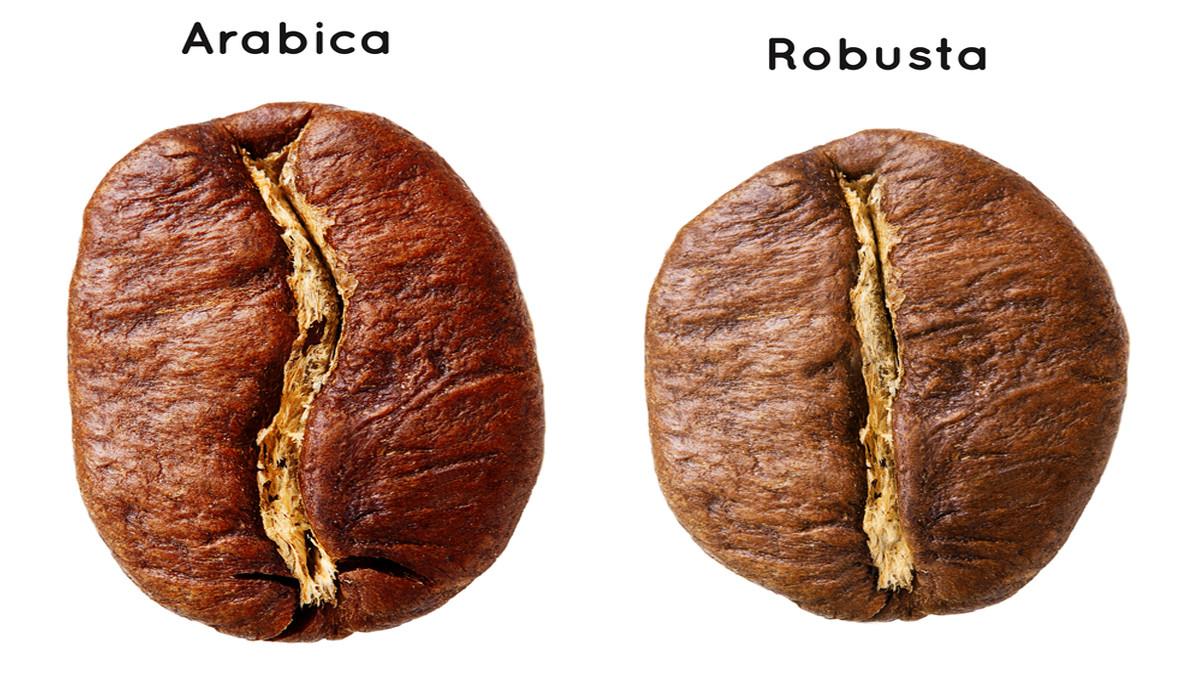
Coffee selection is one of the most important stages of private label development.
The choice depends on your desired flavor, brewing method, target price, and positioning.
Arabica is often selected for its aromatic complexity, varied acidity, and potential floral, fruity, or sweet characteristics.
Robusta can contribute body, strength, bitterness, and crema in suitable espresso blends. It is also important in many traditional Vietnamese coffee styles.
Blends combine coffees to create a particular balance of flavor, body, aroma, and cost.
Single-origin coffee emphasizes coffee from a defined geographic origin and can help tell a more specific product story.
At Cầu Đất Bean, businesses can explore Vietnamese coffee options from the Central Highlands, including Arabica from the Cầu Đất area of Đà Lạt.
Rather than choosing solely by bean name or price, request samples and evaluate the coffee using the brewing method your customers will actually use.
Step 3: Develop and Test the Flavor Profile
A product description might sound appealing on paper, but the coffee must deliver a satisfying experience in the cup.
Begin by defining the desired profile. You might be looking for chocolate and roasted-nut notes, a smooth body, a sweet finish, or a brighter and more floral character.
Then test samples through the intended brewing method.
For café products, evaluate espresso extraction, milk compatibility, body, aftertaste, and consistency. For retail whole-bean coffee, assess aroma, sweetness, acidity, and how the coffee performs across common brewing methods.
If adjustments are needed, discuss the roast level, blend composition, and available coffee options with your production partner.
Keep tasting notes and agreed product specifications so the final product has a clear reference point for future production.
Step 4: Select Packaging That Fits Your Market
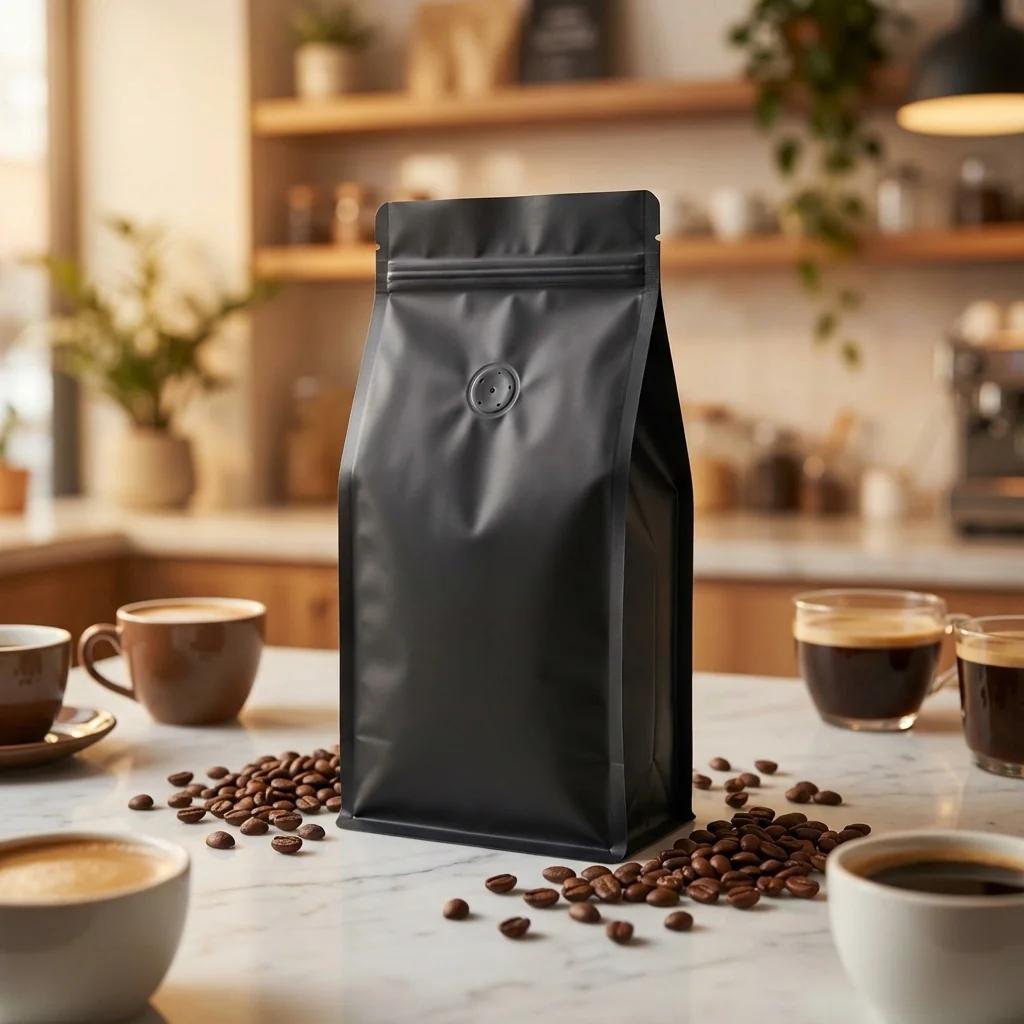
Packaging should protect the coffee while communicating the brand's identity.
Common options include:
-
250 g bags: Suitable for retail trial purchases, specialty coffee, and gift products.
-
500 g bags: Useful for regular home consumption and selected retail channels.
-
1 kg bags: Often practical for cafés, restaurants, and frequent coffee drinkers.
-
Larger wholesale formats: May suit businesses that prioritize operational efficiency over individual retail presentation.
Packaging should also be selected according to the coffee format, storage conditions, distribution method, and expected time before consumption.
For roasted coffee, suitable high-barrier packaging and a one-way degassing valve can help manage exposure to oxygen and the release of carbon dioxide after roasting. A valve bag is not the same as vacuum-sealed packaging, so confirm the exact packaging method with your supplier.
Before printing, confirm the bag dimensions, material, closure, valve, artwork requirements, and applicable food-contact requirements.
Step 5: Prepare Your Brand and Label
Your packaging needs to look professional, but it must also communicate the right information.
Depending on your product and destination market, label details may include:
-
Brand and product name.
-
Net weight.
-
Ingredient information, where applicable.
-
Origin or origin claims that can be substantiated.
-
Roast level and brewing recommendations.
-
Production or lot identification.
-
Best-before date and storage instructions.
-
Manufacturer or responsible business information.
-
Required local-language information and regulatory details.
Requirements differ by market. A product sold in the European Union may need different label content and compliance checks from a product sold in Vietnam or the United States.
Have the final label reviewed for the destination market before committing to a large packaging order. Avoid unsupported claims such as “organic,” “certified,” or specific origin claims unless the relevant evidence and approvals are available.
Step 6: Confirm the Minimum Order and Production Schedule
Private label projects can involve several separate minimums.
The coffee supplier may have a minimum production quantity, while the packaging printer may require a minimum number of custom-printed bags. These quantities do not always match.
Ask your production partner to clarify:
-
Minimum order quantity for each coffee profile.
-
Minimum quantity for custom packaging.
-
Whether the coffee, roasting, and packing are included in the quotation.
-
Sample development and approval procedures.
-
Packaging and label lead times.
-
Payment terms.
-
Shipping arrangements and export documentation, if applicable.
The production timeline should include time for sample approval, artwork confirmation, packaging procurement, roasting, packing, and final checks.
Confirm the schedule in writing before announcing a launch date to customers.
What Should You Look for in a Private Label Coffee Partner?
A reliable partner should be able to explain its production process, product specifications, quality-control practices, and commercial terms clearly.
Consider these points when comparing suppliers:
Coffee sourcing: Can the supplier explain the origin, processing method, and available specifications of the coffee?
Roasting capability: Can it develop a profile suited to your product and intended brewing method?
Quality control: Are samples, specifications, and production references used to support consistency between orders?
Packaging capability: Can the supplier work with your preferred bag format, labeling, and branding requirements?
Production capacity: Can it accommodate your initial quantity and discuss how production could scale if demand grows?
Documentation: Can the supplier provide the documents and evidence required for your particular market? Verify each certification and export requirement rather than assuming it is included.
Communication: Are quotations, lead times, minimums, and responsibilities clearly documented?
A low initial price may not represent the best overall value if the supplier cannot meet your packaging, quality, or delivery requirements.
Common Mistakes to Avoid
Choosing Coffee Before Understanding the Market
A coffee you personally enjoy may not be the right product for your customers. Begin with customer needs and test samples against the intended use.
Launching Too Many Products at Once
Multiple origins, roast levels, and package sizes increase complexity. Starting with one or two well-defined products can make testing and inventory management easier.
Underestimating Packaging Lead Times
Custom bags and printed labels can affect the schedule. Confirm availability and printing requirements early.
Focusing Only on the Price per Kilogram
Calculate the complete product cost, including coffee, roasting, packaging, labels, labor, shipping, duties where applicable, and distribution expenses.
Neglecting Quality After the First Order
A successful launch is only the beginning. Keep reference samples and product specifications, review subsequent batches, and communicate any changes before they affect customers.
Is Private Label Coffee Right for Your Business?
Private label coffee can be suitable for cafés building a retail range, distributors expanding their product portfolios, hospitality businesses creating branded guest experiences, and entrepreneurs testing a coffee concept.
The right approach depends on your target market, available budget, order quantity, desired product, and ability to develop demand.
You do not need to build a complicated range immediately. Start with a clear customer profile, a defined flavor direction, suitable packaging, and a production partner who understands your requirements.
Develop Your Coffee Brand with Cầu Đất Bean
Cầu Đất Bean works with Vietnamese coffee and supports businesses exploring coffee products for different markets and applications.
Whether you are developing a branded retail coffee, selecting a Vietnamese Arabica or Robusta, or discussing roasting and packaging requirements, begin with a clear product brief and sample evaluation.
Tell us about your target market, preferred coffee profile, packaging format, and estimated order quantity so we can discuss suitable options.
Try before you buy.
Cầu Đất Bean
82B Trương Công Định, Đà Lạt, Lâm Đồng, Vietnam
Phone/WhatsApp: +84 926 915 849
Email: caudatbean@gmail.com
Website: https://caudatcoffee.com.vn
Frequently Asked Questions
What is the difference between private label coffee and white label coffee?
The terms are sometimes used interchangeably. In general, private label coffee refers to a product sold under a retailer's or business's own brand, while white label often refers to a more standardized product that multiple businesses can brand. Exact usage varies between suppliers.
Do I need my own coffee roasting equipment?
No. You can work with a roasting partner that provides the production services you need, subject to its capabilities and minimum order requirements.
Can I choose my own coffee blend and roast level?
Many suppliers can discuss custom blends and roast profiles. The available options depend on the coffee inventory, production setup, sample-development process, and order quantity.
How much coffee do I need to order?
There is no universal minimum. It depends on the supplier, product type, packaging format, and whether custom-printed packaging is required. Confirm the coffee and packaging minimums separately.
Can private label coffee be exported?
It can be, provided the product, labeling, documentation, and shipping arrangements meet the requirements of the destination market. Confirm these details before production.
How long does private label coffee production take?
The timeline varies according to sample development, artwork approval, packaging availability, production capacity, and shipping. Ask for a project-specific schedule rather than relying on a general estimate.
Build your brand around coffee your customers will want to drink again.


 Group4, Cau Dat Village, Xuan Truong commune, Da Lat City, Lam Dong Province, Vietnam
 +84 783 472 234
 caudatbean@gmail.com
 www.caudatbean.com