
How to Build a Coffee Menu That Works for Your Café
A successful café menu is not simply a list of drinks. It is a combination of flavor, customer preferences, ingredient costs, and the way a café operates every day.
Some customers want a strong Vietnamese iced coffee before work. Others prefer a smooth latte, a refreshing cold coffee, or a signature drink they cannot find elsewhere. A good menu brings these preferences together without making preparation unnecessarily complicated.
For café owners, one of the most important decisions is choosing the right coffee for the drinks they want to serve.
1. Start with Your Customers, Not the Menu
Before selecting coffee beans or developing recipes, consider who your customers are and why they visit your café.
A neighborhood café serving local customers may need a strong selection of Vietnamese black coffee, milk coffee, and iced drinks. A specialty café may focus more on espresso, pour-over, and single-origin coffee. A takeaway shop may prioritize drinks that can be prepared quickly during busy hours.
Ask yourself:
-
Do customers prefer strong, bold coffee or a smoother flavor?
-
Are milk-based drinks more popular than black coffee?
-
Will the café serve traditional Vietnamese coffee, espresso-based drinks, or both?
-
How much time can staff spend preparing each order?
-
What price range fits the customers and location?
These answers help determine which drinks belong on the menu and which coffee characteristics matter most.
2. Build the Menu Around a Few Core Drink Categories
A menu becomes easier to manage when drinks are grouped into clear categories. Rather than developing every drink independently, start with a few core families.
Traditional Vietnamese Coffee
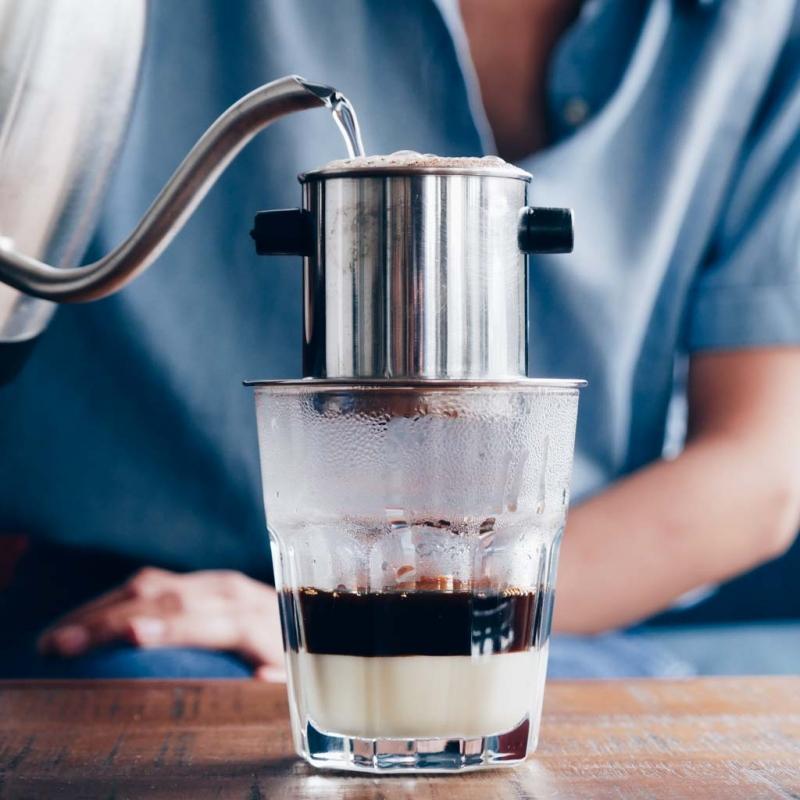
Vietnamese phin coffee remains an important choice for cafés serving customers who enjoy a familiar, full-bodied cup.
Depending on the intended flavor, Robusta, Arabica, or a blend may be suitable. Robusta is often chosen for its pronounced body and strong coffee character, while Arabica can contribute aromatic complexity and different acidity and sweetness characteristics.
For drinks with condensed milk, test the coffee and milk together. A coffee that tastes pleasant on its own may become too mild or too bitter when combined with sweetness.
Espresso-Based Drinks
Espresso can serve as the foundation for several menu items, including:
-
Espresso
-
Americano
-
Latte
-
Cappuccino
-
Mocha
-
Espresso-based milk coffee
Choosing a suitable espresso blend can help a café create variety without maintaining a separate coffee for every drink.
However, the best blend depends on the menu. A coffee designed for milk drinks may need a different balance from one intended for customers who drink espresso or Americano without milk.
Cold Coffee and Signature Drinks
Cold coffee can give customers more options, especially in warm weather or takeaway settings.
A café might offer iced Americano, iced latte, cold brew, or a signature drink combining coffee with selected ingredients.
Start with a small number of recipes and evaluate their actual performance. A signature drink should have a clear flavor identity and be practical for staff to prepare consistently.
3. Choose Coffee Beans Based on the Drinks You Sell
There is no single coffee that is best for every café. The right choice depends on the drink, the target customer, the brewing method, and the desired price point.
When Robusta May Be a Good Fit
Vietnamese Robusta is often considered for menus that emphasize bold coffee flavor, substantial body, and traditional milk coffee.
For a café serving large volumes of iced milk coffee, these characteristics may help the coffee remain noticeable after milk, condensed milk, or ice is added.
Nevertheless, Robusta quality varies. Processing, green bean condition, roasting, and brewing all influence the final cup.
When Arabica May Be a Good Fit
Arabica can offer a different flavor dire


 Group4, Cau Dat Village, Xuan Truong commune, Da Lat City, Lam Dong Province, Vietnam
 +84 783 472 234
 caudatbean@gmail.com
 www.caudatbean.com