
Coffee Farm Irrigation: How Water Management Supports Coffee Growth
Water is essential to coffee production, but successful coffee farming is not simply about providing as much water as possible. Coffee plants need different amounts of water at different stages of their growth, and the timing of irrigation can influence flowering, fruit development, and overall plant health.
In many coffee-growing regions, rainfall is seasonal. Farmers must therefore understand when natural rainfall is sufficient and when additional irrigation may be necessary.
In Vietnam, water management is particularly important in the Central Highlands, where the dry season can create significant challenges for coffee production.
In this article, Cầu Đất Bean explores how irrigation works, why timing matters, and how farmers can manage water more efficiently throughout the coffee-growing cycle.
1. Why Is Water Important for Coffee Plants?
Water supports several essential biological processes in coffee plants.
It helps transport nutrients from the soil to different parts of the plant, supports photosynthesis, maintains leaf structure, and contributes to the development of flowers and coffee cherries.
When water availability becomes insufficient, coffee plants may experience water stress.
Depending on its severity and duration, water stress can affect:
-
Leaf growth and plant development.
-
Flower bud development and flowering.
-
Fruit formation and cherry expansion.
-
Nutrient uptake.
-
Overall plant health and productivity.
However, the relationship between water and coffee growth is not entirely straightforward. Coffee plants also respond to seasonal changes in water availability, particularly during the transition between dry and rainy periods.
2. How Coffee Plants Respond to Seasonal Changes
In many tropical coffee-growing regions, the growing cycle is closely connected to seasonal rainfall.
During a dry period, coffee flower buds may enter a dormant or resting stage. When sufficient rain arrives, or irrigation is applied at the appropriate time, the buds can resume development and open into flowers.
This process is important because the timing and distribution of flowering influence how evenly coffee cherries develop and mature.
For some coffee production systems, a period of controlled water stress followed by suitable rainfall or irrigation helps synchronize flowering.
This does not mean that farmers should allow coffee plants to suffer severe drought. The timing and intensity of water stress must be managed carefully according to local conditions and the plant's development stage.
3. The Importance of Irrigation at Different Growth Stages
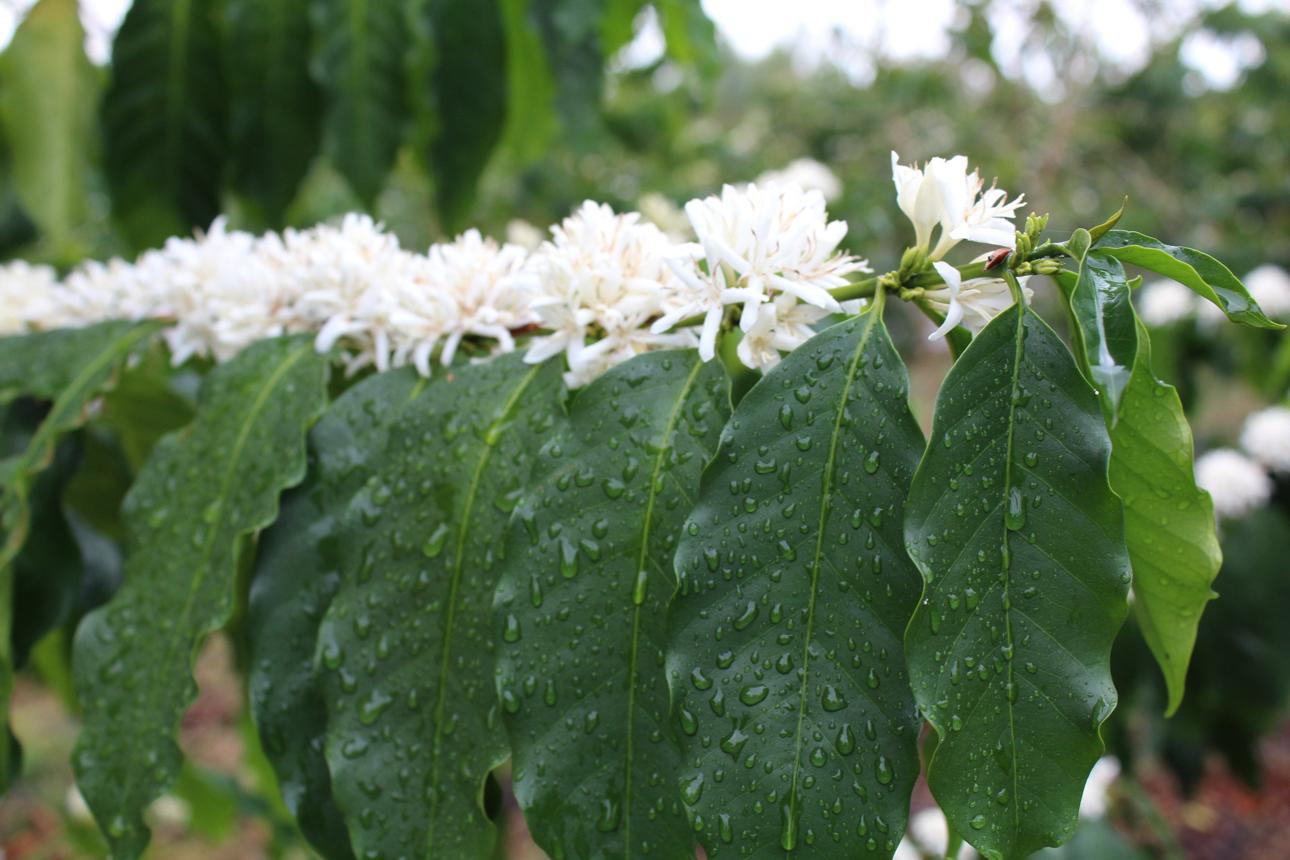
Coffee plants do not have the same water requirements throughout the year. Farmers need to adjust water management according to the crop's development.
Flower Bud Development
Before flowering, coffee plants may experience a seasonal dry period. In certain production systems, this helps prepare dormant flower buds to respond to the next rainfall or irrigation event.
Flowering
When flower buds are fully developed, rainfall or irrigation can stimulate flowering.
Adequate water availability at this stage helps support flower development. The timing of irrigation can also influence how synchronized flowering becomes.
Fruit Formation
After flowering, coffee flowers develop into small fruits known as cherries.
Water availability becomes important for successful fruit development. Prolonged water stress during this stage can affect fruit retention and development.
Cherry Expansion and Bean Filling
As cherries grow, the coffee beans develop inside them.
Sufficient soil moisture is important during this period because water stress may limit fruit growth and bean development.
Cherry Ripening
During the final stages, cherries gradually change color as they mature.
Water management should continue to reflect the plant's condition, soil moisture, and local rainfall. Excessive irrigation is not automatically beneficial and may create problems where drainage is poor.
4. Common Irrigation Methods Used in Coffee Farming
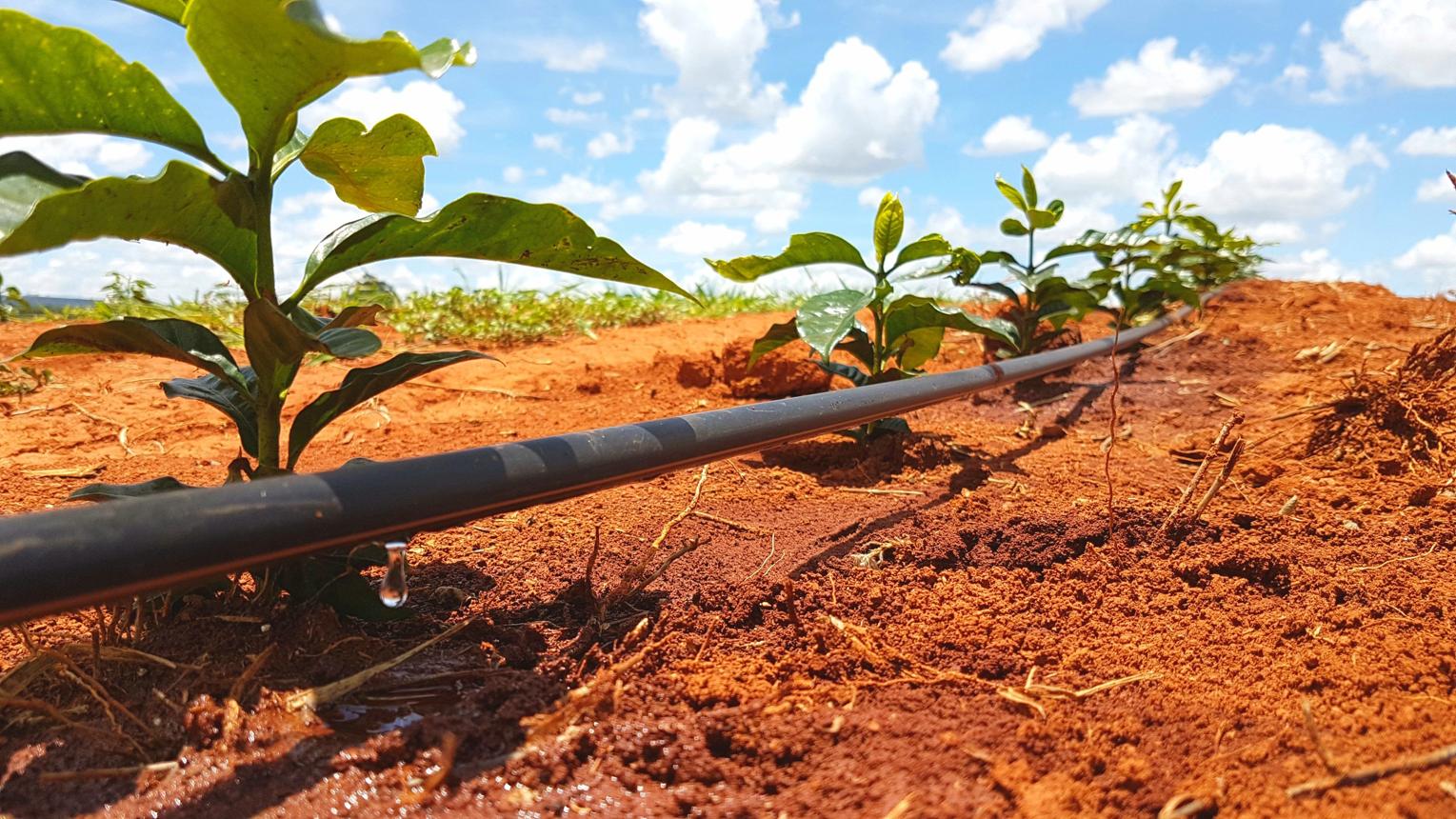
The most suitable irrigation method depends on farm size, water availability, soil characteristics, terrain, and investment capacity.
Drip Irrigation
Drip irrigation delivers water slowly and directly near the root zone through small emitters.
Advantages include:
-
More targeted water application.
-
Reduced water loss from evaporation when properly designed.
-
Better control over irrigation volume.
-
Potential integration with fertilizer application.
However, drip systems require initial investment, maintenance, and suitable filtration to prevent blockages.
Sprinkler Irrigation
Sprinkler systems distribute water over the crop through pressurized nozzles.
They can cover larger areas and may be useful for certain farm layouts.
However, water distribution can be affected by wind, evaporation, and system design.
Basin or Ring Irrigation
In this method, farmers create a basin around individual coffee plants to hold water near the root zone.
It is relatively simple and can be suitable for smaller farms, although water application must be controlled to avoid excessive accumulation.
Manual Irrigation
Some smaller farms use hoses or other basic equipment to supply water when rainfall is insufficient.
This method requires careful attention to the amount and distribution of water applied.
No irrigation system is ideal for every farm. The best option is one that matches the farm's conditions while using available water responsibly.
5. What Factors Determine How Much Water Coffee Needs?
There is no single irrigation volume that works for every coffee farm.
Water requirements depend on several interacting factors.
Rainfall distribution: Total annual rainfall alone does not explain water availability. The timing and distribution of rainfall throughout the year are equally important.
Soil type: Sandy soils generally drain faster, while clay-rich soils can retain more water. This affects how frequently irrigation may be needed.
Plant age and size: Young coffee plants have different water requirements from mature, productive trees.
Coffee variety: Arabica and Robusta may respond differently to environmental conditions and production systems.
Temperature and sunlight: Higher temperatures and stronger sunlight can increase water loss from soil and plants.
Terrain and drainage: Sloping land, soil depth, and drainage conditions influence how water moves and remains available to roots.
Farmers should consider these factors together rather than following a fixed irrigation schedule without monitoring the farm.
6. Why Over-Irrigation Can Be a Problem
Providing too much water can be just as problematic as providing too little.
Excessive irrigation may cause several issues:
-
Waterlogging around the root zone.
-
Reduced oxygen availability in the soil.
-
Nutrient leaching.
-
Increased risk of certain root diseases.
-
Unnecessary water and energy consumption.
Coffee roots require both moisture and oxygen. When soil remains saturated for extended periods, root function can be affected.
This is why good irrigation management involves maintaining suitable soil moisture rather than keeping the soil constantly wet.
7. Practical Ways to Improve Water Management on Coffee Farms
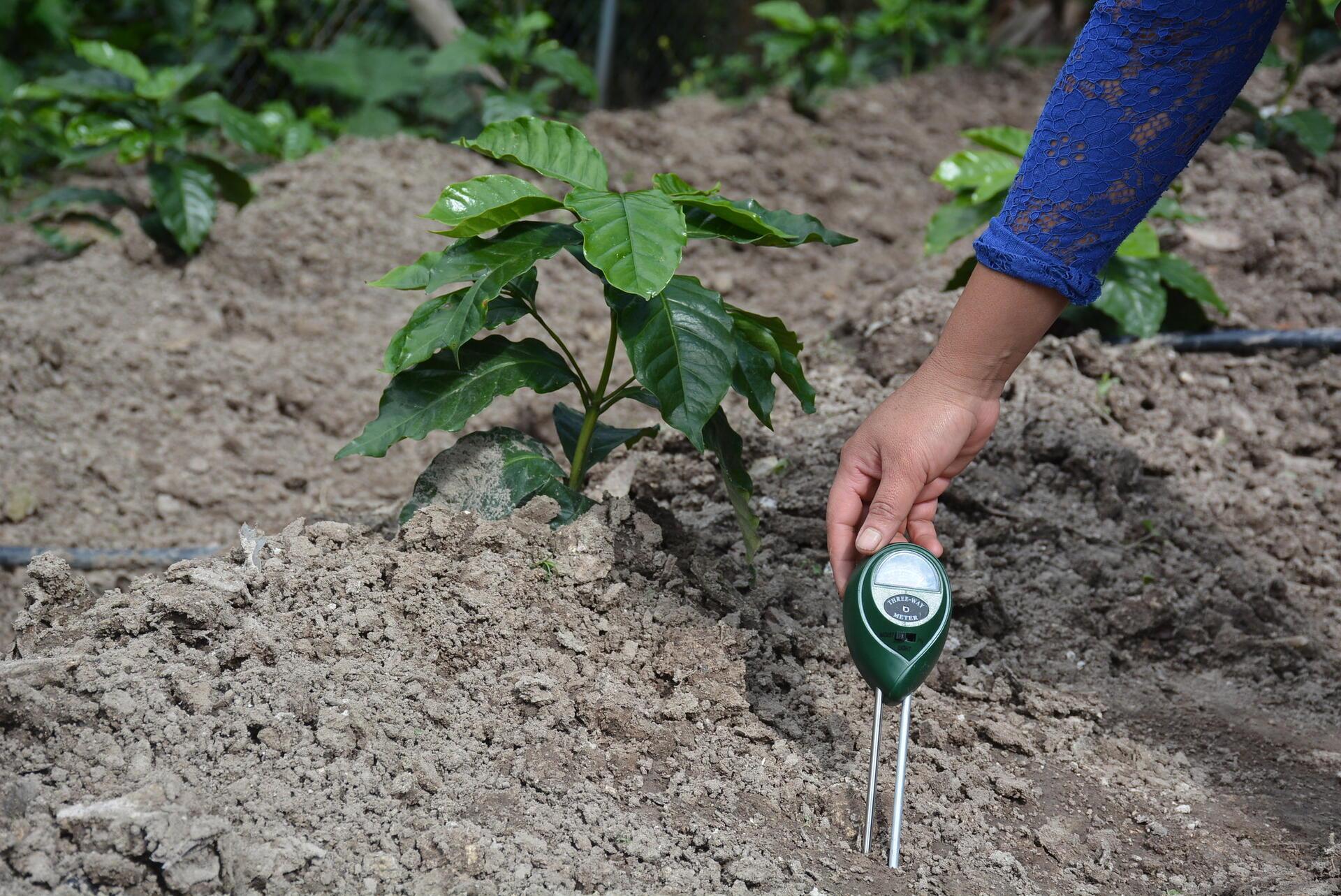
Farmers can improve irrigation efficiency through regular monitoring and appropriate farm practices.
Monitor Soil Moisture
Check soil moisture at representative locations and depths within the coffee root zone.
Soil moisture sensors can provide useful information, while manual observation may also help smaller farms understand changing conditions.
Match Irrigation to the Growth Stage
Avoid using the same irrigation schedule throughout the year.
Consider whether the plants are developing flower buds, flowering, forming cherries, or filling beans before making irrigation decisions.
Use Mulch and Organic Materials
Suitable organic mulch can help reduce direct evaporation from the soil surface and improve soil conditions over time.
Maintain Ground Cover
Appropriate cover crops and vegetation can help protect soil from erosion and reduce surface temperature.
However, farmers should manage competing vegetation carefully so that it does not consume excessive water or nutrients needed by coffee plants.
Check Irrigation Equipment
Inspect pipes, valves, emitters, and sprinklers regularly to ensure water is distributed as intended.
Leaks, blockages, and uneven pressure can lead to inefficient irrigation.
Keep Water Use Records
Recording irrigation dates, estimated volumes, rainfall, and plant conditions can help farmers identify patterns and improve future decisions.
8. Water Management in Vietnamese Coffee Production
Vietnam's coffee-growing regions experience different rainfall patterns and growing conditions.
In the Central Highlands, the dry season is an important consideration for Robusta production. Research on Vietnamese coffee farming has highlighted the importance of carefully timed irrigation, particularly during the period when flower buds resume development and cherries begin forming.
In Arabica-growing areas such as Cầu Đất, Đà Lạt, local rainfall, elevation, temperature, soil characteristics, and drainage conditions also influence water management.
The same irrigation schedule should not be applied automatically across different regions or coffee species.
Efficient water management should be based on local conditions, plant development, and reliable agricultural guidance.
9. Can Better Irrigation Improve Coffee Quality?
Water management can support healthy plant development and more reliable coffee production, but irrigation alone does not determine the final cup quality.
The development of coffee cherries and beans is influenced by several factors, including:
-
Coffee variety and genetics.
-
Growing altitude and local climate.
-
Soil conditions and nutrient availability.
-
Water availability throughout the growing cycle.
-
Cherry maturity at harvest.
-
Processing and drying methods.
-
Green coffee storage and roasting.
For coffee producers, the goal is to maintain suitable growing conditions and avoid unnecessary stress.
For buyers and roasters, understanding how coffee is cultivated provides useful background about the origin, but the actual quality of a coffee lot should still be assessed through physical inspection and sensory evaluation.
Conclusion: Smart Water Management Supports Better Coffee Farming
Water is one of the most important resources in coffee production. Its availability and timing influence flowering, fruit development, and the overall health of coffee plants.
Effective irrigation is not about applying more water. It is about understanding the crop's growth cycle, monitoring soil moisture, choosing suitable irrigation methods, and adapting to local weather conditions.
By managing water carefully, coffee farmers can support more resilient production while reducing unnecessary pressure on local water resources.
At Cầu Đất Bean, we believe that understanding coffee means appreciating every stage of its journey, from responsible farm management to the final cup.
Discover Vietnamese Coffee with Cầu Đất Bean
Explore Vietnamese Arabica and Robusta coffee from the highlands of Cầu Đất, Đà Lạt.
Cầu Đất Bean supplies green coffee beans and roasted coffee for roasters, cafés, distributors, and international buyers.
Contact our team to discuss available products, processing methods, specifications, and sample requests.
CẦU ĐẤT BEAN
Showroom: 82B Trương Công Định, Đà Lạt, Lâm Đồng, Vietnam
Email: caudatbean@gmail.com
Phone / WhatsApp: +84 926 915 849
Website: https://caudatcoffee.com.vn
Try before you buy.


 Group4, Cau Dat Village, Xuan Truong commune, Da Lat City, Lam Dong Province, Vietnam
 +84 783 472 234
 caudatbean@gmail.com
 www.caudatbean.com