
Coffee Degassing Explained: Why Freshly Roasted Coffee Needs Time to Rest
Freshly roasted coffee smells incredible.
But does that mean it should be brewed immediately?
Not always.
After roasting, coffee beans continue to release gases, especially carbon dioxide (CO₂), that were produced during the roasting process. This natural process is known as coffee degassing.
Understanding degassing can help roasters, cafés, and coffee lovers know when coffee is ready to brew and why the flavor of freshly roasted coffee changes over time.
What Is Coffee Degassing?
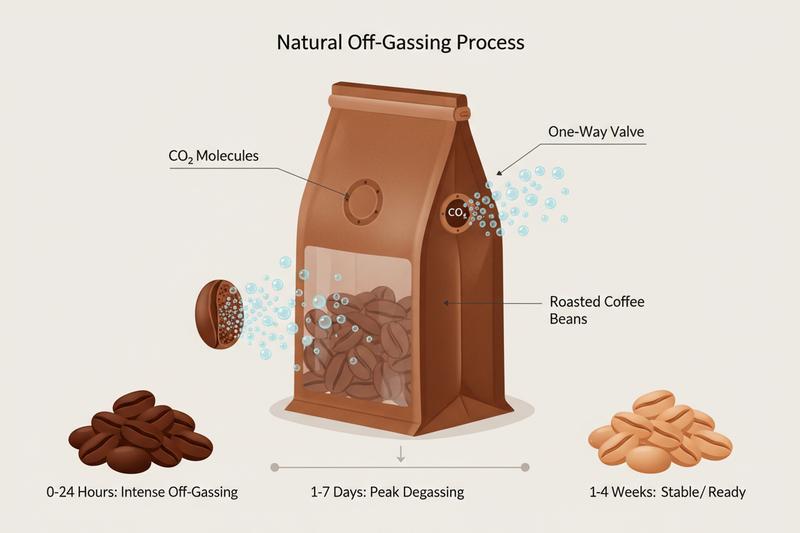
Coffee degassing is the process in which roasted coffee releases gases that remain trapped inside the bean after roasting.
During roasting, chemical reactions create carbon dioxide and other volatile compounds. Because the roasted coffee bean becomes porous, these gases can gradually move out of the bean after roasting.
This process can continue for days or even weeks, depending on the coffee and how it was roasted.
In simple terms:
Roasting → gas formation → gas remains inside the bean → CO₂ gradually escapes → coffee becomes more stable for brewing
Why Does Coffee Produce CO₂ During Roasting?
Roasting causes significant chemical changes inside the coffee bean.
As heat increases, organic compounds inside the green coffee undergo a series of reactions. These reactions create new aroma and flavor compounds while also producing gases.
Carbon dioxide is one of the most important gases produced during roasting.
A portion of this CO₂ remains trapped inside the porous structure of the roasted bean.
After roasting, the gas slowly moves toward the surface and escapes.
This is why freshly roasted coffee continues to change even after it leaves the roaster.
Why Does Freshly Roasted Coffee Need to Rest?
Coffee that has just come out of the roaster can contain a relatively high amount of trapped CO₂.
If brewed immediately, the gas can interfere with the way water interacts with the coffee grounds.
This can affect extraction and make the cup taste different from the same coffee after it has rested.
Depending on the coffee and brewing method, freshly roasted coffee may taste:
-
Sharp
-
Uneven
-
Gassy
-
Less balanced
-
Less clear
After some time, the coffee can become easier to extract and its flavor may become more balanced.
This is why many roasters recommend allowing roasted coffee to rest before brewing.
How Long Should Coffee Rest After Roasting?
There is no single resting time that works for every coffee.
The ideal period depends on:
-
Roast level
-
Coffee variety
-
Processing method
-
Bean density
-
Roast profile
-
Brewing method
-
Personal taste
As a general starting point, many coffees benefit from several days of rest after roasting.
For some filter coffees, a shorter resting period may work well.
Espresso often benefits from a longer resting period because the brewing process is particularly sensitive to the behavior of the coffee and the gases inside the bean.
The important point is that fresh does not always mean immediately after roasting.
Does Dark Roast Degas Faster?
Roast level can influence degassing behavior.
Darker roasted coffee generally has a more developed and porous internal structure, which can affect how gases escape.
However, degassing is not determined by roast color alone.
Two coffees roasted to a similar color may still degas differently because of differences in:
-
Density
-
Variety
-
Moisture
-
Processing
-
Roast profile
-
Bean structure
This is another reason why coffee should be evaluated individually rather than following one fixed rule.
What About Light Roasted Coffee?
Light roasted coffee can also require resting time.
High-density coffees, especially some high-altitude Arabica coffees, may behave differently from lower-density coffees during and after roasting.
A light roast may retain a different internal structure and may require additional time before its flavors become fully expressive.
Instead of asking whether light roast or dark roast always needs more resting time, it is better to observe how the coffee develops after roasting.
How Does Degassing Affect Brewing?
Degassing is especially noticeable during brewing.
When hot water comes into contact with freshly ground coffee, trapped CO₂ escapes quickly.
This can cause the coffee bed to expand or bloom.
You may see bubbles forming and the grounds rising as gas leaves the coffee.
This is why blooming is particularly noticeable with freshly roasted coffee.
As coffee ages, the amount of easily released CO₂ decreases, so the bloom may become smaller.
Why Does Fresh Coffee Bloom More?
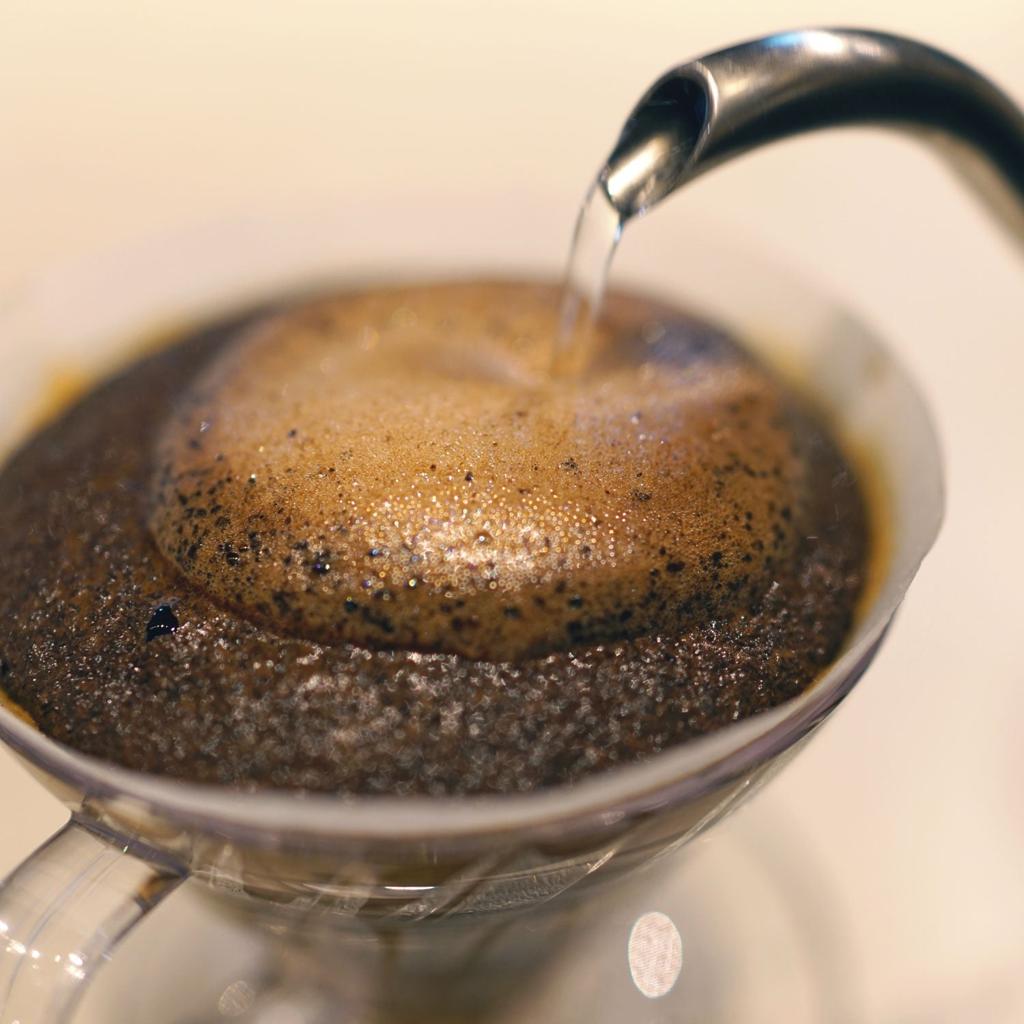
If you brew freshly roasted coffee using a pour-over method, you may notice the coffee grounds swelling significantly.
This is largely related to trapped CO₂.
As hot water enters the coffee bed, the gas escapes and pushes water away from parts of the grounds.
If too much gas remains in the coffee, it can make it more difficult for water to contact the grounds evenly.
This can contribute to uneven extraction.
A short blooming stage gives the coffee time to release some of that gas before the main brewing process continues.
Does More Bloom Mean Better Coffee?
Not necessarily.
A dramatic bloom can be a sign that the coffee is relatively fresh, but it does not automatically mean that the coffee will taste better.
Cup quality depends on many factors, including:
-
Green coffee quality
-
Roast development
-
Grind size
-
Water temperature
-
Brewing ratio
-
Extraction
-
Coffee freshness
A coffee that blooms dramatically can still produce an unbalanced cup if the brewing parameters are not appropriate.
Degassing and Coffee Packaging
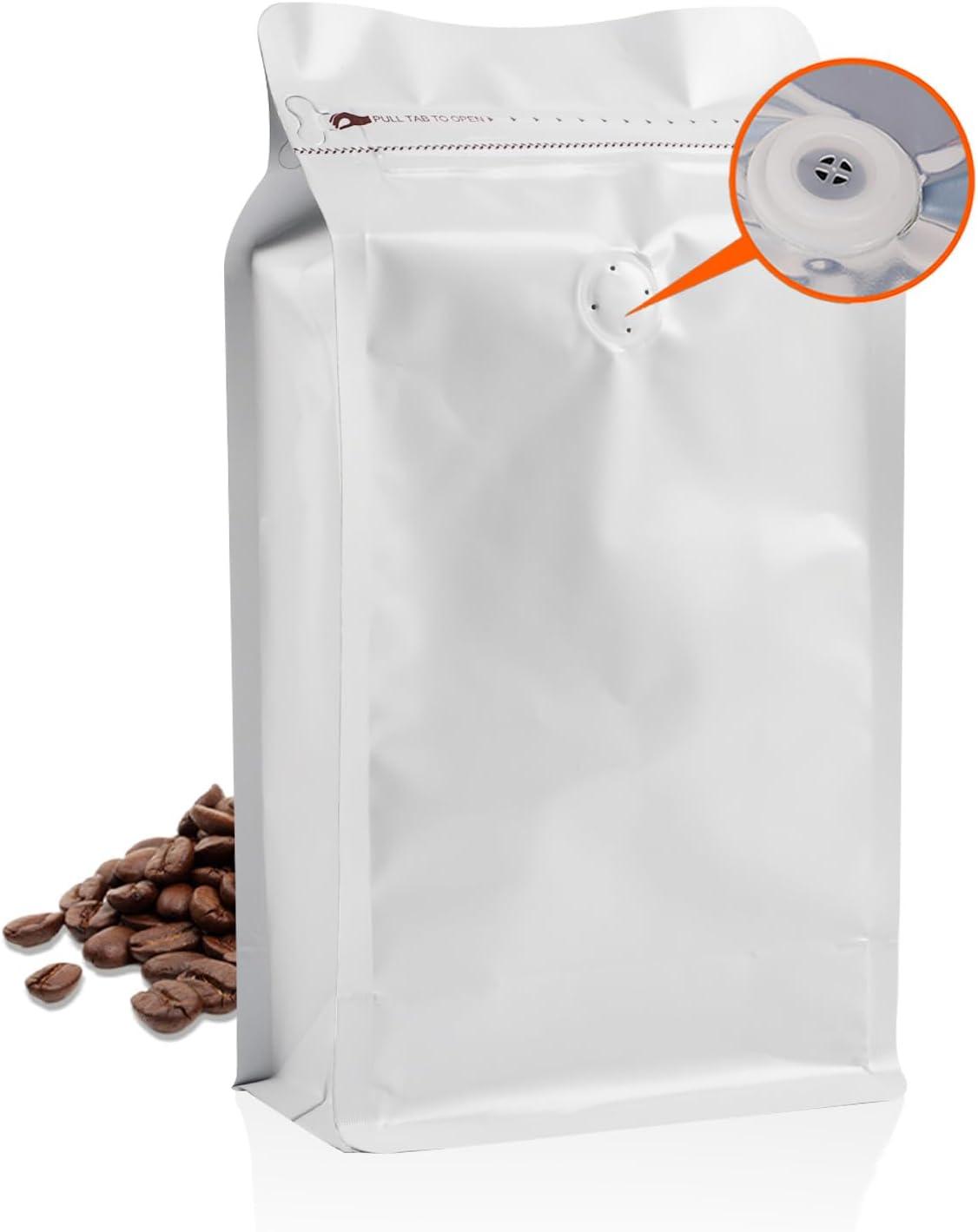
Packaging plays an important role in managing freshly roasted coffee.
If roasted coffee is sealed immediately after roasting, the gases released by the beans can build up inside the package.
For this reason, coffee bags often use a one-way degassing valve.
The valve allows gases such as CO₂ to escape while helping prevent outside air from entering the package.
This allows freshly roasted coffee to continue degassing without creating excessive pressure inside the bag.
Why Is Oxygen a Concern?
While CO₂ naturally leaves roasted coffee, oxygen can contribute to oxidation.
Once coffee is exposed to oxygen, some of the compounds responsible for aroma and flavor can gradually deteriorate.
This is why coffee packaging needs to balance two things:
Allow CO₂ to escape while limiting oxygen exposure.
Proper packaging helps preserve the coffee while it continues its natural post-roasting development.
Can You Brew Coffee Immediately After Roasting?
Yes, you can.
There is no rule that says freshly roasted coffee cannot be brewed immediately.
However, the result may not represent the coffee at its most balanced stage.
Some coffees can taste surprisingly good very soon after roasting, while others may taste noticeably better after resting.
For commercial roasters, the best approach is to test the coffee over several days.
For example:
Day 1: Brew and record the flavor.
Day 3: Brew again.
Day 5: Compare the aroma, sweetness, acidity, and body.
Day 7: Evaluate again.
This creates a simple resting curve that shows how the coffee changes over time.
Degassing and Espresso

Espresso is particularly sensitive to coffee freshness.
Coffee that is too fresh may contain a large amount of CO₂, which can affect puck preparation and extraction.
You may notice:
-
Excessive crema
-
Unstable flow
-
Fast or uneven extraction
-
Sharp flavors
-
Difficulty dialing in the espresso
After additional resting time, the same coffee may become easier to dial in and produce a more balanced shot.
This is why cafés often establish a specific resting period for each roasted coffee.
Degassing and Filter Coffee
Filter coffee can also change significantly during the resting period.
Pour-over brewing makes the effects of degassing easy to observe because the coffee bed visibly expands during blooming.
As the coffee rests, the bloom usually becomes less dramatic.
But again, a smaller bloom does not necessarily mean lower quality.
The goal is not to maximize the visual bloom.
The goal is to achieve an even and enjoyable extraction.
Does Grind Size Affect Degassing?
Grinding increases the surface area of coffee dramatically.
Once the bean is ground, trapped gases can escape much more quickly.
This is one reason freshly ground coffee can smell so aromatic.
However, grinding also means the coffee becomes more exposed to oxygen.
For the best flavor, coffee is generally ground shortly before brewing.
This allows the brewer to take advantage of the coffee's aroma while limiting unnecessary exposure after grinding.
How Can Roasters Evaluate Degassing?
Roasters can create a simple tasting schedule after each roast.
Record the coffee at different intervals, such as:
-
24 hours
-
48 hours
-
72 hours
-
5 days
-
7 days
-
10 days
At each stage, evaluate:
-
Aroma
-
Acidity
-
Sweetness
-
Body
-
Balance
-
Aftertaste
-
Clarity
This can reveal when a particular coffee reaches its most enjoyable stage.
There is no universal “perfect day.”
Every coffee has its own resting curve.
Degassing and Cau Dat Arabica
Cau Dat Arabica offers an interesting example of why every coffee should be evaluated individually.
High-altitude Arabica can have different density and physical characteristics depending on variety, processing, moisture, and growing conditions.
A Washed Catimor, Yellow Bourbon, Typica, or Moka may not behave exactly the same after roasting.
For roasters working with Vietnamese Arabica, observing how each lot changes during the resting period can help determine the best brewing window.
Instead of relying only on roast date, roasters can combine:
-
Roast profile
-
Roast level
-
Coffee variety
-
Processing method
-
Degassing behavior
-
Cupping results
to determine when the coffee is ready.
Freshness vs. Readiness
One of the most important ideas to understand is the difference between freshness and readiness.
Fresh coffee is coffee that has been recently roasted.
Ready coffee is coffee that has reached a stage where its flavor and extraction characteristics suit the intended brewing method.
These two things are related, but they are not exactly the same.
A coffee can be extremely fresh and still need more time to rest.
Final Thoughts
Coffee does not stop changing when it leaves the roaster.
After roasting, the beans continue to release gases, especially carbon dioxide.
This natural degassing process affects packaging, brewing, blooming, extraction, and the way coffee tastes over time.
There is no universal resting period for every coffee.
The best approach is to taste and compare the coffee at different stages and identify the point where its aroma, sweetness, acidity, body, and balance come together.
For roasters and coffee buyers, understanding degassing is another step toward understanding the complete journey from green coffee to roasted coffee to the final cup.
At Cau Dat Bean, we believe that every coffee lot has its own character — and understanding how it behaves after roasting is part of bringing that character forward.
Frequently Asked Questions
What is coffee degassing?
Coffee degassing is the natural process of gases, especially carbon dioxide, escaping from roasted coffee beans after roasting.
How long should coffee rest after roasting?
There is no universal answer. Many coffees benefit from several days of rest, but the ideal period depends on the coffee, roast, and brewing method.
Why does freshly roasted coffee bloom?
Freshly roasted coffee contains more trapped CO₂. When hot water reaches the grounds, this gas escapes and causes the coffee bed to expand.
Does more bloom mean better coffee?
No. A larger bloom generally indicates more gas is being released, but it does not directly indicate better cup quality.
Why do coffee bags have a one-way valve?
A one-way valve allows gases released by freshly roasted coffee to escape while helping limit outside air entering the package.
Is coffee better immediately after roasting?
Not necessarily. Coffee may need some resting time before it reaches a more balanced and easier-to-extract stage.
Explore Vietnamese Coffee with Cau Dat Bean
Looking for Vietnamese green coffee for roasting, wholesale, or export?
Cau Dat Bean supplies selected Vietnamese coffee, including Arabica from the highlands of Da Lat.
Cau Dat Bean Showroom
📍 82B Trương Công Định, Phường Xuân Hương, Đà Lạt, Lâm Đồng, Vietnam
📞 +84 926 915 849
📧 caudatbean@gmail.com
Try before you buy.


 Group4, Cau Dat Village, Xuan Truong commune, Da Lat City, Lam Dong Province, Vietnam
 +84 783 472 234
 caudatbean@gmail.com
  www.caudatbean.com